Launch of the ‘Twige Twese’ programme to improve fundamental education in Burundi
In support of the Government of Burundi, UNICEF and its partners are helping to improve equal access to inclusive, quality fundamental education through this programme.
- English
- Français
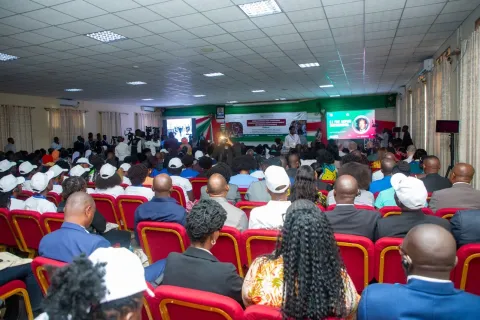
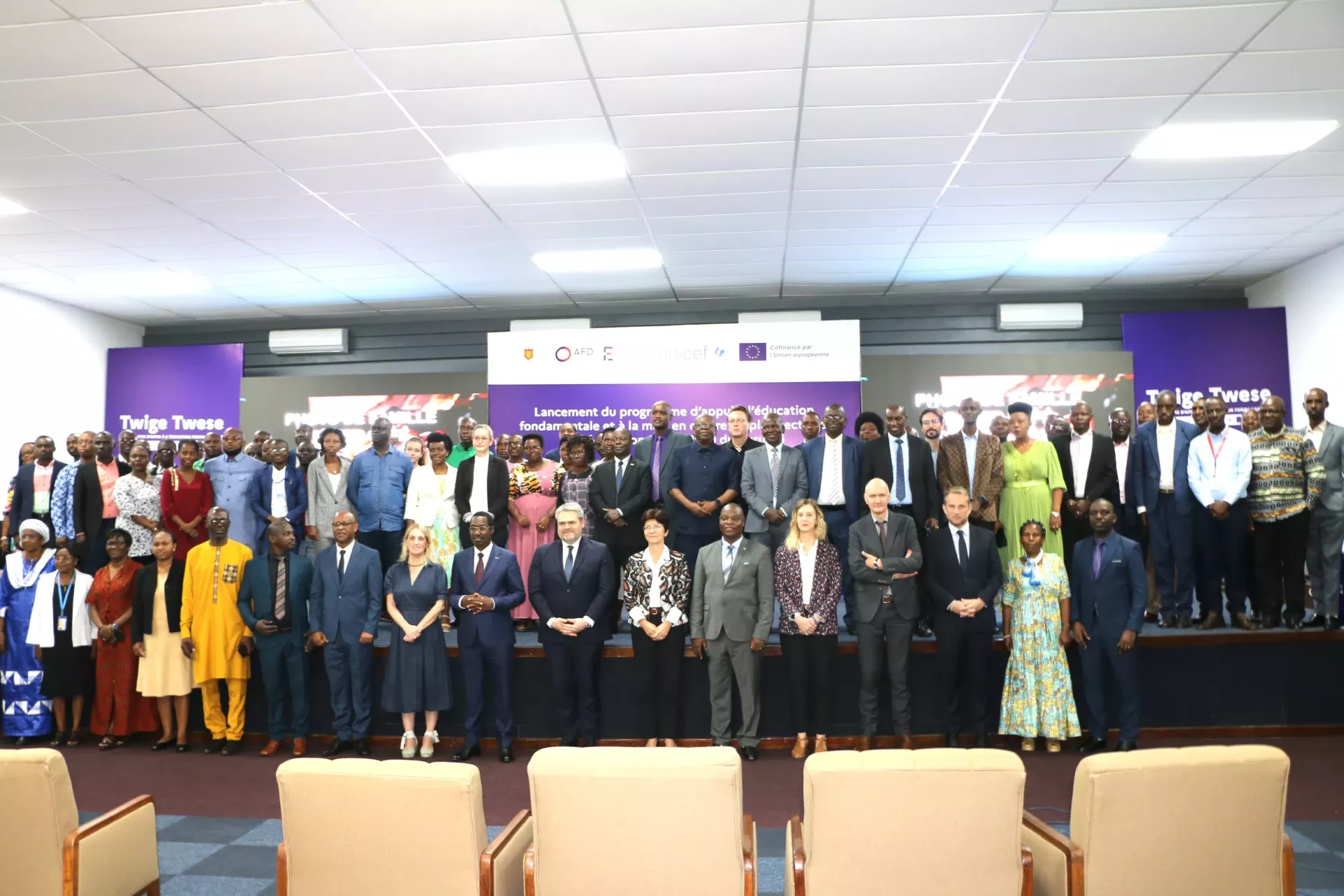
Education is one of Burundi's priorities. Although rapid progress has been made in this sector, Burundi's education system still faces many barriers. The ‘Twige Twese’ programme was designed to address several challenges, including limited preschool and elementary school capacity, a high percentage of new enrolments exceeding the legal entry age, significant geographical and gender disparities, low use of ICTs, and a high percentage of children and teenagers out of school. In collaboration with UNICEF, the French Development Agency, and the European Union, the Ministry of Education and Scientific Research officially launched this ambitious programme on 28 January 2025 at the Donatus Conference Center.
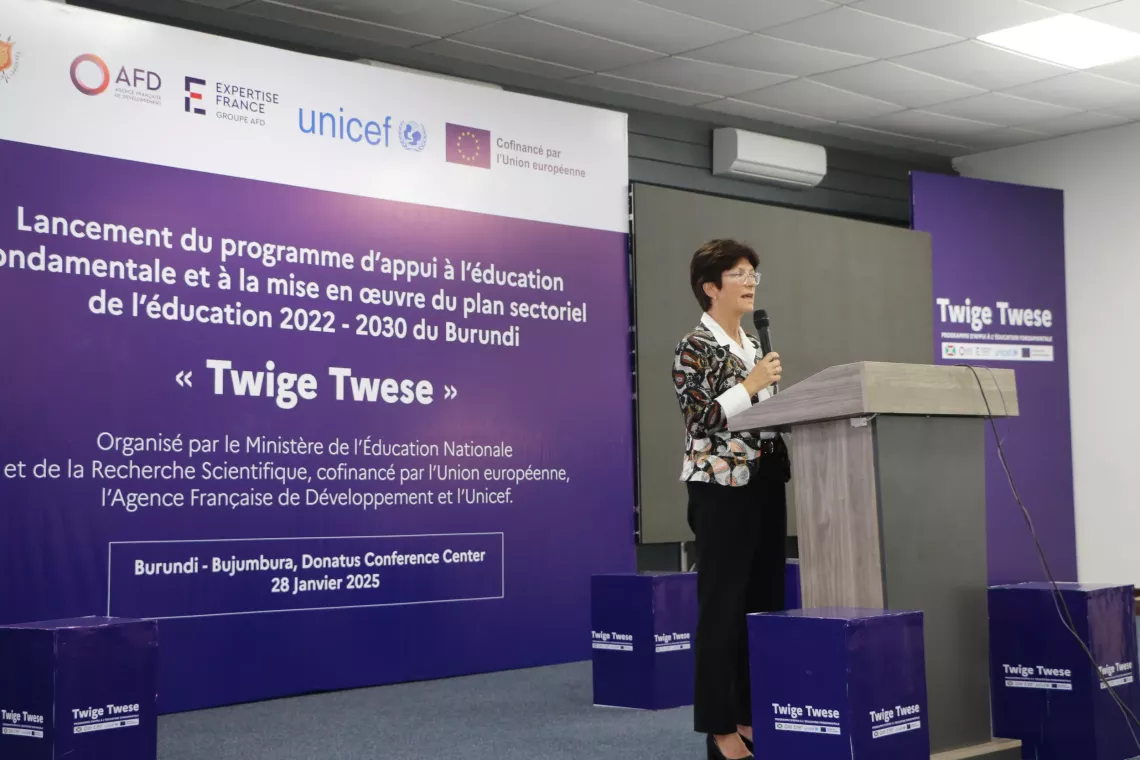
The Twige Twese project is part of a broader effort to tackle unequal access to education, improve school infrastructure, and promote inclusive education. It will contribute to systemic and sustainable reforms to support the goals of the Government of Burundi through the Ministry and other institutions in charge of education. These objectives motivated all the partners to support this project. ‘This coordinated approach, supported by the technical assistance of the Ministry, will allow us to address the major challenges and lay the foundations for a more promising educational future for Burundi’, said Elisabetta Pietrobon, the European Union's Ambassador to Burundi.
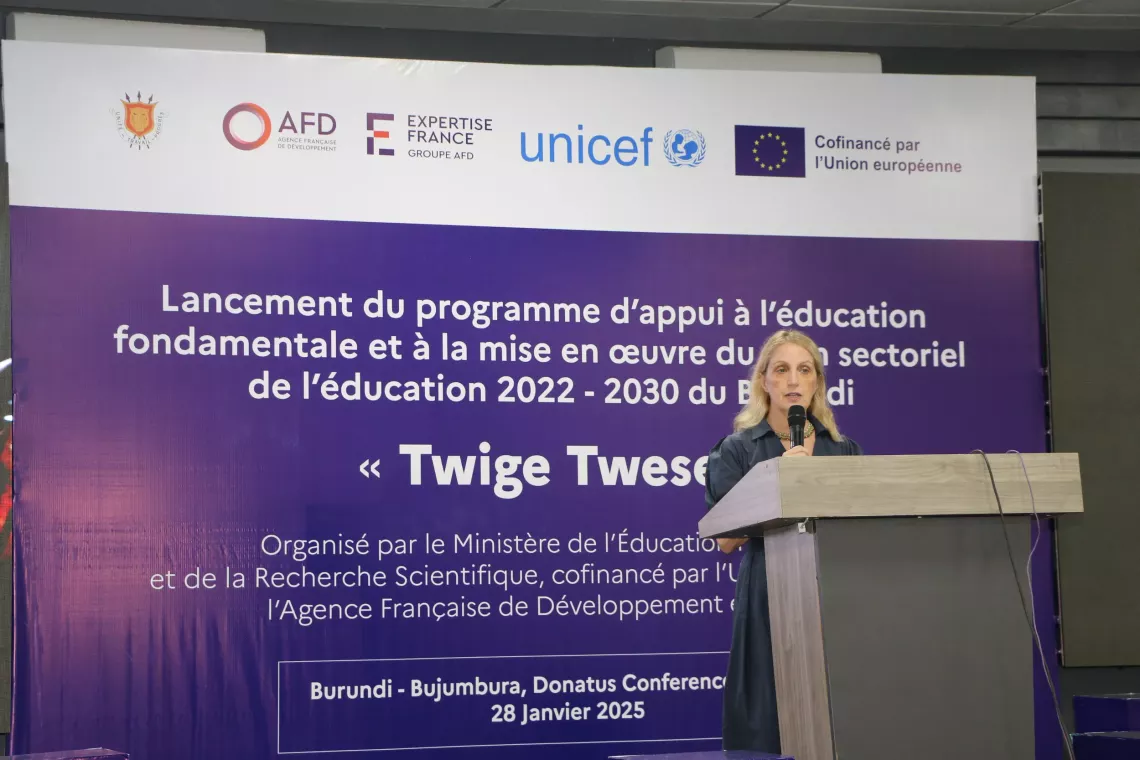
Thanks to this initiative, learning conditions will be improved by rehabilitating and equipping 350 inclusive classrooms, improving access to education for vulnerable children, and combating gender-based violence in schools. ‘This project will not only enable the rehabilitation of 350 classrooms, but also the reintegration of 15,750 children and adolescents who were previously out of school for reasons both within and beyond the education system. It will also provide school kits for 308,000 children, including those who are not yet enrolled in school’, promised UNICEF Representative France Bégin.
The event was also an opportunity to recall that in 2024, the education of thousands of children was severely disrupted by extreme climate events such as sweltering heat, tropical cyclones, storms, floods, and droughts, exacerbating an existing learning crisis. In Burundi, for example, nearly 20,000 schoolchildren were directly affected by flooding linked to the El Niño phenomenon.
Although investing in children's education is a key strategy for adapting to climate change, it is often neglected in public policies, while education systems lack the resources and preparedness to tackle these challenges. This is why UNICEF and all its development partners are urgently calling on leaders and the private sector to take concrete measures to protect children from the impacts of climate change. Education must be strengthened as part of national climate plans by investing in resilient school infrastructure and accelerating funding to improve climate resilience in the education sector. It is therefore crucial to explicitly integrate climate change education into all public policies. ‘The future of our children is at risk, and it is our collective responsibility to act now’, emphasized the UNICEF Representative.

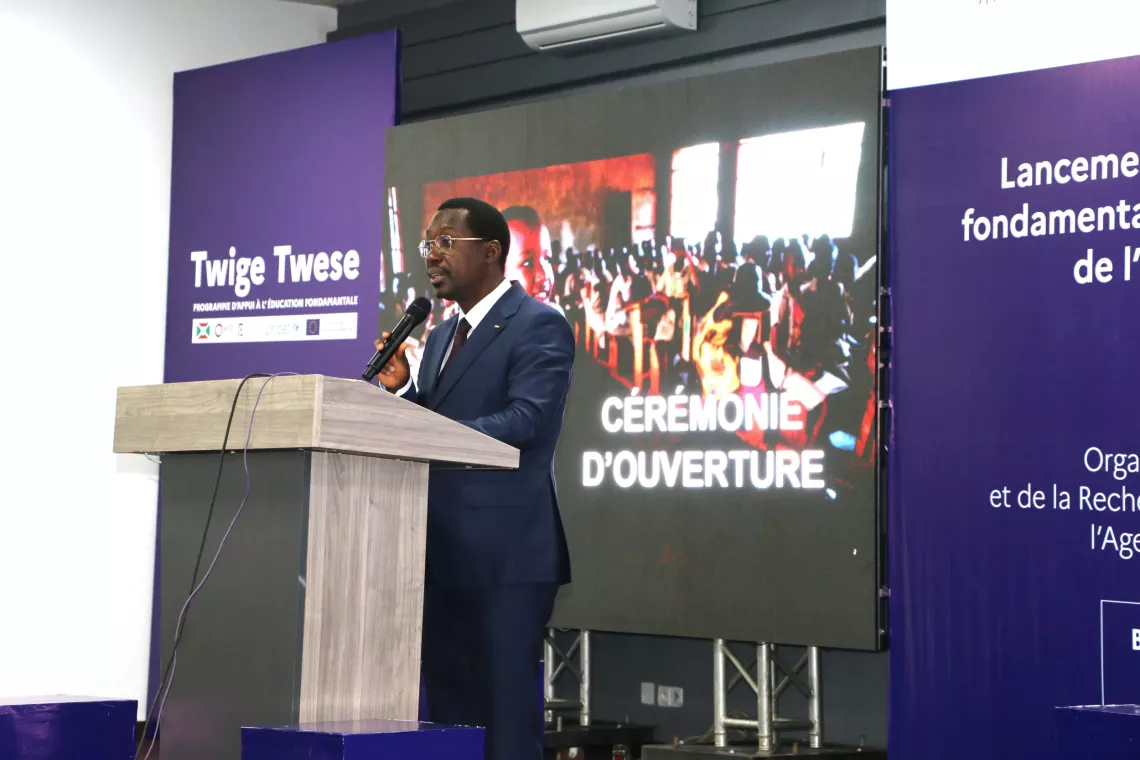
To support the implementation of Burundi's 2022-2030 education sector plan, this project will enhance the skills of graduates from institutions that train basic education teachers. Pupils and teachers will have access to modern, high-quality teaching resources and continuous learning opportunities thanks to the integration of digital resource hubs that will be established in the two provinces covered by the project. ‘We are certain and confident that the actions proposed through this project will help address the challenges facing Burundi's education system’, said the Minister of National Education and Scientific Research.
A particular focus throughout the project will be on including the most vulnerable children: those with disabilities, returnees, and those from deprived backgrounds.
This three-year programme is being implemented in four provinces: Kirundo, Muyinga, Gitega, and Bujumbura City Council. It is jointly funded by UNICEF, the European Union, and the French Development Agency.