The fight against Mpox continues despite the lull at Kayanza Hospital.
After a fierce battle against Mpox and a significant drop in cases in Burundi, can we finally consider this disease a thing of the past? Or should we remain vigilant in the face of an ever-present risk? This article explores the current situation.

- English
- Français
On 25 July 2024, Burundi's Ministry of Public Health officially declared Mpox epidemic across the country. The announcement sparked concern and widespread mobilization. Eighteen months later, at Kayanza Hospital, the apparent silence of the isolation center contrasts with the still vivid memories of weeks of intense activity.
As soon as the epidemic was announced, UNICEF mobilized alongside the Burundian government, with financial support from The Church of Jesus Christ of Latter-day Saints, to curb its spread.
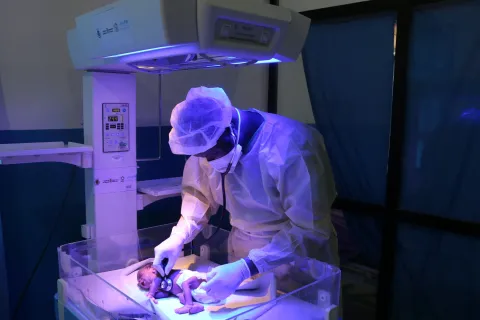
The intervention, designed using a holistic approach, combined several actions: community awareness campaigns, support for medical care, the provision of medicines and food, the distribution of hygiene kits (soap, buckets, utensils), and the provision of enriched porridge for children. But one of the most visible measures remains the establishment of isolation centers in certain hospitals across the country, including Kayanza Hospital.
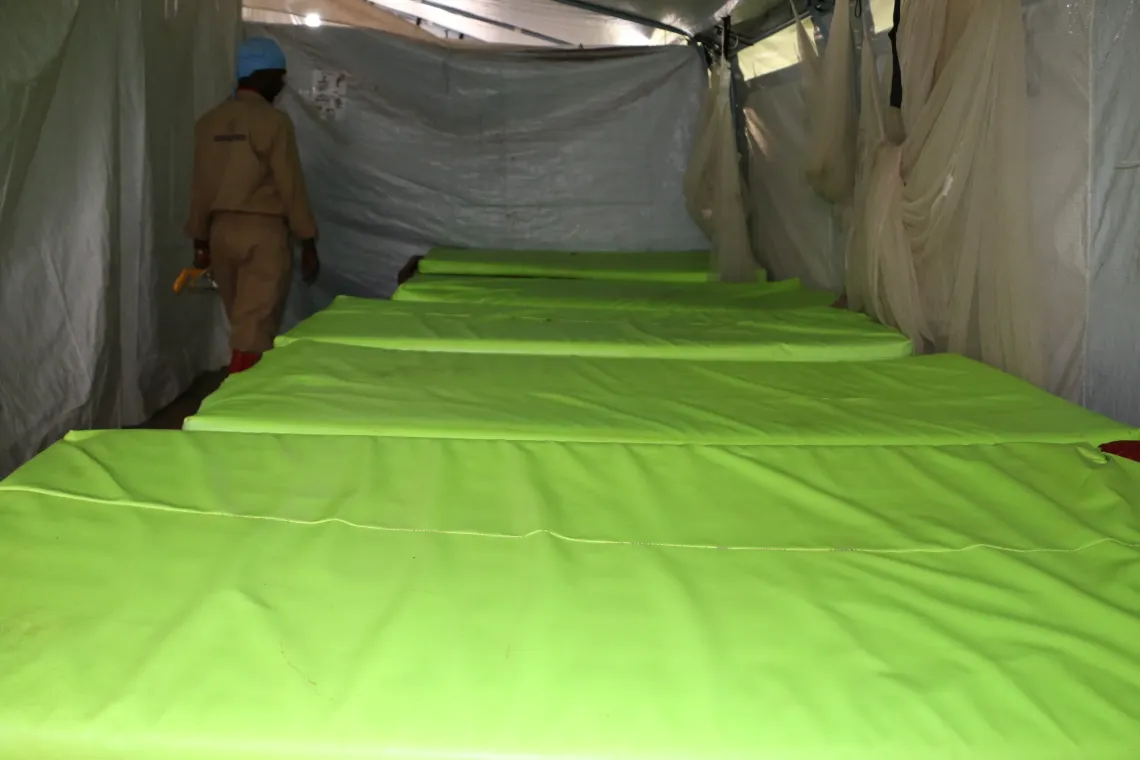
At Kayanza Hospital, the white tents set up on the grounds still bear witness to the scale of the response. Now empty, they symbolize a key moment in the fight against the epidemic.

Reverien Barutwanayo, head of nursing at the hospital since June 2025, recalls: ‘UNICEF helped us greatly by building an isolation center with tents, which did not exist before. This prevented Mpox patients from mixing with other patients, thereby preventing the spread of the disease among patients hospitalized in other wards.’
Isolation, an essential measure when dealing with a disease transmitted through close contact, helped break the chains of transmission within the hospital. But the support was not limited to infrastructure. ‘Medical and nutritional care were of paramount importance. Patients had no other concerns. This facilitated recovery,’ he adds.
In a context where many families live in precarious conditions, the provision of food and hygiene products has eased a considerable burden on patients and their loved ones.
During our visit, there were no patients in the isolation center. This is a reassuring situation, which the staff welcomes with caution.
Dr. Irambona Dophine, a doctor at Kayanza Hospital for two years, explains: “The care provided was adequate. Isolating patients away from the community broke the chain of transmission. Awareness-raising and patient care led to a significant reduction in the number of Mpox cases.”
According to her, most patients admitted were not in a serious condition, which facilitated treatment and limited complications. However, the epidemic is not completely over. “Less than two weeks ago, the last patient in isolation was discharged. From time to time, some cases come here. It is a disease that can reappear at any time.”

While serious cases appear to be fewer in number, another concern is emerging: that of patients who prefer to stay at home. With reduced material support, particularly food aid, some patients are reluctant to go to the hospital. Staff also mention the possibility of self-medication, which is difficult to quantify.
“We don't have precise figures, but we think that some cases are staying at home to avoid coming to the hospital, especially as there is no longer any special assistance,” says a member of the healthcare team.
This hypothesis raises a considerable challenge: combating an epidemic is not limited to medical infrastructure. It also relies on trust, ongoing awareness-raising, and social support. “We must remain vigilant; the disease has not gone away,” insists Dr. Irambona.
Eighteen months after the official declaration of the Mpox epidemic, Burundi appears to have made progress in its response. The figures are reassuring, the pressure is easing, and the emergency seems to be receding. Yet behind the renewed calm, even in the silent tents of the Kayanza isolation center, one thing remains certain: no health victory is irreversible. The fight against Mpox is less visible today, but it is no less important. Rather than a spectacular battle, it is now a matter of patient and constant work.