Early Childhood Development model project for the first 1,000 Days of life.
Burundian Government, UNICEF, and the Kingdom of the Netherlands highlight the strong success of the Kayanza Early Childhood Development (ECD) model project.

- English
- Français
Driven by a shared commitment to invest more in early childhood development, a national workshop to review and document the achievements of the Kayanza Early Childhood Development (ECD) Model Project was held at the Royal Palace Hotel. Opened by the First Lady of the Republic of Burundi, the event brought together nearly 160 participants, including key government stakeholders, the governors of the country’s five provinces, local authorities, civil society representatives, community members, and development partners involved in the field of ECD.
Participants also included our UNICEF Representative, representatives of other UN agencies (UN Women, UNFPA, WFP, WHO, and UNESCO), as well as delegates from the Embassy of the Kingdom of the Netherlands and the European Union. Together, they came to address a common challenge: capturing and leveraging the project’s achievements while accelerating the scale-up of integrated interventions for young children.
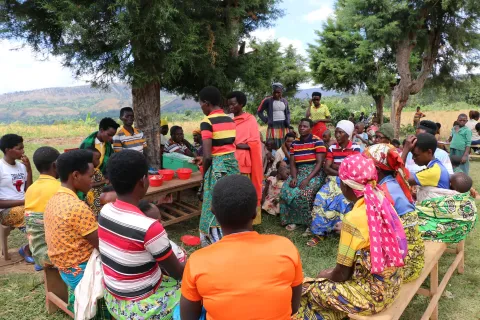
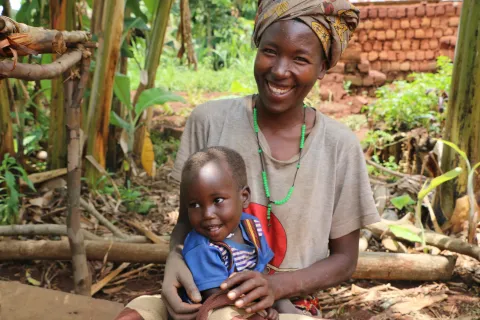
For eighteen months, this pilot project, funded by the Kingdom of the Netherlands, tested a multisectoral approach focused on the first 1,000 days of life, a critical period for a child’s holistic development. Health, nutrition, child protection, water, sanitation and hygiene (WASH), early stimulation, social protection, and social and behavior change were addressed simultaneously to meet the needs of young children and their families.
The results presented during the workshop highlighted the scale of the intervention. Nearly 77,800 children under the age of five, including 25,800 children under the age of two, benefited from integrated multisectoral services. More than 33,500 parents and caregivers were reached with awareness and education programs on early stimulation and positive parenting, while 359 community-based actors received training and capacity-building support.
Beyond strengthening human capacities, the project also made significant investments in health infrastructure. Specifically, the neonatal care unit at Kayanza Hospital was rehabilitated and equipped with a biodigester as well as a modern water supply system, enhancing the quality and sustainability of healthcare services for newborns and their families.

At the institutional level, one of the major advancements lies in the integration of ECD into the Community Development Plan (PCDC) of Kayanza commune, a key accomplishment that ensures the continuity of interventions well after this pilot phase.
Beyond the numbers, the workshop served above all as a forum for strategic reflection. For the partners, the challenge now is to transform these best practices into a sustainable model that can be scaled up nationwide. "The early childhood development model project of Kayanza now stands as a tangible demonstration of this," emphasized the UNICEF Representative, recalling that an integrated approach makes it possible to act simultaneously on all factors influencing a child's growth.
She also added: “Early childhood development is one of the most cost-effective investments in human capital and in accelerating the country’s sustainable development.”


This vision is fully shared by the Kingdom of the Netherlands, the main donor of the initiative. "It is during this time [the early years] that nutrition, various forms of care, and appropriate stimulation can make a decisive difference for the child's health and development, with effects that last throughout their lifetime. We therefore cannot wait to act,” said the delegate from the Dutch Embassy during her speech.
The Kayanza experience also highlighted the crucial role of communities in monitoring and caring for young children. The training of local stakeholders, combined with the involvement of authorities and parent awareness-raising efforts, helped bring multisectoral services closer to households in a sustainable way.
“Scaling up is not only possible, but also necessary,” insisted one participant during the discussions.
The Minister of Public Health, Fidèle Nkezabahizi, reaffirmed that these actions are fully aligned with the National Multisectoral Strategy (2021-2027) and its 2024-2027 Operational Plan, which all the sectors involved are called upon to implement.


The presence and commitment of H.E. Angeline Ndayishimiye, the First Lady, at the opening of the workshop demonstrated the importance that the highest levels of government attach to this issue.
Early childhood development is now an integral part of Burundi’s Vision 2040/2060, which aims to build strong human capital.
"Malnutrition cannot be tackled by a single sector," the First Lady strongly emphasized, stressing that malnutrition cannot be overcome through isolated efforts.
To consolidate these achievements, the workshop's recommendations call for increased public investment, stronger coordination among the ministries (Health, Education, Justice, Internal Affairs, Finance, Mining Resources, Communication, Labor, and Environment), and systematically integrating ECD budgets at the commune level.
Through the future scaling up of the Kayanza model’s achievements, Burundi is about to take a historic step forward: ensuring that every child, regardless of where they are born or their socioeconomic background, has access from the start of life to adequate nutrition, quality healthcare, a safe and nurturing environment, and early learning opportunities, enabling them to fully realize their developmental potential.