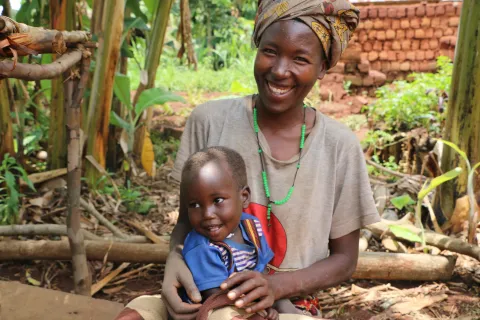
In Bugendana, mothers are transforming families’ lives
With financial support from the German National Committee for UNICEF, vulnerable families are strengthening their self-reliance and improving their children's health through nutrition education, community savings, agriculture, and livestock farming
- English
- Français
On Mugitega Hill, in Bugendana Commune of Gitega Province, laughter and lively conversations echo beneath the trees on this sunny morning.
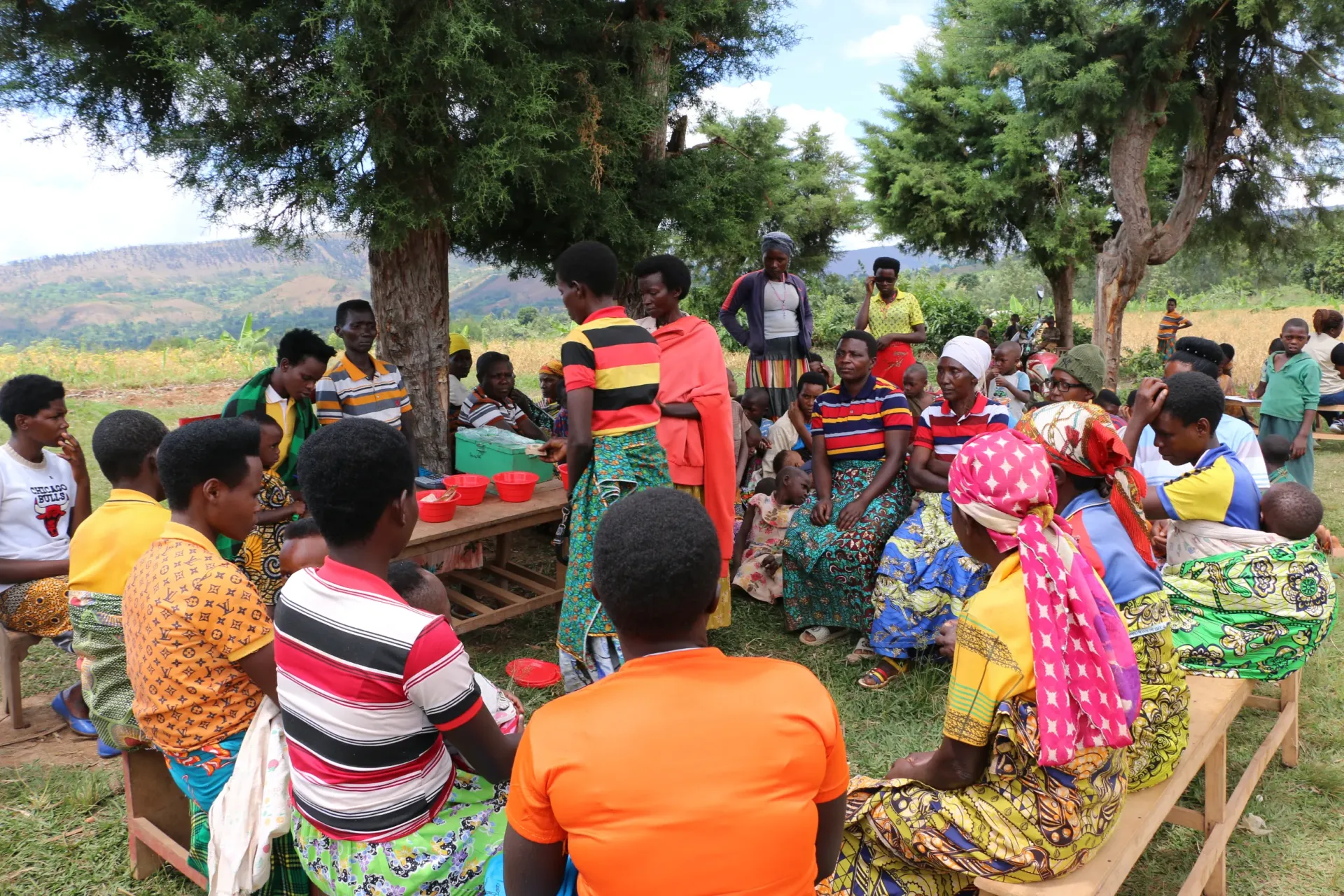
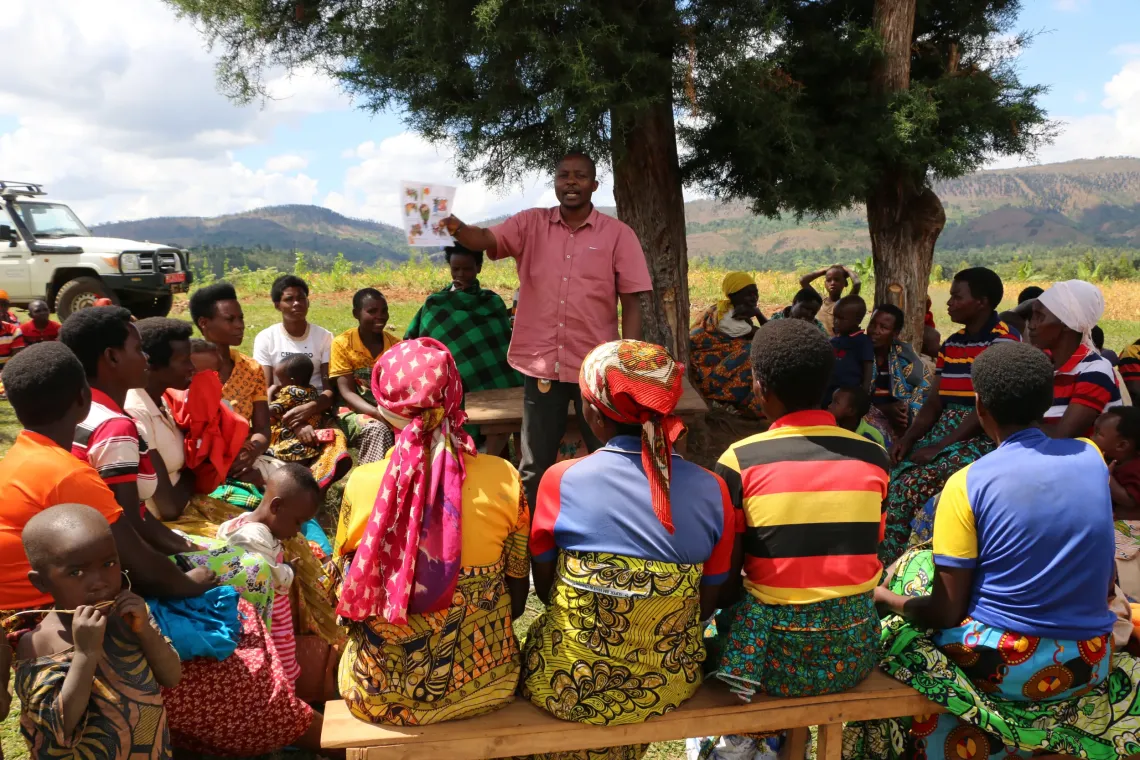
Seated in a circle, around twenty women and a few men are taking part in a meeting of their Village Savings and Loan Association (VSLA). Each member contributes 5,000 Burundian francs to the group’s weekly savings fund, a simple gesture that opens the door to savings, credit, and new opportunities.
But on this particular day, the gathering is about more than money. After the savings session, members participate in a nutrition education session, where they discuss balanced diets, hygiene, and good nutrition practices for pregnant women, breastfeeding mothers, and young children.
This activity is part of a project aimed at improving child nutrition and dietary practices among adolescent girls and women in vulnerable communities in Burundi. The project is implemented by the NGO Concern Worldwide with support from UNICEF and funding from the German National Committee for UNICEF. The initiative seeks to improve the nutrition of children, adolescent girls, pregnant women, and breastfeeding mothers while strengthening the prevention and management of malnutrition. It combines nutrition interventions, group farming, group poultry rearing, the production of fortified flours through the provision of milling equipment, community awareness-raising, and women’s economic empowerment through savings and loan activities.
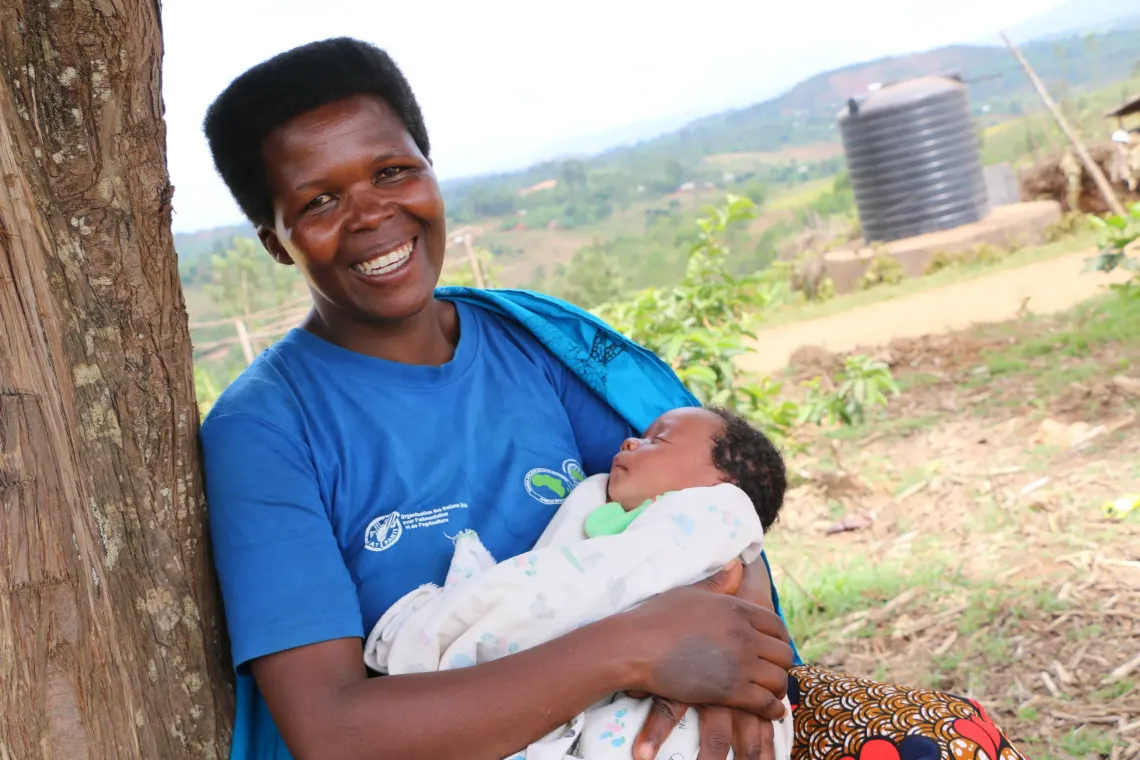
Among the participants is Sandrine Nibizi, a 38-year-old mother of seven and a member of the “Mukenyezi Dushigikirane” VSLA. In her arms, she gently cradles her three-week-old baby. A few years ago, one of her children suffered from malnutrition and received treatment through an acute malnutrition management programme. Today, Sandrine is a different mother: better informed and better equipped, she has adopted healthier feeding practices that benefit her entire family.
“I learned that a pregnant woman should consume energy-giving, protective, and body-building foods. I put this advice into practice. Today, I have given birth to a healthy baby with a normal birth weight,” she says.Avant,
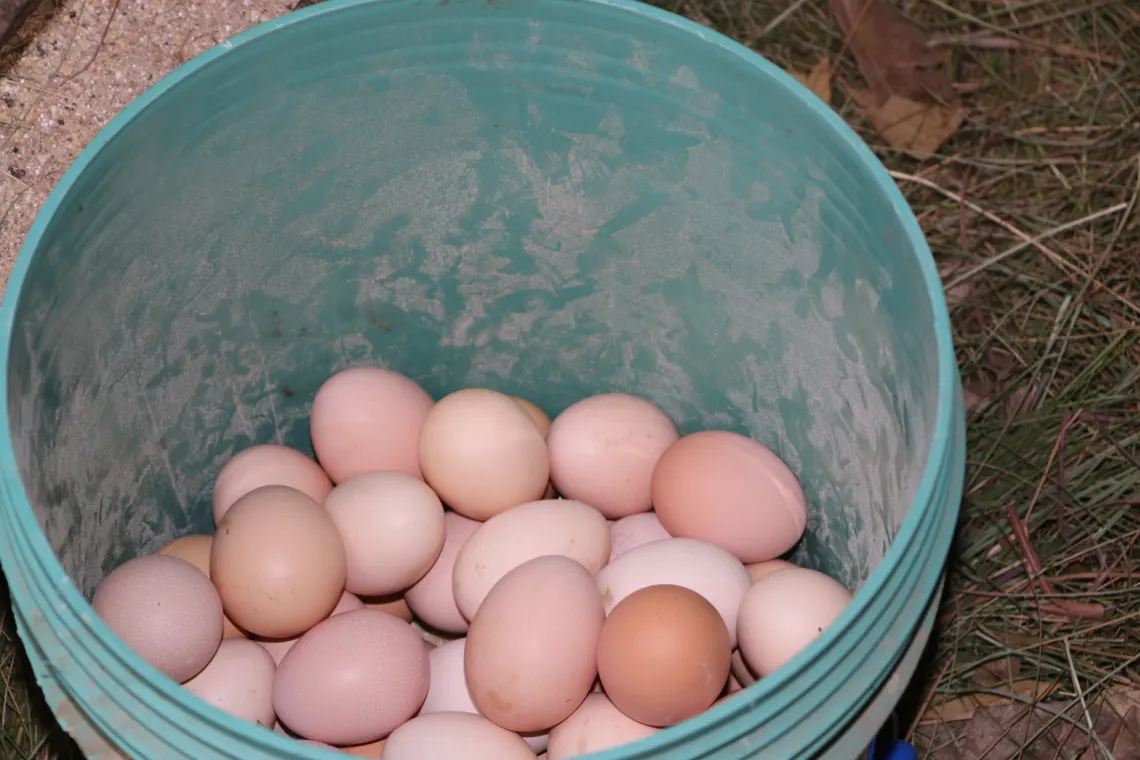
Sandrine was unaware of the importance of certain foods that were readily available around her. “I used to cook beans without vegetables because I didn’t know they were necessary. I also did not eat eggs because I thought they were only meant for sale. Now, both my children and I eat them,” she explains.
Thanks to the project, her family now grows vegetables and fruit trees. “We cultivate vegetables and have planted avocado trees. Before, we had to buy vegetables. Today, we understand their importance and can produce them ourselves.”
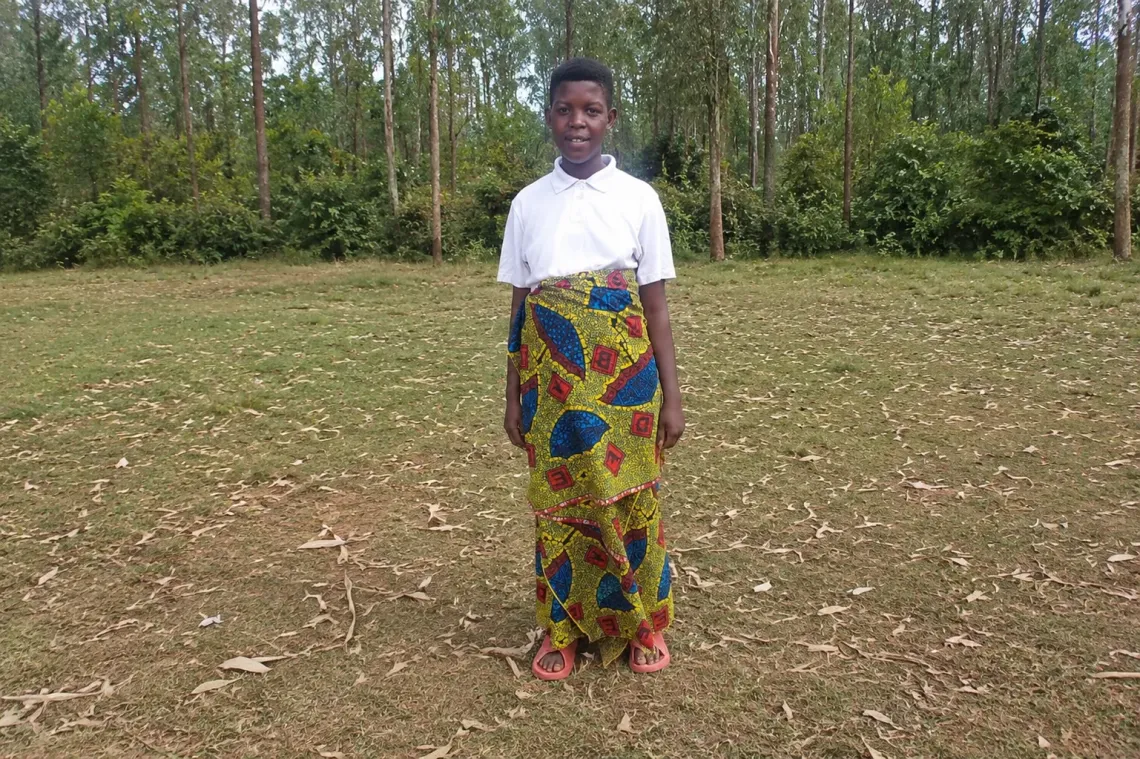
Like Sandrine, Annonciate Nizigiyimana, 33, who is pregnant with her fourth child and a member of the Dushigikire Umwana mu Muryango VSLA, has also noticed an improvement in her health since learning how to combine different food groups, particularly energy-giving, protective, and body-building foods, in her daily diet.
Comparing her current pregnancy with her previous ones, she says: “Today, I feel better than I did during my earlier pregnancies.”
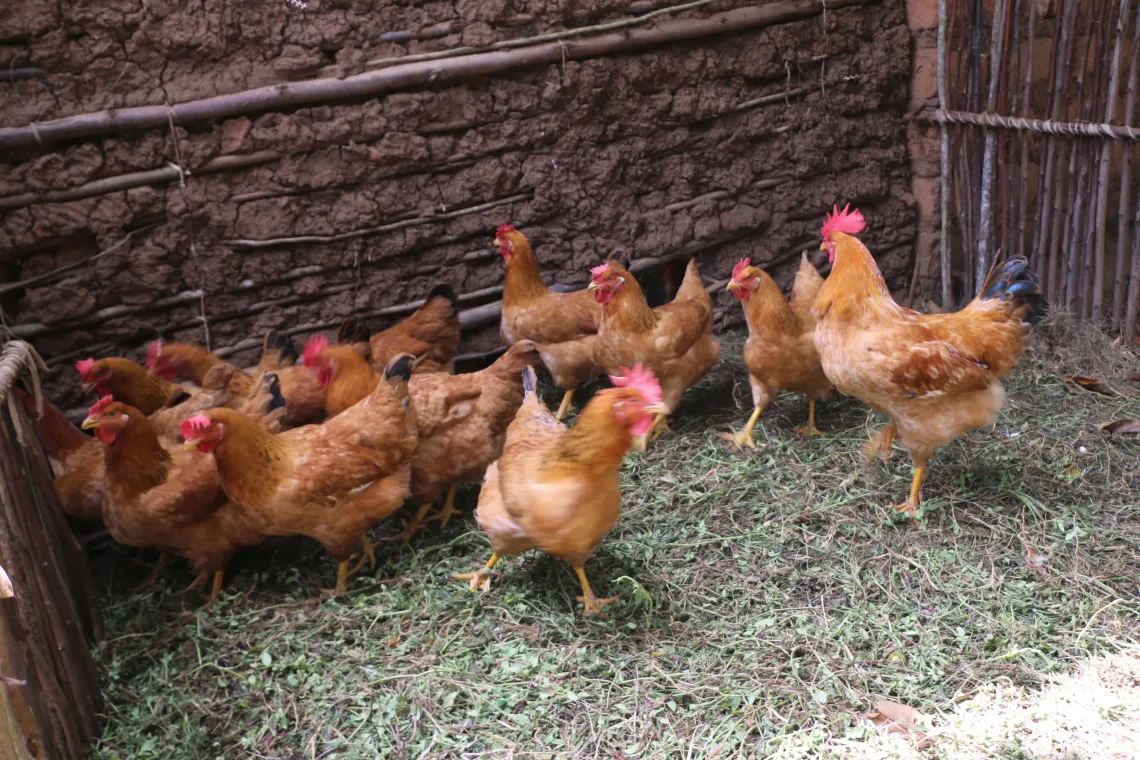
The cooking demonstrations organized through the project introduced her to new nutritious recipes tailored to the needs of pregnant women and young children. “We learned how to prepare a nutritious porridge made from maize, soybeans, wheat, peanuts, sesame, small fish, beans, and sugar. I consume it regularly, and I can feel that it is benefiting me.” Like other members of her group, she also benefits from community savings activities and poultry rearing, which enable her family to consume eggs regularly and improve their diet.
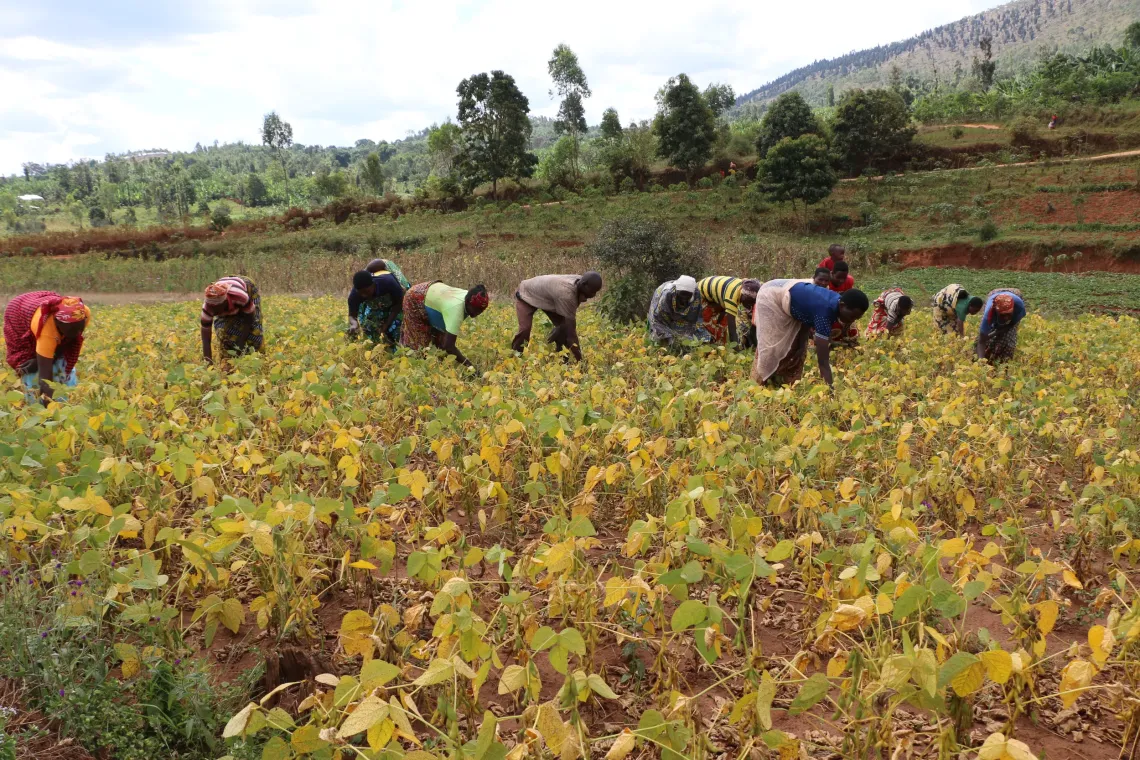
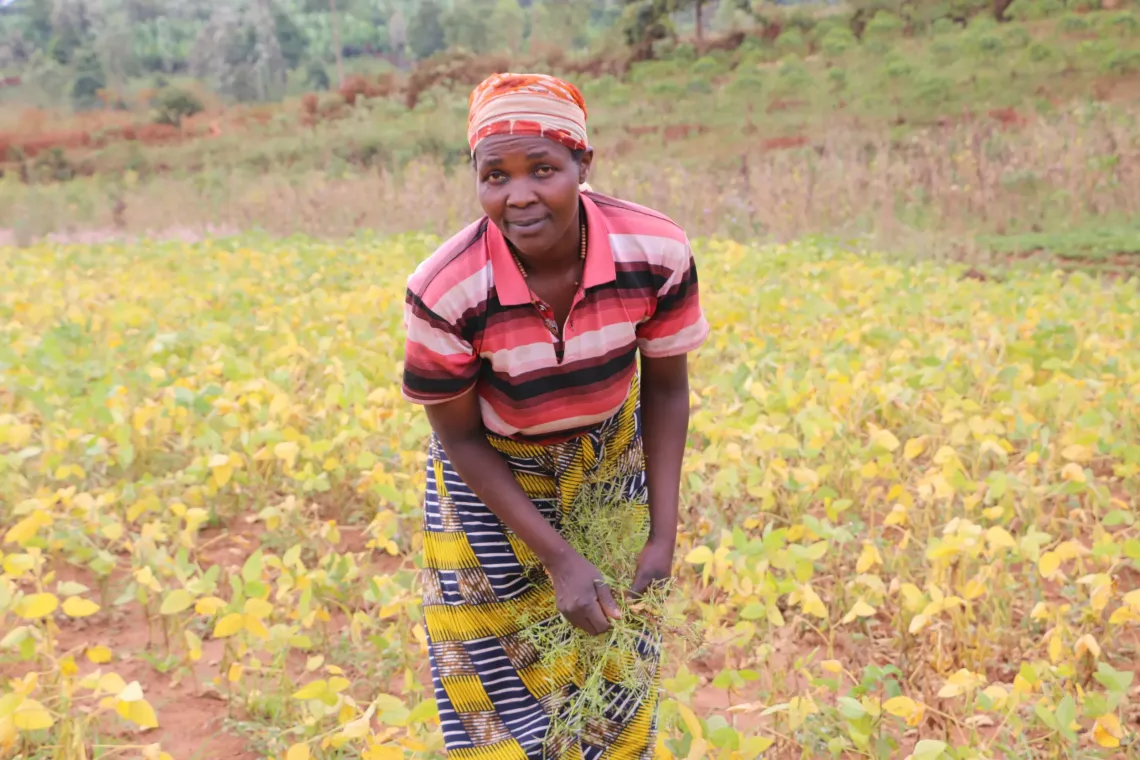
The soybeans used in this nutritious porridge are also at the heart of another initiative supported by the project. On the neighboring hill of Mwurire, at the top of a lush green hillside lies a 40-are community soybean field, currently in the flowering stage. Swaying gently in the breeze, the plants seem to promise a bountiful harvest.
The field belongs to the “Shigikira Umukenyezi” VSLA. For its members, it represents far more than just an agricultural activity. “We will use the soybean harvest to produce fortified flour that will help improve our children’s nutrition,” explains Joséphine, the association’s president.
The soybeans will be incorporated into the nutritious porridges introduced during the cooking demonstrations, creating a direct link between agriculture, nutrition, and family well-being.
Community-based actors at the heart of change.
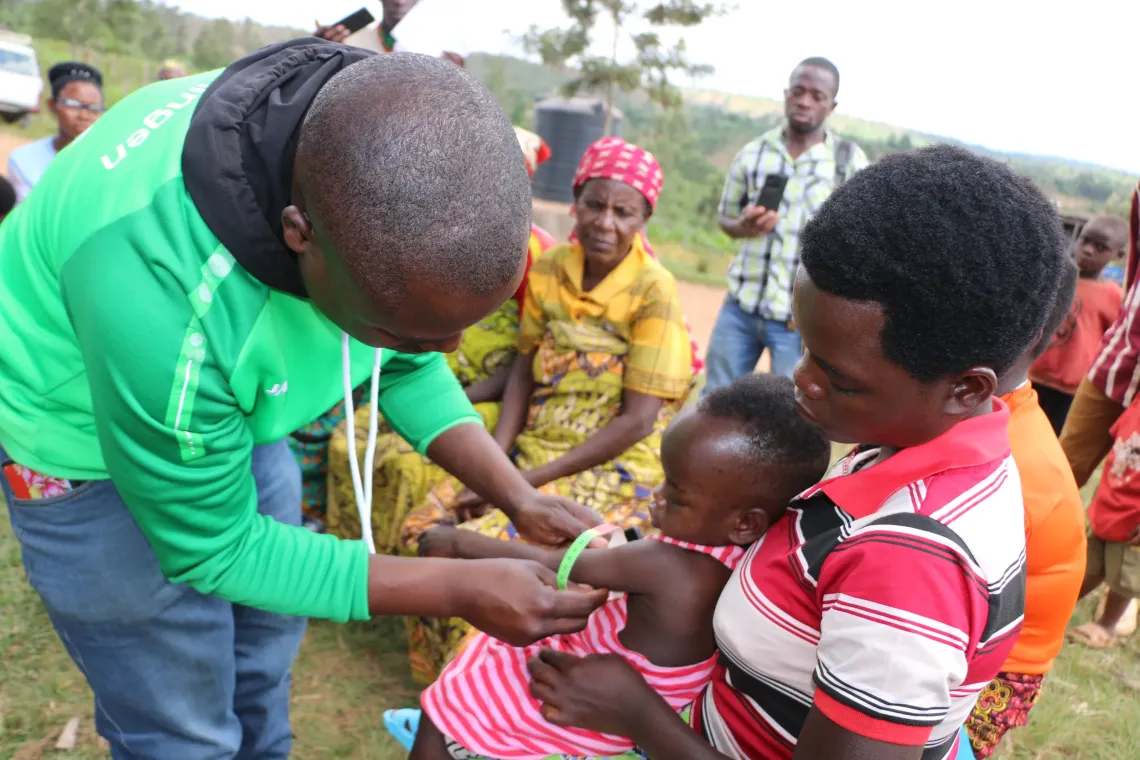
The changes observed in households are also the result of the patient work of community health workers and lead mothers. Every week, Jean de Dieu Nshimirimana travels across the hills conducting home visits. His role is to support families, detect cases of malnutrition early, and promote improved nutrition, health, and hygiene practices. “During our visits, we raise awareness among families about child feeding and good hygiene practices. We also emphasize to pregnant women the importance of antenatal care, postnatal consultations, and infant vaccination,” he explains. Equipped with MUAC tapes, community health workers regularly measure children’s mid-upper arm circumference to quickly identify cases of acute malnutrition. The most severe cases- those in the red zone- are immediately referred to health centres for appropriate treatment. Beyond screening, these workers often serve as the first point of contact between communities and health services. “People listen to us and follow the advice we provide. They also frequently come to us to share their concerns and seek guidance,” he adds.
The work of community health workers is further reinforced by Health Promotion Technicians. Fabrice Manirakiza, a Health Promotion Technician at Bugendana Health Centre, explains: “We provide community health workers with educational tools that help them raise awareness about nutrition, breastfeeding, vaccination, and pregnancy monitoring.”
According to him, the results are visible even at health facilities. “In the past, we sometimes received more than fifty children suffering from malnutrition each month. Today, we only see two or three.”
Through an integrated approach combining nutrition, health, and resilience-building, the project is sustainably improving vulnerable families’ access to quality food and better nutrition practices. In Bugendana, the stories of Sandrine, Annonciate, and Joséphine bear witness to this impact. Through healthier births, better-supported pregnancies, improved access to diverse, nutritious, and healthy diets, and enhanced opportunities for food production, they embody the hope of a generation of better-nourished children and more resilient communities.