A better start in life for newborns in Kayanza and Mukenke.
UNICEF pledges to acquire new neonatal units and quality equipment to improve maternal and newborn survival.

- English
- Français
From the Muyinga center, where we had arrived the day before, we travelled for an hour and a half on a very dusty road. Our guide escorted us into a large facility; we had arrived at Mukenke District Hospital, situated in the Bwambarangwe commune of Kirundo Province.
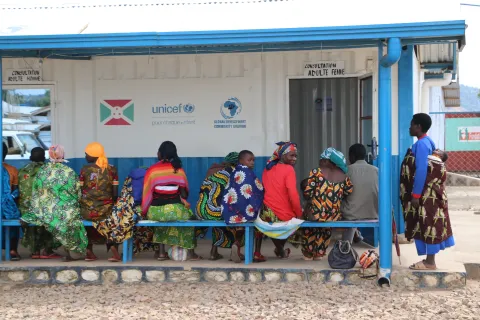
After a brief discussion with the hospital director, we began a tour of the various health services. Our attention remained focused on a room containing four beds. On each bed, three babies rested in their mother’s arms. The mothers, still overwhelmed by the fatigue and emotion of a recent childbirth, tenderly watched over their newborns. This touching scene illustrates both the fragility and the strength of a new life in this essential service, where every moment counts to ensure a healthy start for the little ones. We approached Thérèse, a mother holding her child: “My baby was born here. I walked 25 kilometers from my village because there was no transportation. That’s why the birth took place under hard conditions. My child was put on oxygen because he had respiratory problems”, she confided to us.
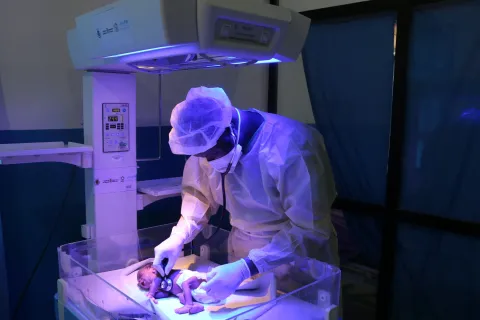
Neonatal distress is an urgent situation that occurs when the newborn shows signs of distress at birth, often due to a lack of oxygen or obstetric complications. Without rapid intervention, this distress can lead to severe after-effects, or even death, for both mother and newborn. Early and appropriate treatment is vital to save lives and limit long-term consequences. “This may include neonatal intensive care, resuscitation, or infection management. However, due to a lack of space and equipment, these cases are often transferred to better-equipped hospitals such as those in Ngozi or Bujumbura”, explains a nurse caring for a newborn at the back of the room. This situation highlights the crucial importance of strengthening local capacities to ensure that every newborn has the best possible chance of survival, regardless of their place of birth.
The Mukenke district has 16 facilities, of which only the district hospital currently has a neonatology department. However, this center faces several challenges that limit its ability to provide optimal care for newborns, along with the fact that the three incubators in the unit are currently out of service. Among the identified constraints is a lack of essential medical supplies. These technical and material difficulties make the management of neonatal distress cases particularly complex. The strengthening of equipment and human resources within the neonatal service of Mukenke would significantly improve the quality of care offered locally and better meet the growing needs of the population.

After our stop at Mukenke, we headed towards Kayanza. When we reached the Kayanza District Hospital, Jérôme Nsabimana, the head of the neonatology department, welcomed us. He guides us to a room where women, accompanied by their children, are resting on beds. In the hallway leading to the neonatology unit, a few mothers were breastfeeding their babies. “When the infants are in incubators, their mothers come to the corridor to breastfeed them here. Our neonatal service does not have a specific room for breastfeeding; the medical staff also have their offices there”, explained the head of the service. In this department, five incubators are used to care for newborns. However, given the numerous babies requiring care at birth, this equipment remains insufficient.
Due to limited resources, the Kayanza hospital recommends and encourages the use of the “Kangaroo Mother” method as a complement to incubators, especially for mildly premature infants. The technique involves placing the baby naked, or simply wearing a diaper, in skin-to-skin contact on the mother’s chest. This comprehensive and practical approach to caring for premature or low-birth-weight newborns boosts both their physical and mental health while strengthening the family bond. “I place my baby on my bare chest to keep his body temperature stable and ensure his safety”, confides a mother breastfeeding her child in the neonatal unit.

In short, the neonatology departments of the hospitals in the Kayanza and Mukenke health districts, as well as the facilities that make up these districts, face several major challenges. Among the most concerning issues are the lack of beds, the shortage of trained health personnel, and difficulties in accessing care, particularly for premature newborns or those in critical condition. Added to this are infrastructure problems, a lack of suitable equipment, and the persistent risk of contamination, which compromises the quality and safety of care.
Hospital managers hope that these investments will significantly improve the quality of neonatal care. They emphasize the need to strengthen the staff’s capacities, ensure a regular supply of medical consumables, and guarantee sustainable funding to meet the population's needs.
Thanks to the funding from the National Committee of UNICEF Switzerland and the Republic of Korea, the hospitals of Kanyanza and Mukenke will receive a complete set of essential equipment to enhance the quality of neonatal care. The equipment includes incubators, respirators, monitors and phototherapy devices, as well as feeding tubes, continuous positive airways pressure systems, resuscitation bags and masks, infusion pumps, umbilical catheters, oxygen tents, adapted mattresses, nasal tubes, neonatal resuscitation tables, medical resuscitation kits, manual suction devices, training mannequins, learning materials, reusable neonatal cuffs and temperature sensors.
“We are convinced that quality equipment, adapted to the specific needs of newborns and healthcare staff, will ensure high-quality care and promote healthy development, to the benefit of neonatal and maternal health”, stated Dr Samson Minani, Director of Mukenke District Hospital.