Climate Displacement, Loss, and Uncertain Futures
The worst floods in three decades uprooted lives in eastern Bangladesh. Floodwaters are receding, but the crisis is far from over.

- বাংলা
- English
EASTERN BANGLADESH – Bangladesh is among the most climate-vulnerable countries in the world, yet this monsoon season, the severity of disasters reaches a new extreme.
The worst floods in 34 years have affected 5.8 million people, including over two million children in eastern Bangladesh. Many children have lost loved ones, their homes, and schools, and now are completely destitute.
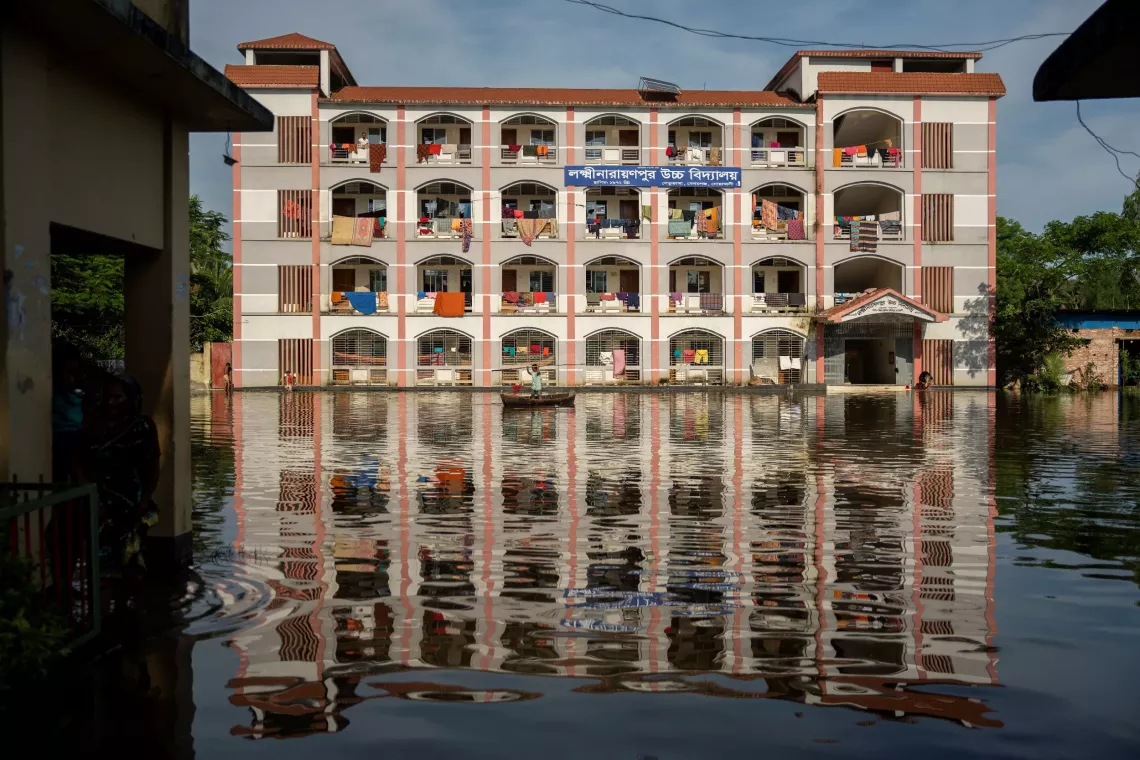
Floodwaters upend and uproot children’s lives, long after the water has receded. Their houses destroyed. Schools closed and turned into shelters. Immunization services on hold. Crops and fishponds flooded. Inside healthcare facilities, medical equipment meant to save the lives of mothers and newborns damaged by water.
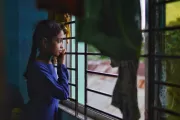
Children do not fully grasp the situation, but they are scared, hungry and traumatized. Their parents are hurting, and their animal friends are dying. Sick with fever and coughing, they lay in the arms of parents, waiting in hospitals that are already overflowing with patients. They miss their homes. They want to play and learn. They want their childhood back.
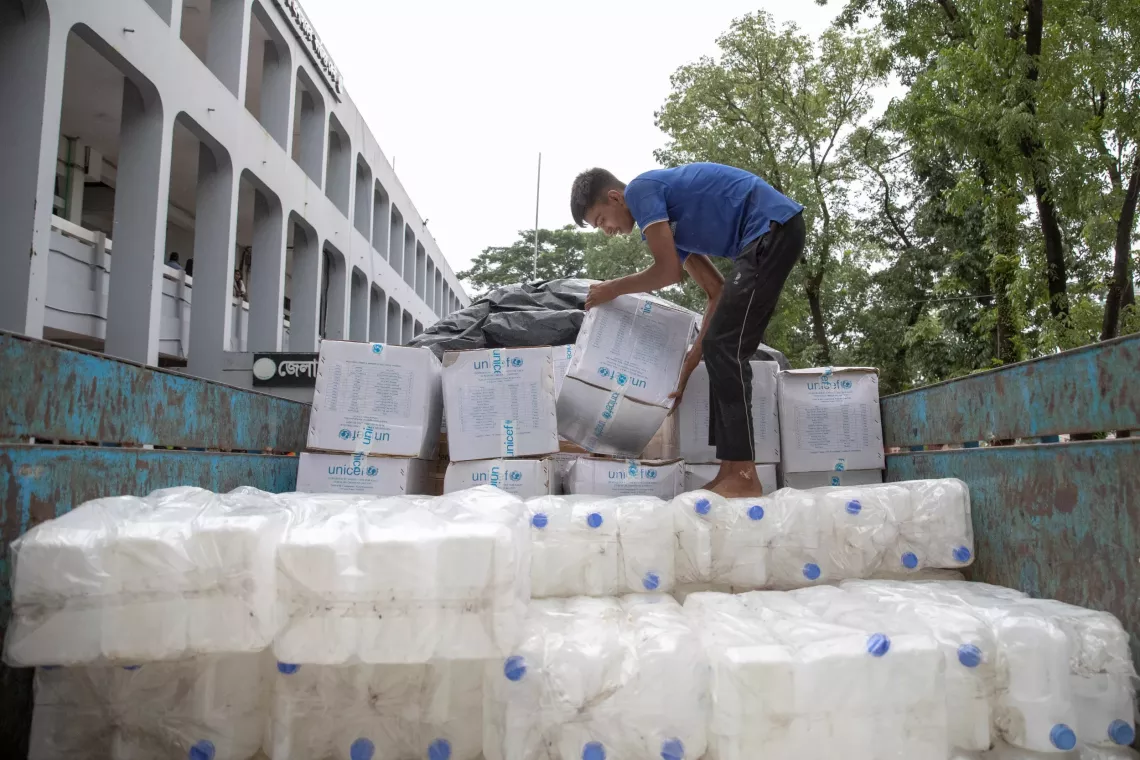
Since the onset of this disaster, UNICEF has been on the ground reaching almost 900,000 people with critical supplies. Yet more children and families are still in dire need.
Displacement from home
Over half a million people have been displaced and are now living in shelters. In these cramped refuges, hundreds of families are sharing minimal resources and limited space under intense stress and despair. In such conditions, the risks of neglect, abuse, and violence—especially against women and girls—are likely to increase.
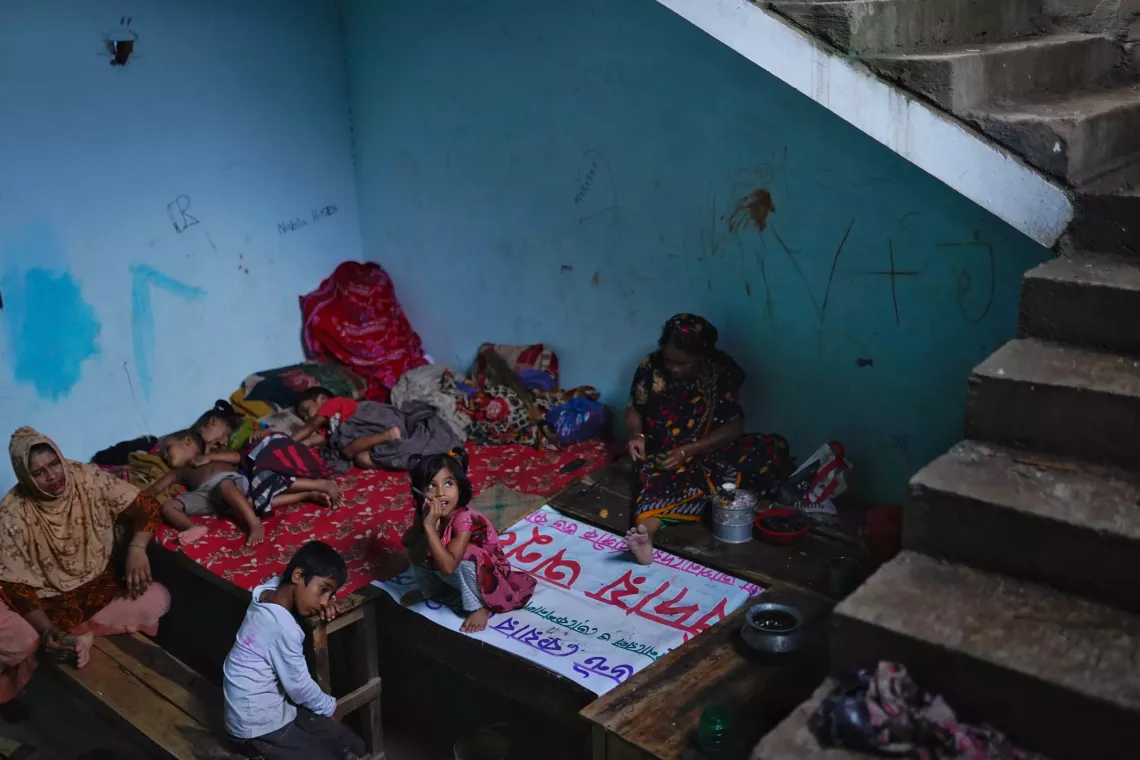
In a school shelter in Chattogram Division, southeast Bangladesh, Mohima’s family has been sleeping on cloths laid over the damp floor.
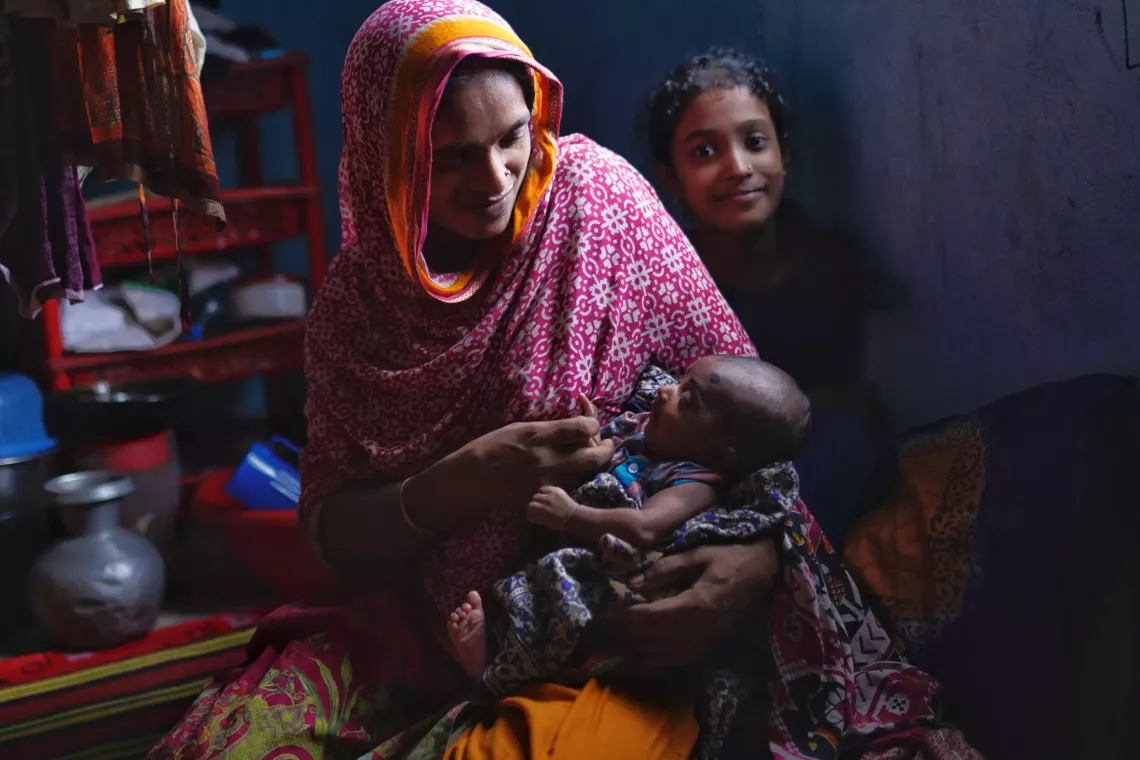
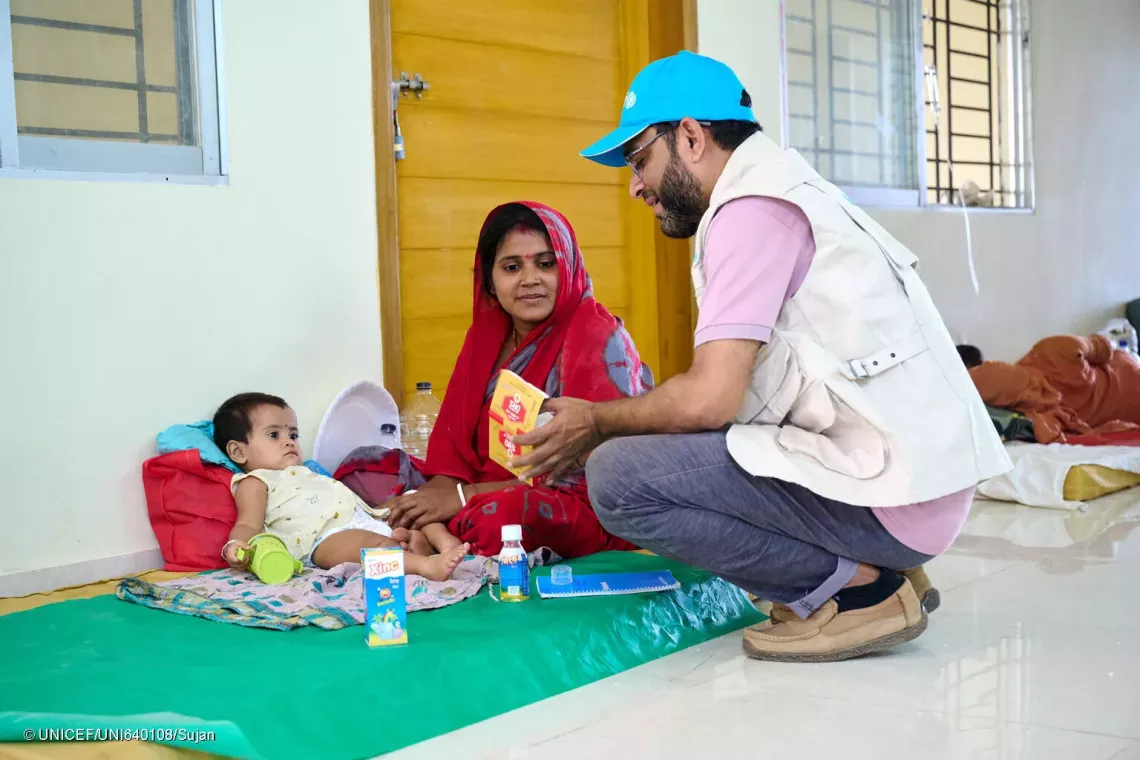
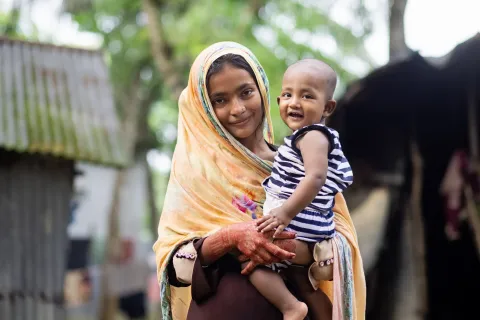
“I have never experienced a flood. Not me, nor my mother, nor my grandmother,” Mohima says as she cradles her two-month-old baby Fatima in her arms. Every cough from Fatima gives her pain. Since the family ran out of money for treatment, Fatima hasn’t yet recovered from pneumonia.


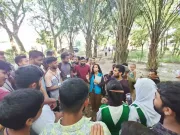
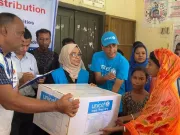
UNICEF, partners and volunteers are on the ground, distributing family and dignity kits, providing psychosocial support and connecting vulnerable children and families with various services, including food, clothing, health care, shelter and cash.


On the Brink of Survival
“I was afraid [of losing my baby] because the lorry was jolting,” recalls Fatema, a mother of four from Feni District in the Chattogram Division. Uncontrollable tears oozed out of her eyes as she recounted her journey through floodwaters to reach the hospital. After walking three to four kilometers, she finally found a lorry that could take her the rest of the way. Feni was one of the hardest hit areas during the floods in late August, with water exceeding danger levels.
Weighing only two kilograms, her boy suffers from low birthweight. Yet Fatema is grateful that at least, he survives. She knows two other pregnant women who have lost their babies because they couldn’t go to the hospital during the floods.


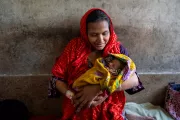
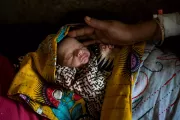
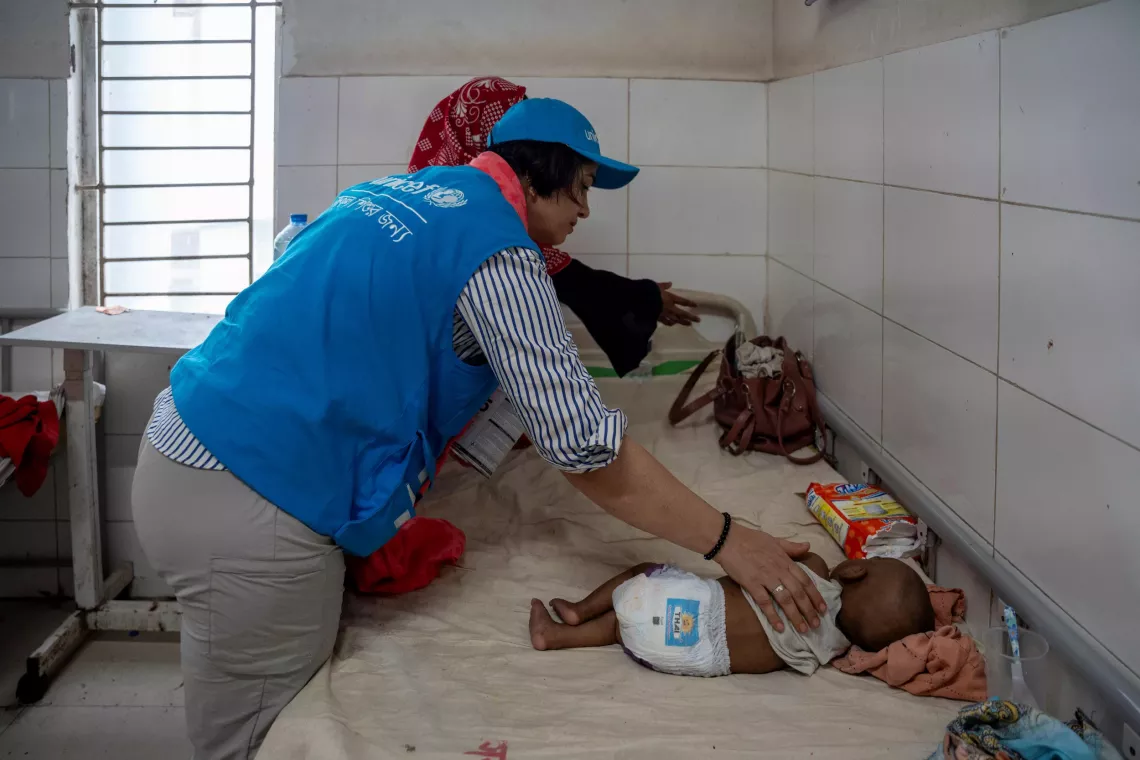
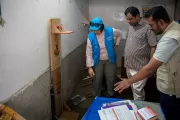
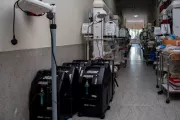
Floods have damaged life-saving equipment in many health facilities and hospitals, disrupting care for mothers and newborns.


Diarrhea and pneumonia on the rise
With two front teeth and a cheerful smile, nine-month-old Nusaiba brightens up any room she enters. Yet due to incessant coughing, sometimes she stops smiling and buries her face in her mother’s scarf. She has recently been diagnosed with pneumonia after being caught in the rain for too long.
“Carrying our three children on our shoulders, we waded through chest-deep water amid rain for almost half an hour to take shelter at our neighbor’s place. At one point, we feared that we won’t be able to save our children,” shares Najma Akhter, Nusaiba’s mother.
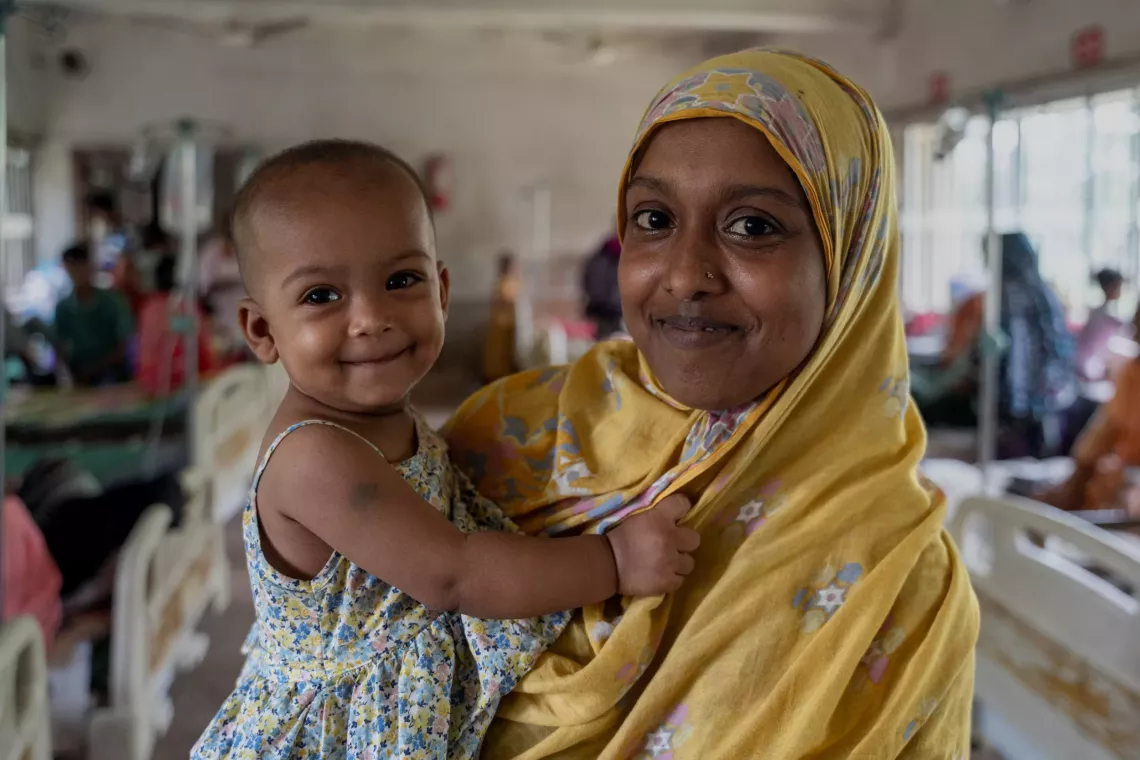
Not only are cases of pneumonia rising, but also diarrhea. To date, there have been more than 9,600 acute watery diarrhea cases in Chattogram Division. In response, UNICEF has distributed 620,000 oral rehydration salts sachets, 100,000 zinc dispersible tablets, and other medicines.
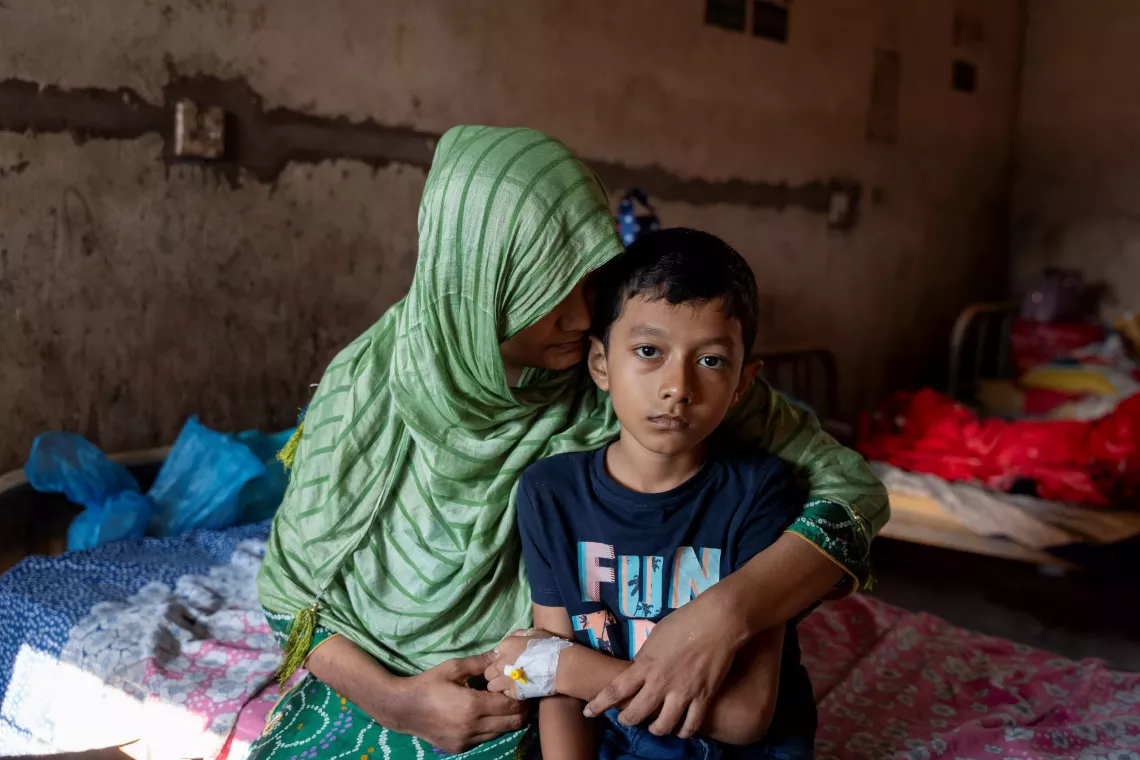
“This is the first time I have experienced a flood my life. The experiences were horrible and beyond my imagination. I never thought I have to experience something like this”
What needs to happen
The recent floods come close on the heels of the floods in north Bangladesh in June and Cyclone Remal in May. Jointly, the three emergencies have impacted over 18 million people across Bangladesh, including 7 million children.
UNICEF has called for US$ 35 million to provide life-saving support to those in need. The funding support will help UNICEF and partners to respond swiftly to urgent humanitarian needs and save lives at scale.