A Child Rights Manifesto to build a better future for every child
How twelve political parties came together to commit to safeguarding child rights in Bangladesh

- বাংলা
- English
What is the Child Rights Manifesto?
As I write this, Bangladesh stands on the verge of a critical democratic milestone – the first national election, to be held in February 2026, following the July 2024 revolution. Historically speaking, as the political parties design their campaigns for forthcoming elections, one of the most important stakeholders – the children of the country – are often excluded from their election manifestos.
In Bangladesh, children represent over 38 per cent of the population and yet, their rights and voices often receive limited attention in national policy debates, particularly during elections when political priorities overshadow public discourse. Identifying this disparity presented a critical opportunity for UNICEF to advocate for the mainstreaming of child rights as one of the political agendas. This initiative ultimately led to the creation of the Child Rights Manifesto, a list of 10 commitments shaped by consultations with children and young people, intended to secure formal pledges from political parties and candidates to prioritize investments in children.
Youth Consultations for the Child Rights Manifesto
The 10 commitments are a result of six different children and youth consultations held all over the country in October 2025.


As a member of UNICEF’s Young People’s Advisory Group (YPAG), I had the opportunity to facilitate one such consultation session in Chittagong. The participants were from indigenous backgrounds, persons with disabilities, and with diverse socioeconomic upbringings, and the diversity was anything but tokenistic. They were all very much in touch with the needs of their communities, and together, they worked through the challenges addressing the changes they wanted to see.
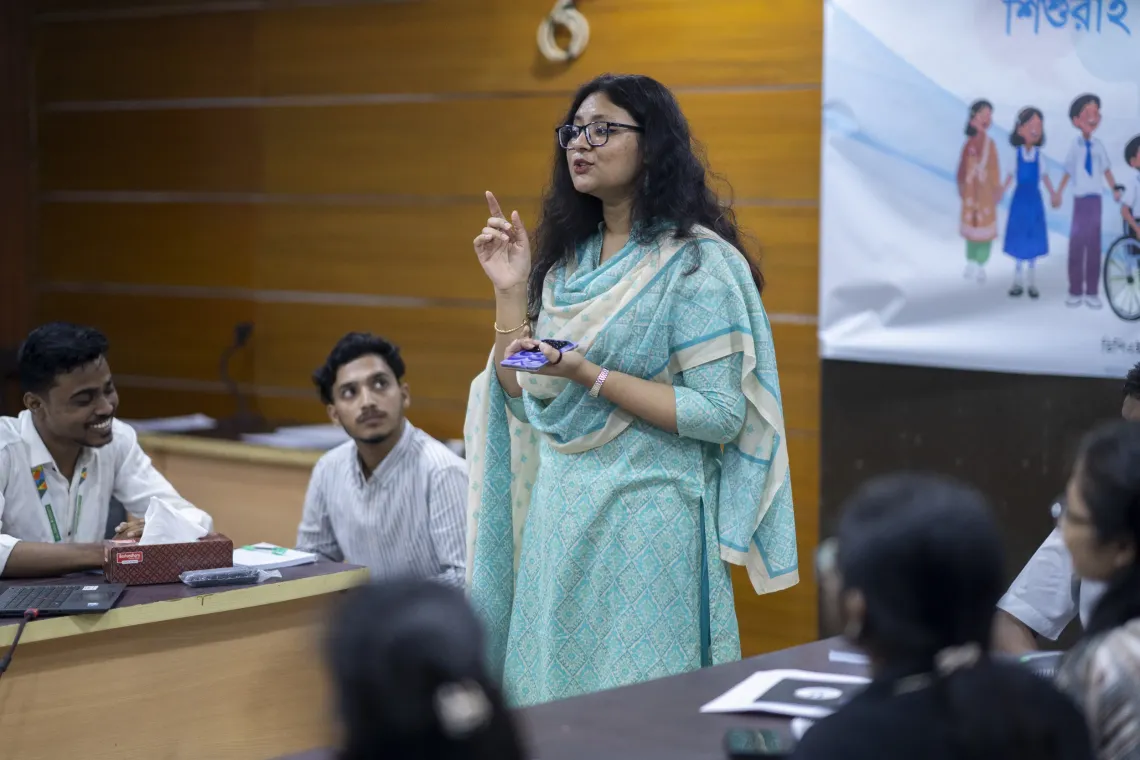
This was also a huge learning experience for me. I learned that, till this day, the primary source of drinking water of several communities from the hill tracts is muddy swamps. Many schools in even some of the more progressive areas of Bangladesh are still not equipped to cater to the requirements of children with disabilities.
“No child marriage.” “No child labour.” “An open playground.”
As the young consultants neatly documented the problems along with the changes they want to see, I was forced to reckon with the stark reality facing the children of our country.
The changes that children want to see are so fundamental, and yet they have to ask for these very basic rights. This also made me realize why the Child Rights Manifesto is so important. It is that invisible safety net that we hope will protect and ensure a more equitable future for the children of Bangladesh, regardless of who comes into power after the national elections.

In Bangladesh, many children grow up in poverty, without proper care, nutrition, or a safe and discrimination-free environment. Some are even deprived of basic rights like birth registration and essential vaccinations. Child marriage makes this situation even worse. When mothers themselves are still children, birth registration becomes complicated, and both mother and baby grow up facing serious physical and mental challenges. Too many children in our country are being born into a cycle of vulnerability and that must end,” said 14-year-old Tayaba.
Children with disabilities fall behind because schools often lack accessible learning environments, trained support teachers, and essential learning materials,” 15-year-old Ahmed Al Abid shared. “While schools in urban areas are increasingly using technology, students in rural areas have far fewer opportunities, widening the gap even further. To build a truly inclusive and equitable education system, we must address these inequalities now.

Signing of the Child Rights Manifesto
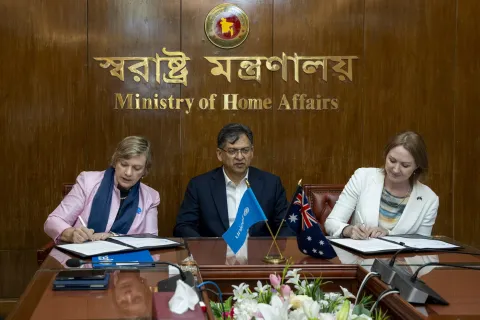
12 political parties gathered to sign the Child Rights Manifesto on 1 December 2025, in Dhaka.
Following the opening remarks by UNICEF Youth Advocate, Gargee Tanushree Paul, the Child Rights Manifesto was introduced to the attendees by Rana Flowers, UNICEF Representative in Bangladesh. In her speech, Ms. Flowers expressed her hopes of the signing to be only the beginning of a continued commitment of the political parties towards investment in the children of Bangladesh.

Afterwards, my fellow YPAG members, Anika, Azhor, Neamul, and I had the opportunity to present the 10 commitments of the Child Rights Manifesto to the audience. As I watched the political leaders in front of us nod along, I hoped that somewhere deep within, they are conscious of the responsibility they have towards ensuring a safe, healthy, and inclusive childhood for the children of our country.
The presentation was followed by remarks and commitments from the leaders of the political parties, think tanks, trade unions, and other key parts of society present at the event. Finally came the historic moment – the signing of the manifesto. All 12 political parties signed the Child Rights Manifesto – a promise to uphold the rights and wellbeing of the children of Bangladesh. The event ended with closing remarks by a 15-year-old Child Journalist, Iftesham, where he reflected on the hopes and expectations of young children from this manifesto.
"We are hopeful that the commitments made today will be reflected in future policies, budgets, and action plans. We expect to see stronger child-sensitive budgeting, enhanced social protection systems, climate adaptation measures that prioritize children, and equitable access to education and health services for all," Iftesham shared.

The Way Forward
Having been involved in the education of underprivileged children for over five years now, I am familiar with the existing level of welfare for children in Bangladesh. Yet being part of UNICEF’s Child Rights Manifesto initiative brought in fresh and alarming perspectives about the current state of well-being of the children in our country and re-affirmed my belief that we still have a long way to go in bridging the gap.
While the signing of the Child Rights Manifesto is a step in the right direction, it is by no means the last. The 10 commitments on education, health, skills, protection, climate resilience, and more are guidelines for the political parties to develop their policies and ensure the protection of every child’s rights. We have a long road ahead, and children and young people are ready to extend their help whenever required in this journey. But the responsibility to fulfill these commitments lies in the hands of our political leaders. Children and young people will continue working to keep them accountable to fulfil the 10 commitments of the Child Rights Manifesto.
Saria Chowdhury is a member of UNICEF Young People’s Advisory Group (YPAG) in Bangladesh. She is also a graduate student at Bangladesh University of Engineering and Technology and an advocate for quality education for all children.