Children Affected by Floods Receive Clothing Vouchers and Psychosocial Support
Through collaboration with Armenia’s Ministry of Labour and Social Affairs and financial backing from the U.S. Bureau of Population, Refugees, and Migration, 300 children impacted by the floods were supported with clothing vouchers.

- Հայերեն
- English
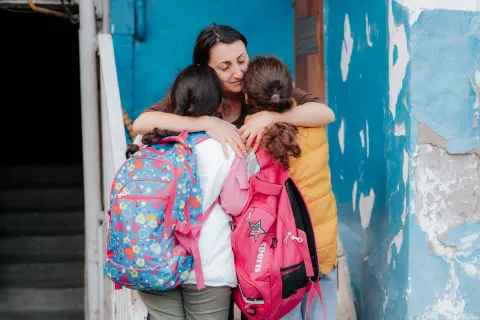
The family of 40-year-old Aksanna Zakaryan, displaced from their hometown in 2023, resettled in a house in Tashir, Lori. With the support and assistance of locals, Aksanna and her husband worked to adapt to their new surroundings and rebuild their home for their five young children. However, the devastating flood in May 2024 brought further hardship.
Aksanna’s video of the aftermath paints a grim picture: a newly purchased washing machine, household appliances (donated by various organizations), furniture, and clothes—all submerged in water. The family now resides in Artashat, in an abandoned former club building.
The voucher support provided to families with children affected by the floods in the Lori and Tavush regions of Armenia on May 25–26 was an extension of the existing voucher initiative. The programme, originally designed to assist around 20,000 refugee children and families who had recently arrived in Armenia, utilized mechanisms established during the earlier phase.
“By working with the Unified Social Service of Armenia’s Ministry of Labour and Social Affairs (MoLSA) and its regional centres, we were able to target affected families with children. These centres also facilitated the distribution of vouchers. This approach enabled us to quickly and effectively identify the most impacted families, whose cases of flood damage had already been confirmed by the relevant departments.”
Aksana’s children—Erika, Edita, Elina, Maria, and Tigran—have already used the vouchers provided by UNICEF to purchase school uniforms. Aksanna reflects on the impact of this support, noting that while some might think assistance of AMD 25,000 per child is insignificant for a large family, it can make a meaningful difference.
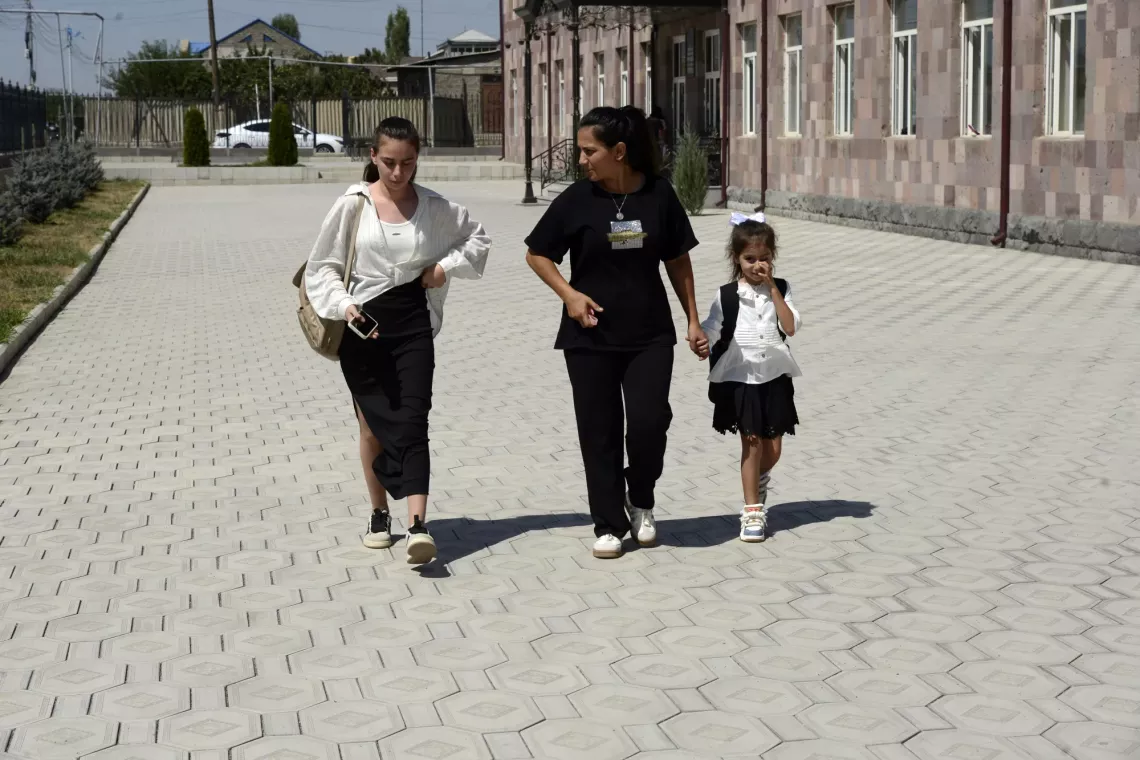
“Especially for families with children, even with one school-age child, you sometimes don’t know how to manage,” she says. “It’s even more challenging when there’s more than one.”
Dadalyan emphasizes that voucher and cash support models should not be seen solely as direct aid but as effective tools for responding to disasters and emergencies. These models empower affected families to prioritize and select what they need most, respecting their dignity and freedom of choice.
“This initiative is also part of UNICEF’s commitment to strengthening a more resilient and emergency-responsive social protection system in Armenia,”
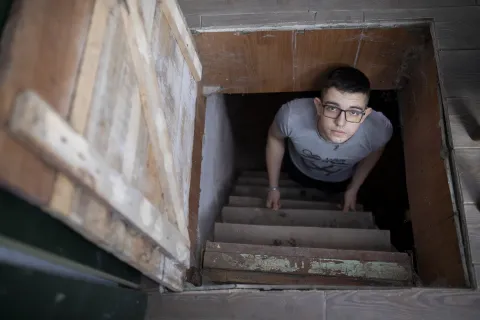
Seventeen-year-old Erika, the eldest of the siblings, studied fashion modeling at a college in her hometown. After relocating to Tashir, she could not attend school for a year due to the lack of a suitable college to continue her education. This setback came after nearly a year during which attending school had already become a significant challenge in her hometown. Education for Erika had turned into a distant dream—something almost unattainable for two years.

“Every day, I begged my parents to find a way for me to continue my education, but it was impossible. Now we’re in Artashat, and I’ve been accepted to a college here. I’m eagerly looking forward to returning to that environment. I want to study tourism, make up for the lost year, and leave that difficult period behind,”
Aksanna shares her family’s struggles: “My mother-in-law worked in a store back in our hometown, but here, everyone says she’s too old. She’s applied to countless jobs, but the answer is always the same. My husband doesn’t have stable work—he keeps animals and sometimes drives a taxi—and I stay home with the children. This support is essential, especially now that we’ve been in Artashat for just a month after facing such a terrible situation. How could I even afford my five children’s basic necessities without it?” She smiles, pointing out, “Look, Edita is already wearing some of the new clothes we got with this help.”
While the support provided to displaced families is often temporary, it serves two crucial purposes: it reassures families that they are not alone in facing overwhelming challenges and offers them a moment to breathe, knowing that at least their children’s clothing and footwear needs have been addressed.
“This kind of assistance is vital for helping families regain stability and find their footing, but we need jobs,” says Aksanna. “For months, our children haven’t had enough protein, and managing the burdens of a large family isn’t easy.”
Through collaboration with the MoLSA and financial backing from the U.S. Bureau of Population, Refugees, and Migration, clothing vouchers were distributed to 300 children affected by the floods.

Strong partnerships between state, international, and private organizations play a critical role in addressing the aftermath of emergencies and supporting those who, through no fault of their own, find themselves in such dire situations—where even buying a single school backpack becomes a struggle. Developing and refining support mechanisms in advance is essential to ensure assistance is fast and precisely targeted when needed.
In addition to clothing vouchers and school bags, UNICEF and its partners provided socio-psychological support to families affected by the floods. By October 31, the needs of 24 families had been assessed, and they received individual case management support. Meanwhile, 50 children from Vahagnadzor, Yeghegnut, and Vahagni in Pambak benefit from socio-psychological support in group and individual sessions. Additionally, the only school in the area impacted by the floods, the Karkop community school, was furnished with new furniture for its primary grades.

“This was, of course, the first step. The next step is to ensure that these children have access to various services, including education, healthcare, and other essential resources within their own community. By providing robust social support, we can guarantee that children have equal opportunities to grow, develop, and reach their full potential,”