Nothing about us without us. LCOY Armenia 2026 unites the voices of adolescents and young people around a common climate agenda
Over 100 adolescents and young people from all regions of Armenia come together to develop a National Youth Statement ahead of CBD COP17 and UNFCCC COP31.
- Հայերեն
- English
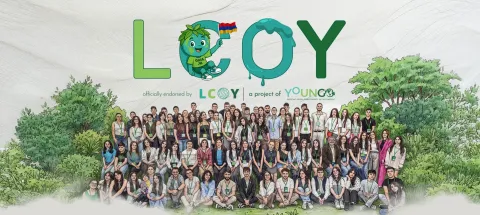
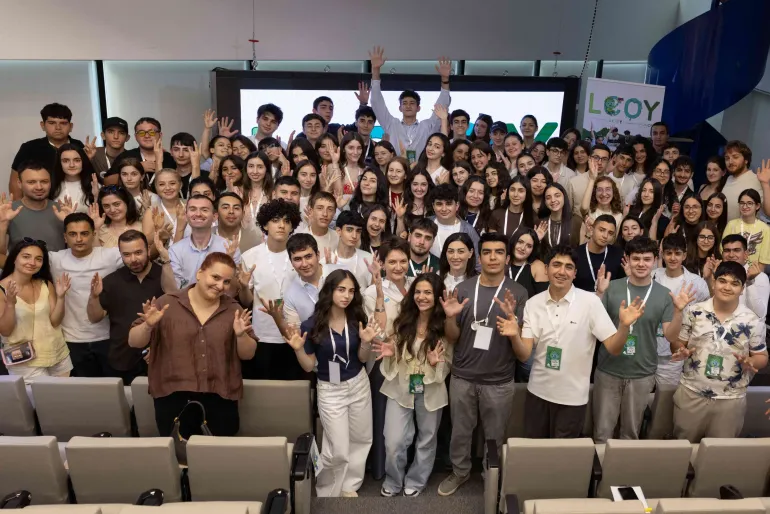
YEREVAN - On July 30–31, 2026, the Local Conference of Youth (LCOY Armenia 2026) took place in Yerevan. This international youth conference on climate change is organized within the framework of YOUNGO, the official global children’s and youth constituency of the United Nations Framework Convention on Climate Change (UNFCCC). This year’s conference was held under the slogan: ‘nothing about us without us’.
The conference brought together more than 100 adolescents and young people of ages 16 to 24 representing all regions of Armenia to discuss the climate crisis, loss of biodiversity, and policies and solutions they believe should be developed and implemented with meaningful and sustained child and youth participation.
LCOY Armenia 2026 was organized by the Youth Council on Climate Change, established in 2025 through a joint initiative of the Ministry of Environment of the Republic of Armenia and UNICEF Armenia. To organize the LCOY, the Council was supported by UNICEF, with financial assistance from the Austrian Development Agency (ADA), and by the Armenia Tree Project (ATP).
From discussions to collective recommendations
The first day of the two-day programme focused on climate advocacy by adolescents and young people and the extent of their influence on decision-making at the national and international levels. Participants discussed youth engagement in the 17th Conference of the Parties to the Convention on Biological Diversity (CBD COP17), to be held in Yerevan in 2026, as well as UNFCCC COP31.
A dedicated panel explored participation of children, young people and other vulnerable-groups, climate education and literacy, climate and environmental rights, and the role of youth organizations in raising and addressing climate-related issues.
On the second day, participants deepened their knowledge of intergenerational justice, the inclusion of children and young people, the interconnection between climate and biodiversity, just transition, the green economy, climate finance and policy making, and climate action and leadership within communities.
Participants then worked in five thematic groups:
- Climate change and biodiversity;
- Just transition and green economy;
- Climate finance and policy;
- Sustainable food systems and agriculture;
- Youth inclusion and intergenerational justice.
The National Youth Statement was developed based on the inputs and outcomes of these group discussions.
“As a young climate researcher, I want to contribute to advancing data-driven solutions in Armenia and ensuring that young people’s potential is integrated into strategic decision-making processes. We are living through a climate crisis, and LCOY is one of the effective mechanisms through which we, as young people, can raise concerns and propose youth-centered solutions aimed at securing our well-being and future,” said Narek Ohanyan, a member of the Youth Council on Climate Change.
“Young people must have an active role in shaping climate policy and decision-making processes. I am confident that their voices can have a real impact on national and international climate agendas. Through initiatives such as LCOY, I hope to inspire more young people to engage in climate action and environmental decision-making,” noted Ani Paltajyan, a member of the Youth Council on Climate Change.
“UNICEF consistently advocates for the genuine and meaningful participation of children and young people, not only by listening to their views but also by ensuring that their voices are reflected in decisions about issues that shape their present and future. LCOY Armenia provides young people from different regions with the opportunity to collectively define their priorities and recommendations and present them to decisions makers at national and international levels. Young people are not merely beneficiaries of climate policy, they are full partners to shape it,” emphasized Hasmik Aleksanyan, Adolescent Development Programme Officer at UNICEF Armenia.
“For the Armenia Tree Project, educating young people is the most important investment in a sustainable future. We believe that young people are the most powerful force for multiplying change: their knowledge and values ripple outward, reaching families, communities and beyond. Guided by this belief, ATP has built a decentralized web of environmental education through its Environmental Education Centers and EcoClubs across Armenia,” noted Marina Mkhitaryan, Director for Strategic Partnerships and Impact at Armenia Tree Project. “LCOY Armenia is a natural extension of that vision, empowering young people to become active leaders in shaping the agenda for positive climate action.”
“Prioritizing young people means not only implementing projects involving youth, but also listening to them, valuing their experiences and recommendations, and creating opportunities for meaningful participation in decisions that shape their future. The Austrian Development Agency recognizes the importance of engaging youth as full partners in driving change and supports the transformation of their ideas into practical action, in line with ADA’s mandate and capacities,” said Vahe Sargsyan, Programme Manager at the Austrian Development Agency.
At the conclusion of the conference on July 31, participants formally adopted the National Youth Statement through voting. The bilingual statement will be released on Monday 3 August 2026 and will serve as a representative position of Armenia’s adolescents and young people, directly contributing to the development of the Global Youth Statement in the lead-up to COP31.
Media contacts
About UNICEF
UNICEF promotes the rights and wellbeing of every child, in everything we do. Together with our partners, we work in 190 countries and territories to translate that commitment into practical action, focusing special effort on reaching the most vulnerable and excluded children, to the benefit of all children, everywhere.
For more information about UNICEF and its work for children, visit www.unicef.org.