Building a circle of support: Supporting the people children rely on the most
How parents across Armenia are gaining practical skills to care for their own well-being and better support their children.

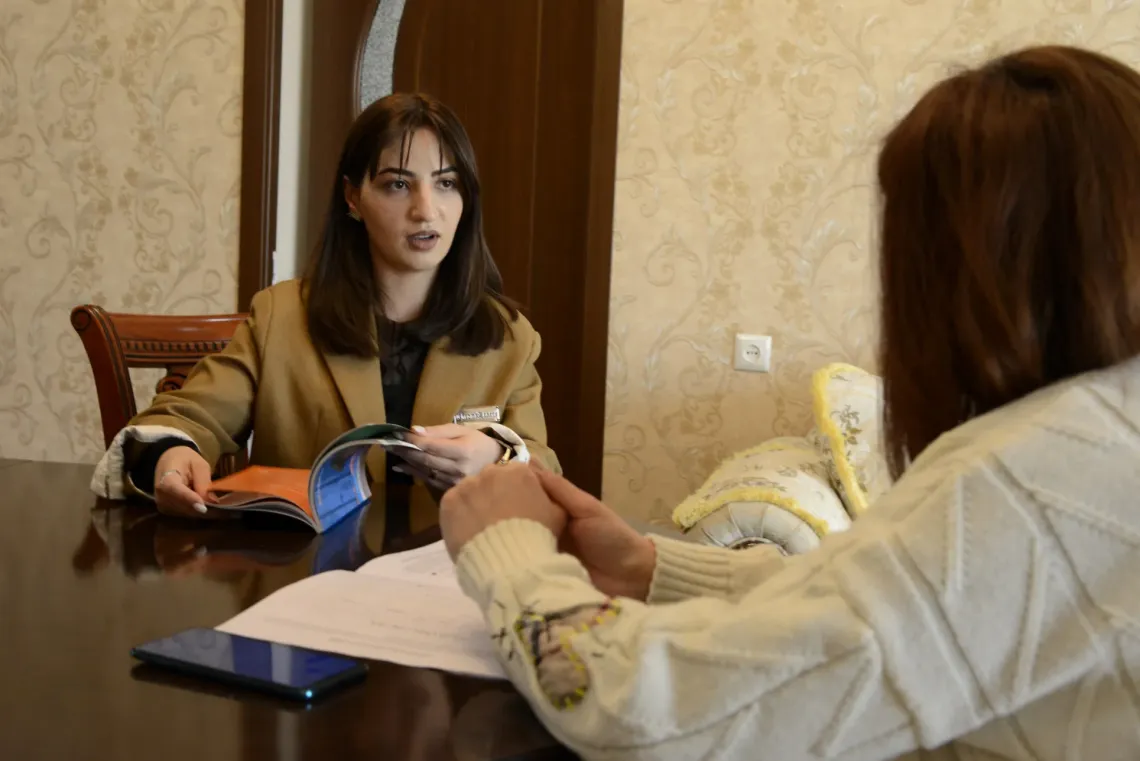
Marine Hovhannisyan spends much of her day caring for others. As a kindergarten teacher in the village of Noratus and a mother of three, she knows how easily her own needs can end up at the bottom of the list. Until recently, coming home after work meant moving immediately on to the next set of responsibilities.
“I used to come home exhausted from work and immediately start doing chores,” Marine says. “Now, when I come home, I tell my family I need a few minutes to rest.” It may sound like a small change, but, for Marine, this tiny adjustment has changed more than her daily routine.
In 2025, Marine joined over 1000 other parents as part of a nationwide expansion of UNICEF’s peer support volunteers’ network, developed in partnership with Parenting School NGO and with support from the Afeyan Foundation. Through the series of sessions and regular online follow up later on refugee and host community parents alike learned practical ways to understand and regulate their emotions, and, as Marine puts it, communicate more positively and establish healthy boundaries.
Right after the sessions, Marine began applying what she learned to her relationships at home and parenting approach with her children. As many were set out to do, she also started sharing these skills and the new knowledge with other parents in her community.
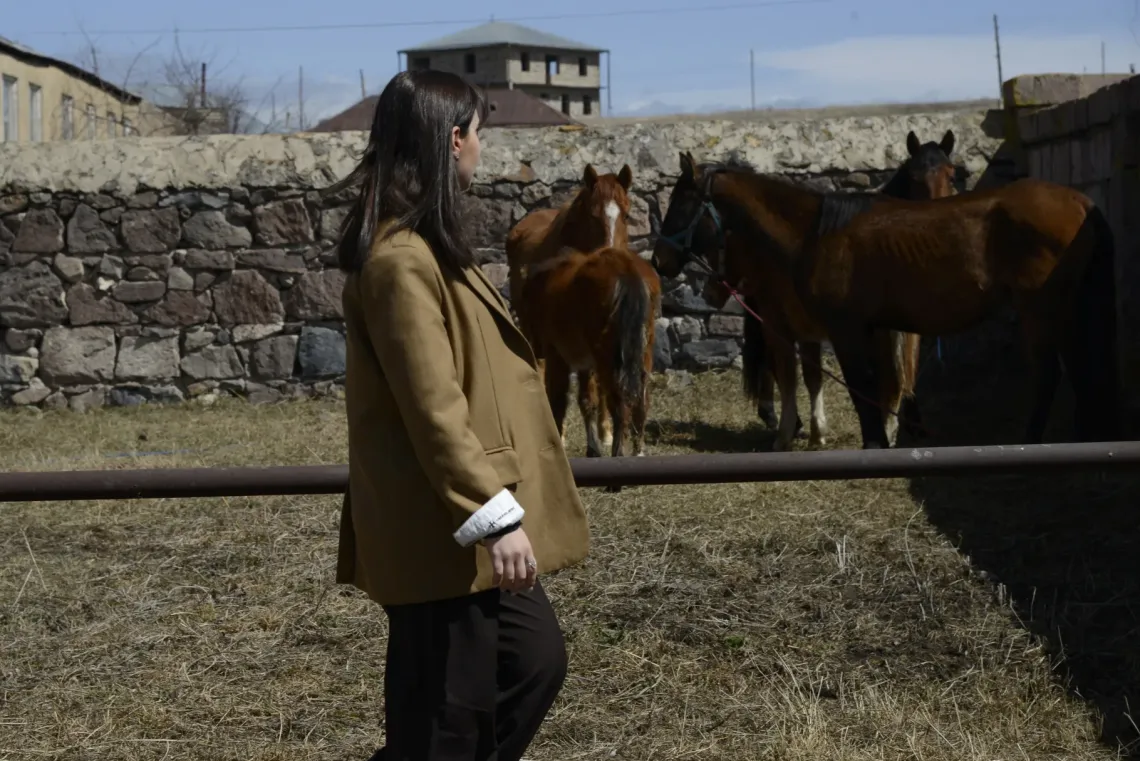
That is exactly how the programme was designed to work: rather than limiting mental health and psychosocial support to specialized settings, UNICEF and Parenting School have helped build networks of trained parental, professional and adolescent peer support volunteers who can take practical knowledge and support into the places where children and families live their everyday lives. Together, they have already reached more than 24,000 parents in their own and neighboring communities.
Marine shares that one of the sessions that stayed with her was about personal boundaries. At first, she says, many participants associated boundaries with pushing people away. Through discussion, they began to understand them differently, as part of building relationships based on mutual respect.
For the mum of a teenage daughter, that lesson quickly became practical. “Sometimes when we have guests over, my daughter just wants to stay in her room. And I let her,” she says. “If I want her to respect my boundaries, I have to model that myself.”
Marine also learned simple breathing and grounding exercises to help manage stressful moments. She now shares some of those techniques with her daughter. When her daughter feels anxious, Marine encourages her to notice objects, colours or smells around her, helping her bring her attention back to the present moment.
More recently, she brought together 10 parents from her kindergarten to talk about positive discipline approaches, using some of the print materials she received during her training sessions. “Those manuals rarely make it back onto the shelf; I'm constantly rereading them,” she notes.
“Sometimes when we have guests over, my daughter just wants to stay in her room. And I let her.” “If I want her to respect my boundaries, I have to model that myself.”
Marine's experience illustrates the multiplier effect at the heart of the programme: knowledge gained by one person can travel from a training room into a family, from a family to a kindergarten and from there to other parents and children.
More importantly, peer support volunteers are not expected to do this alone. They continue to receive regular professional supervision and support, which helps them identify those who need individual or more specialized support and encourage them to seek it where relevant.
“Children's mental health is shaped not only when they enter a psychologist's office, but every day, through their relationships at home, at school and in their communities,”
says Viktoria Ohanyan, UNICEF Child Protection Specialist a.i. “By equipping parents, professionals and adolescents with practical skills and ensuring they have continued supervision, we are bringing support closer to children and families, including refugee families. One trained volunteer can support many others, while also helping recognize when someone may need more specialized care.”
For psychologist Anna Velitsyan, founder of Parenting School NGO, this approach works because participants first experience the value of what they learn in their own lives.
“We want participants to benefit personally before they begin supporting others. When people start seeing changes in their own relationships, with their children, partners or colleagues, that knowledge becomes something they have experienced, fueling their motivation to share it with others.”