Young People from Shkodra are Fighting Prejudices and Stereotypes through TED Talks and Art
On International Women’s Day, students from high school “28 Nentori” in Shkodra are taking bold steps to challenge stereotypes, dismantle prejudices, and advocate for gender equality.
On International Women’s Day, students from high school “28 Nentori” in Shkodra are taking bold steps to challenge stereotypes, dismantle prejudices, and advocate for gender equality. Harnessing the power of platforms like TedTalks, these change-makers are using their voices to spark conversations and inspire action.
In a recent survey from the online platform of U-ReportAlbania, about 60 percent of respondents when asked about gender norms in our country, found that girls in Albania are discriminated against in aspects of gender-based violence, financial autonomy, and employment opportunities.
Thanks to the generous support of the United Kingdom government, the European Center, a local NGO in partnership with UNICEF supported a youth–led initiative for the empowerment of girls. The project was designed to empower boys and girls with the awareness, confidence, and skills to influence and become change-makers in their communities. Through workshops, awareness campaigns, and advocacy efforts, high school students are learning how to be activists to challenge gender stereotypes, exercise their voice and advocate for equal opportunities, eradicate gender-based violence, warn against the risks of trafficking, and discourage child marriage as a harmful practice.


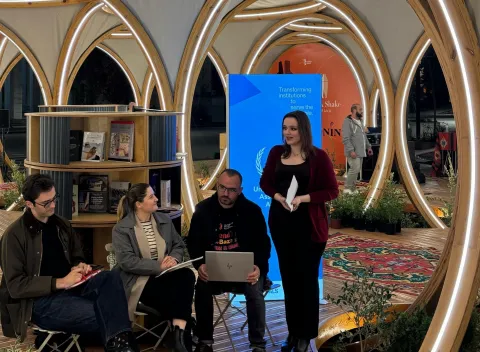
Full of passion, creativity, and determination, they shared compelling stories with the audience through the TEDTalk format, as they took the stage, one by one.
One of the girls said that in her house, the brother occasionally helps the mother in doing dishes. However, she was warned by her brother to not go around and confess this to her friends, afraid that people could make fun of him. Another testimonial was sex-based discrimination. Boys are more celebrated than girls, still. It was the family of her cousin who organized a big birthday party when the boy was born, but sadly, nothing for the birth of the girl. Another participant in the TedTalk questioned if women in Albania should continue to party on Women’s Day while they are still underpaid, violated, and abused.
Adora, 16, confesses: “We’ve been trained by our mentors at school to believe that we can be part of the change. We can’t close our eyes anymore. Every day we are recognizing the urgency of addressing issues of inequalities. Also, we do have cases of early marriage with a promise of a good life abroad, and many other stereotypes that still exist in our community. It's true that I’m free to speak up and to chase my dream but still, I do not see this happening everywhere, among my friends, or in society."
When our parents listen to our conversations about the efforts, we are making against prejudices and gender inequalities, they feel proud that they are raising their children with a different point of view, unlike their generation. I believe in the empowerment of girls, yes, but we need a supportive environment, too.
Endri,17, pointed out the root cause that makes abused women and girls stay in an abusive relationship. “Poverty is interlinked with gender-based violence and harmful practices, but these are kept alive due to social norms. There is a huge need for awareness in our city. We are using all communication platforms to convey the message of promoting equal rights between girls and boys. But I don’t know if this is enough."


At the end of the TEDTalk that the students customized as TED#28 to hail the name of their school, the jury members cast their votes, acknowledging the most impactful presentations. It was agreed by all the jury members the importance of these initiatives which serves to build a dialogue and inspire others to believe in girls' and women's empowerment.
Art has long been recognized as a potent tool for social change, capable of going beyond barriers and conveying powerful messages. At the heart of the historic city of Shkodra, a mural painting “Of the same root” was revealed by the deputy mayor of Shkodra, Teuta Qyteza, and the Director of Education Authorities, Brisela Kadia, symbolizing the collective efforts and commitment of local authorities to support initiatives aimed at fostering a society where women and girls enjoy their rights.


Ergis, the school president confesses with pride: “By displaying prominently the mural in a public space, the message of unity and empowerment is extended to all members of the community, hoping that the society would reflect that gender equality matters for all of us.”
As young people continue to spearhead efforts to combat prejudices, gender discrimination and stereotypes, human trafficking and child marriage, it is evident that their impact extends far beyond individual initiatives. More needs to be done at the community level so youth can drive the change, and give a fair chance for a more equitable future for every boy and girl.