Bridging Neuroscience and Community: A Summer of Mental Health Advocacy in Albania
One Student’s Journey to Turn Scientific Knowledge into Healing and Hope at Home
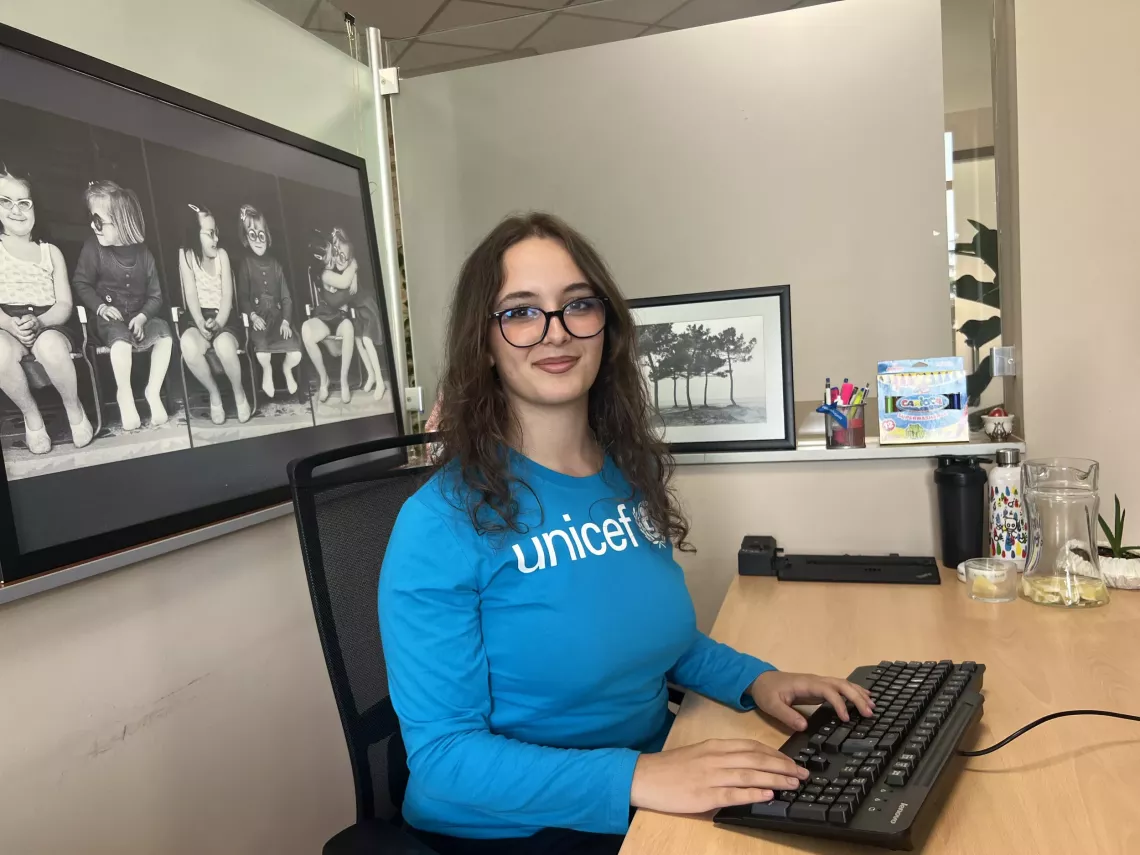
As an undergraduate student from Albania currently studying neuroscience, mathematics, and biology in the Netherlands, I have always carried a deep desire to contribute to meaningful change, starting small, starting from home. This summer, I had the privilege of experiencing that by volunteering with UNICEF Albania.
Mental health remains a deeply stigmatized and often overlooked issue in Albania. Through my studies in neuroscience, I have come to understand the brain-based mechanisms behind trauma and abuse. This knowledge, gained abroad, is now being translated into practice back home, and it is becoming clear how powerful this exchange of knowledge can be.
I shared a neuroscientific perspective with psychologists, educators, and community workers, exploring the anatomical and biological imprints trauma leaves on the brain and behavior. This physiological understanding often helps people grasp the seriousness of mental health issues in ways that abstract, emotional narratives might not. When individuals see the “why”, the logic behind certain behaviors or struggles, grounded in brain function, awareness grows, and action does follow.
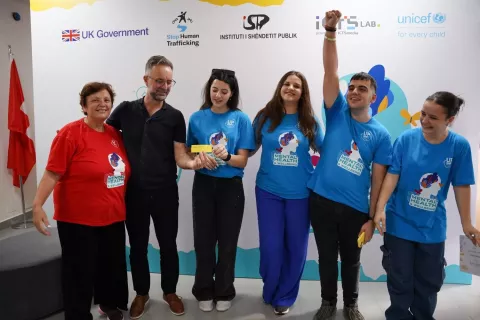
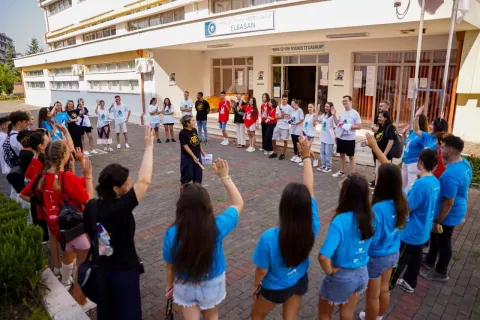
One of the most impactful experiences was visiting Albania’s first Multifunctional Psycho-Social Center in Kukës, part of the EU4SocialCare Project, which aims to strengthen social care services in 14 targeted municipalities across Albania, building inclusive systems for those most at risk. It is also part of Albania’s Mental Health Action Plan 2023–2026, which works to bring health and social care together under an EU-aligned social protection vision. The project targets 6,000 vulnerable families through direct social care services. This center offers a safe space where children and adults can speak openly about their mental health and seek support without fear. There were 15 young participants during our visit, and many of them left feeling more confident sharing stories and discussing the issues they experience regarding bullying. I remember Anila*, a teenager I spoke with, saying “This place feels safe… I would gladly come back here again”.
This center is more than a support center, it is a space of cultural shift. It is where mothers are sensitized, children are listened to, and a community begins to understand that asking for help is not a weakness, but a strength.
Because this mission aligns fittingly with World Mental Health Day on 10 October, linking local efforts to such a global moment emphasizes that mental health advocacy in a small town like Kukës echoes far beyond its borders.
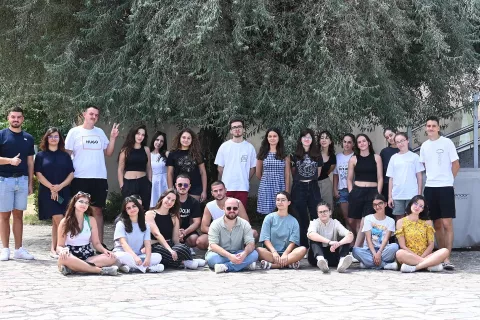
Through this experience, I have also built meaningful connections across sectors. I’ve collaborated not only with UNICEF staff undertaking projects in the health and well-being aspect, but also those in the education aspect. I have become friends with brilliant Youth Program members and I have worked in the field with partners from different NGOs such as Terre des Hommes and World Vision. Together, we have built a network that looks forward to so many more new opportunities to ensure the wellbeing of individuals and especially, children.
What I’m doing is, in many ways, a quiet resistance to a wider national challenge: the mass emigration of young Albanians. Many feel there is no future here, nothing to come back to. But I want to show that we can return and create something impactful with the knowledge and experience gained abroad. We can apply international education to local needs.
My hope is that this experience not only strengthens my connection to my home and family but also serves as a model, a message that it is not strange or naïve to come back or link your occupations to your country, but it is powerful.
If I can contribute to change in my field and inspire just a few others to do the same, then this summer will have meant even more than I hoped.
*The name of the teenager has been changed for privacy concerns.