Beyond the algorithm
Building an education system where technology & human potential grow together

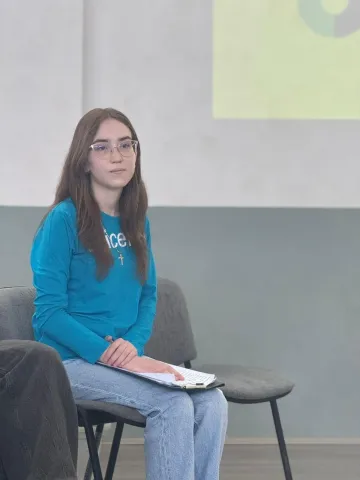
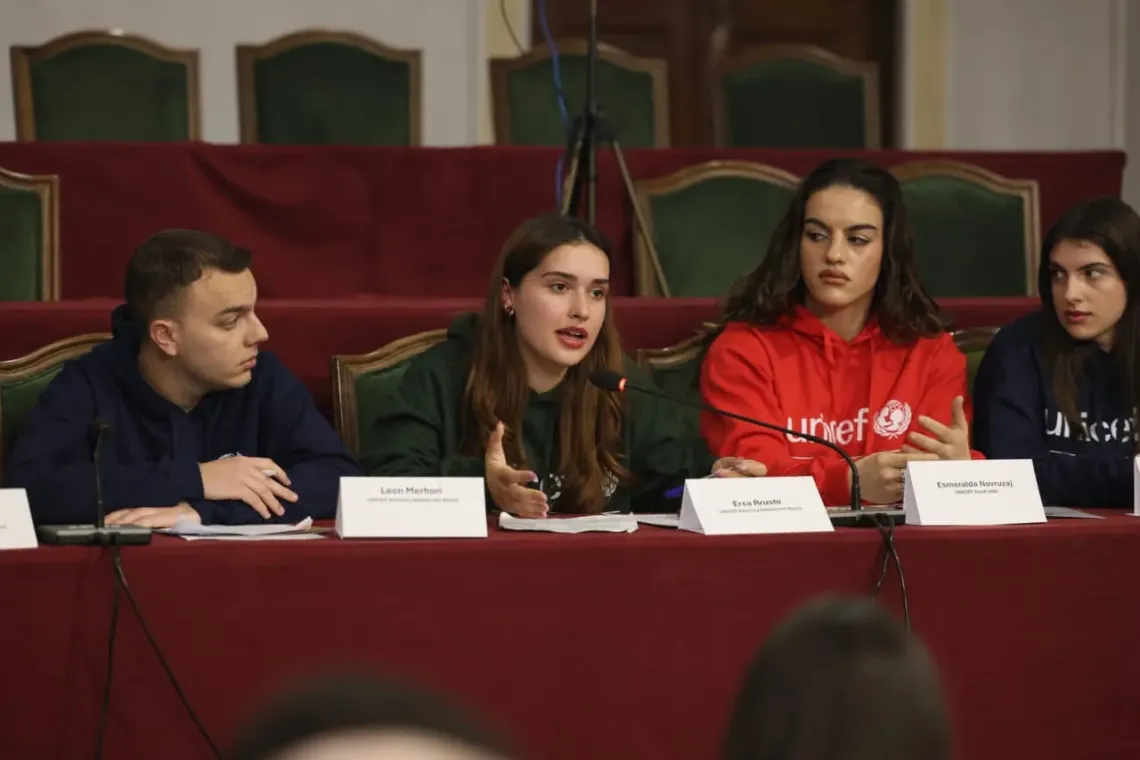
Hello everyone, or perhaps "Hello, World!", the phrase that marks the beginning of every programmer's journey. I am Ersa Rrushi, a first-year Medicine student and Adolescent Advisory Board member at UNICEF Albania. Before all of this, I started off as a little girl with a strong interest in technology and the wish to use it to solve everyday problems. My journey in technology went from curiosity to winning and taking part in different prestigious hackathons, while eventually earning the opportunity to represent Team Albania in both FIRST Global Challenge Greece 2024 (the biggest robotics competition) and The International Olympiad of Artificial Intelligence Beijing 2025 (IOAI).
These experiences have given me the opportunity to connect with many peers around the world and better understand how technology and Artificial Intelligence are integrated into their daily lives and, more importantly, how they are taught, used, and perceived in school environments.
Artificial Intelligence in Education (AI in Education) refers to the use of intelligent digital tools to support teaching and learning. Rather than replacing teachers, AI can personalize lessons, adapt learning materials to each student's needs, improve accessibility for children with disabilities, and provide educators with valuable insights into students' progress. As technology becomes an integral part of our everyday lives, learning how to use these tools responsibly is no longer optional but an essential skill for the future.
Every child has the right to quality education. As Artificial Intelligence becomes increasingly present in classrooms, ensuring equitable access to digital tools, strengthening digital literacy, and promoting their safe and ethical use are becoming essential. Having seen how students in different countries are introduced to AI through my international experiences, I believe every child in Albania deserves the same opportunity to learn how to use these technologies safely and responsibly.
These global developments are already beginning to take shape in Albania. UNICEF Albania, in partnership with the Ministry of Education and Sport and national education institutions, has introduced EDUTEN, an innovative AI-powered digital mathematics learning platform, in 30 elementary schools across the country. Originally developed in Finland, EDUTEN combines Finnish pedagogy, gamified learning, and real-time learning analytics to make mathematics more engaging, personalized, and inclusive for every learner. The implementation of the project has
also been accompanied by teacher training, recognizing that the successful integration of AI depends not only on innovative technology but also on equipping educators with the knowledge and confidence to use it effectively and responsibly in the classroom.

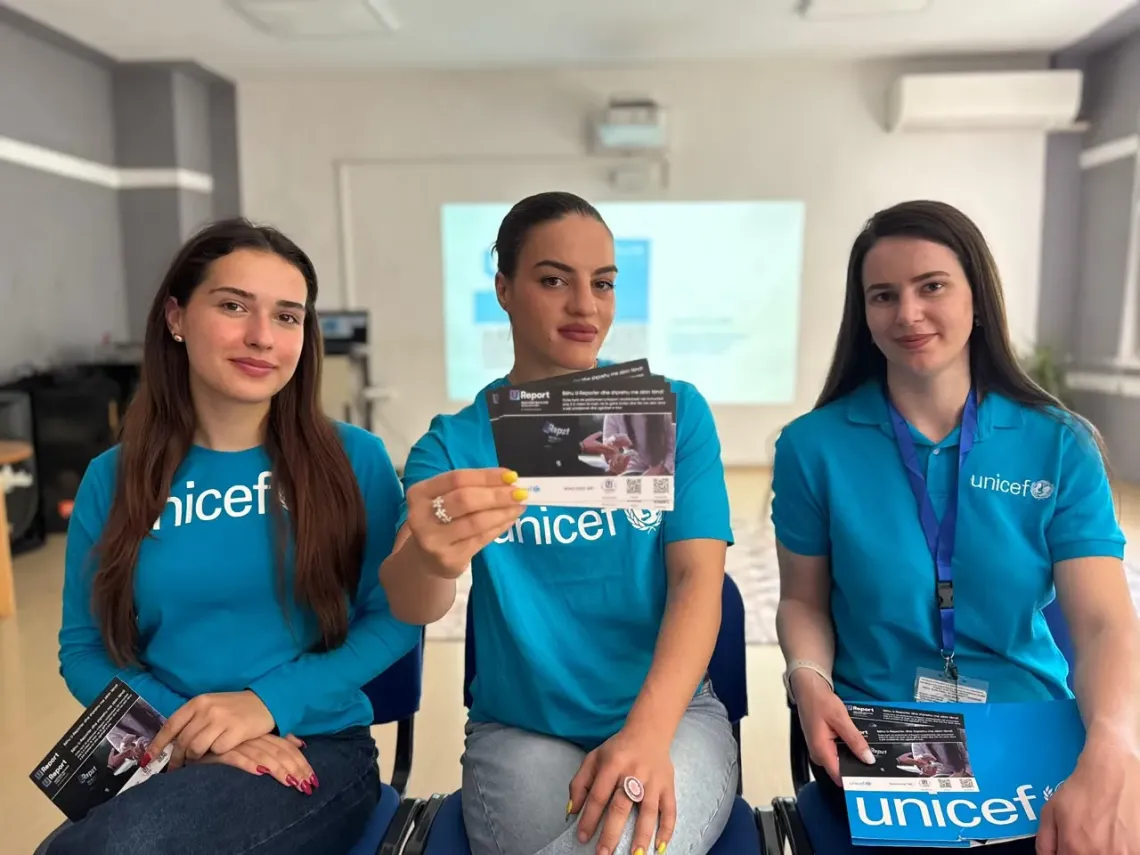
But how do young people themselves view Artificial Intelligence in education? Our U-Report Albania poll provides valuable insights into how AI is already shaping their learning experiences, expectations, and concerns. While 54% of respondents believe AI should primarily be used for studying within the classroom and 26% support its broader use as a teaching tool, the results demonstrate that young people are open to embracing AI when it is introduced responsibly, ethically, and under the guidance of educators.
While AI remains a major topic of discussion worldwide, the poll confirmed that its use is already widespread among young people. Around 40% of respondents reported using AI every day, indicating that it has become an integral part of their academic and professional activities. A further 26% reported using AI two to three times per week, reflecting regular but less intensive use. On the other hand, 26% said they use AI only rarely, while 8% do not use it at all, suggesting that gaps in access, knowledge, or trust in technology still exist. Overall, the findings show that AI has already become an integral part of many young people's daily lives.
However, despite this high level of adoption, only 13% of respondents reported having received proper training on how to use AI. Meanwhile, 30% expressed a desire for more training, and nearly half said they had received no training at all. As technology experts increasingly emphasize, in this era of rapid innovation, success depends not only on access to AI but also on understanding how to use these tools responsibly and effectively. These findings highlight the need for clear guidelines, safe and regulated AI policies, and accessible training opportunities to ensure that everyone can benefit from AI in a secure, ethical, and efficient way.
Although young people use AI in different ways, U-Report Albania respondents overwhelmingly see it as a practical tool for learning. Nearly half (45%) reported using AI primarily for research, gathering information, and analyzing content. At the same time, respondents expressed concerns about misinformation, copyright, and whether AI-generated information is accurate and properly cited. Perhaps most importantly, many worried that excessive reliance on AI could weaken critical thinking skills, reminding us that technology should complement learning rather than replace independent thinking. These findings also resonate with my own experience as both a medicine student and someone involved in technology. I use AI almost every day, both in my studies and in my technology projects. As a medicine student, where the amount of material can often feel overwhelming, AI helps break down complex topics, identify the key concepts I should focus on, and explain difficult medical terms in a simpler way. During exam periods, it also helps me organize my preparation by creating flashcards, quizzes and personalized study plans that make revision more efficient. Beyond medicine, AI has also become an important part of my programming journey. It helps me brainstorm ideas, debug code, explore different solutions, and improve the AI projects I build. Through my international competitions, while solving challenging tasks and visiting one of the world's largest AI exhibitions in Beijing, I had the opportunity to see firsthand how AI is already transforming our communities: from robotic systems assisting surgeons in operating rooms to AI-powered scientific tools that are accelerating research and innovation. These experiences made me realize that the future of AI is ultimately in the hands of today's young people. The ideas we create and the choices we make today can shape technologies that improve lives, solve global challenges, and build a better future for everyone.
The overall results confirm the immediate need for a balanced, responsible, and forward-looking approach to integrating Artificial Intelligence into education. This means establishing clear institutional policies and practical guidelines for AI use, providing structured training for both students and educators, promoting AI as a tool that supports rather than replaces the learning process, and strengthening the uniquely human skills that technology cannot replicate.
Artificial Intelligence is not here to replace human potential, but to amplify it. When used responsibly, it can make education more inclusive, personalized, and accessible, empowering every learner to reach their full potential regardless of their background or circumstances. The challenge before us is not whether AI should become part of education, because it already is, but how we can ensure it is used safely, ethically, and meaningfully. By investing in digital literacy, promoting responsible innovation, and creating learning environments where technology and human potential grow together, we can ensure that AI becomes a force for opportunity rather than inequality. Looking back, I never imagined that a simple curiosity about technology would one day lead me to represent Albania in international AI and robotics competitions. Those experiences taught me that great ideas can come from anyone, as long as we are willing to learn, seize opportunities, and keep challenging ourselves. I hope more young people will have the confidence to explore their interests, use technology to turn their ideas into action, and make a positive difference in their communities. After all, the future of Artificial Intelligence will not be defined by the technology itself, but by the people who choose to use it with purpose, creativity, and responsibility.
Looking back, I never imagined that a simple curiosity about technology would lead me to represent Albania in international AI and robotics competitions. Along the way, I learned that every opportunity begins with a willingness to learn, take initiative, and keep challenging yourself. I hope more young people will have the confidence to explore their interests, use technology to turn their ideas into action, and make a positive difference in their communities. After all, the future of Artificial Intelligence will not be defined by the technology itself, but by the people who choose to use it with purpose, creativity, and responsibility.