Safe water on their doorstep
New climate-resilient water supply systems serve more than 69,000 people in remote communities of Afghanistan
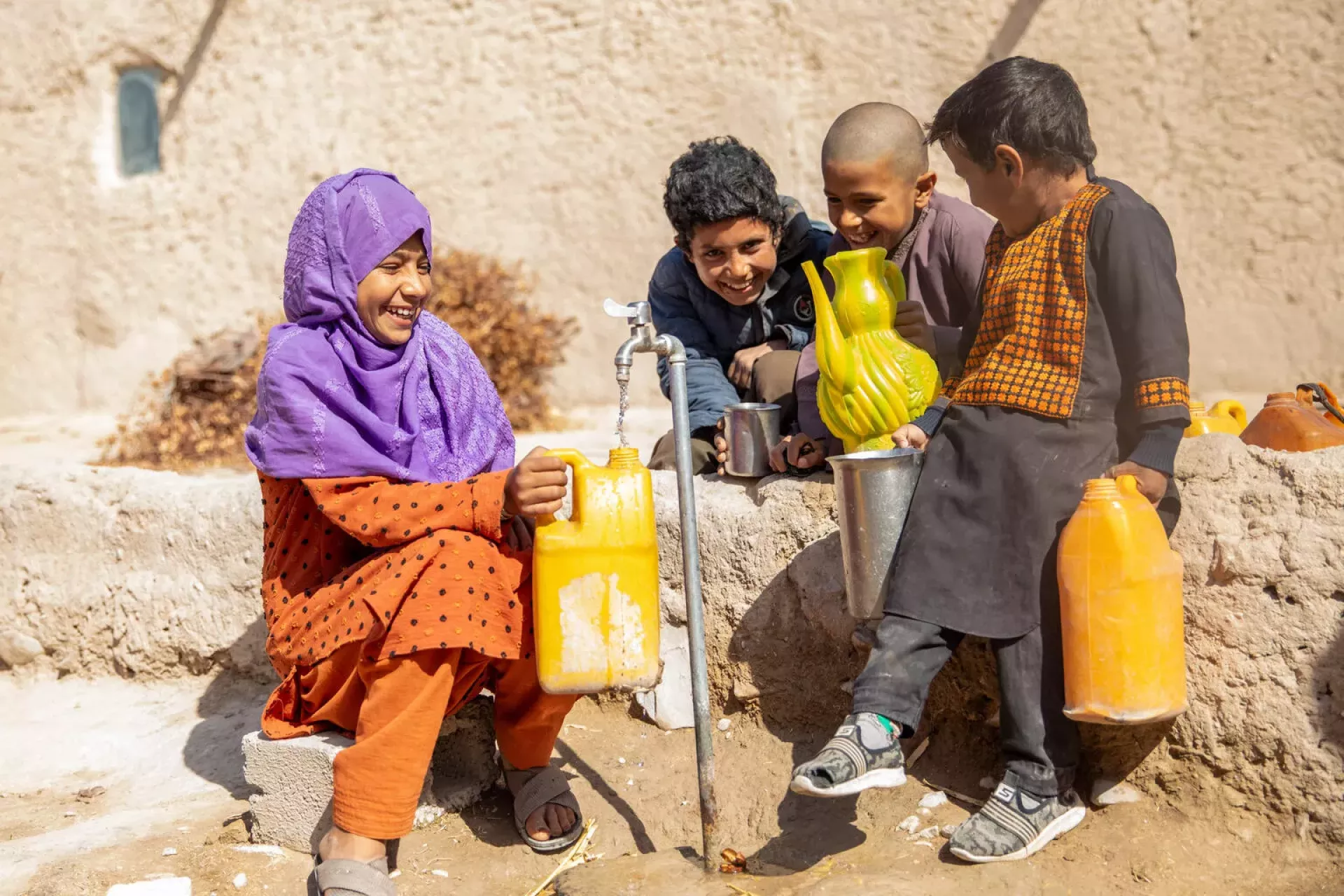
“My husband and I wanted to leave our home and move to a place where there was enough water. For years, I had been fetching water, but now I am old and can no longer do it,” says 60-year-old Fatima.
Their home, Khormaloq village in Farah Province, western Afghanistan is an isolated area where access to safe and clean drinking water was once just a distant dream for Fatima and the people living here.
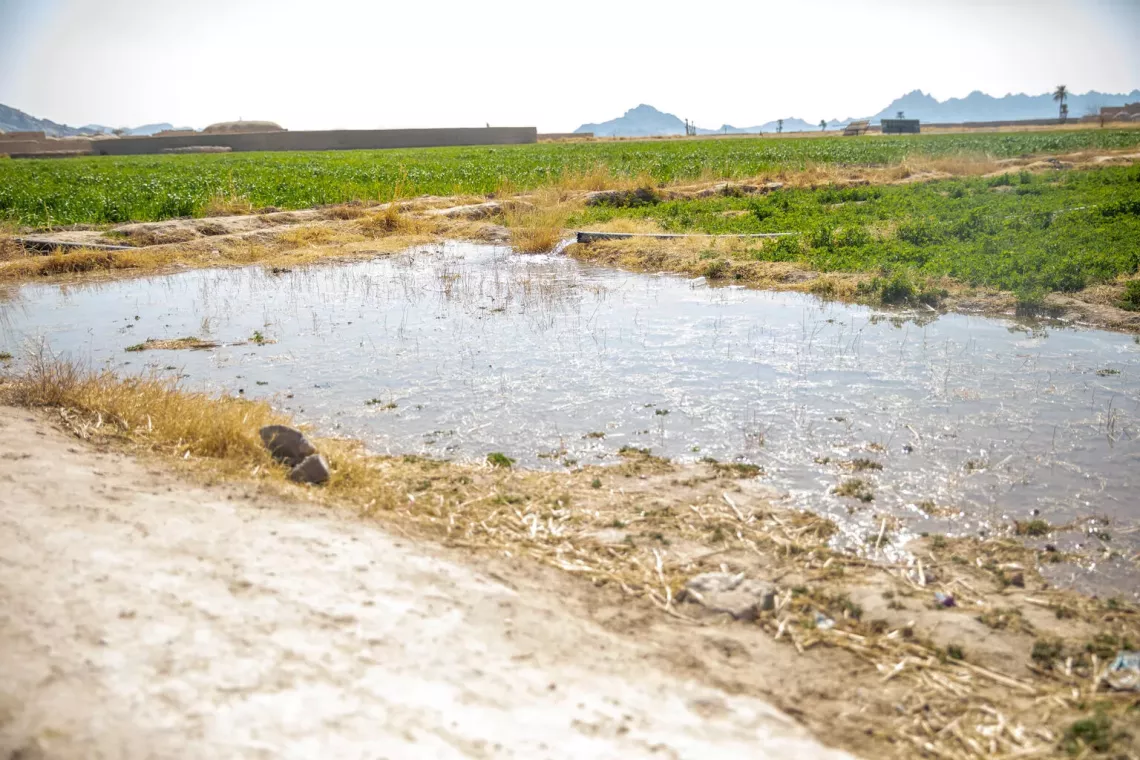
“I used to fetch water from a stream nearly a kilometre away. The water was neither clean nor safe, but we had no other choice,” Fatima recalls.
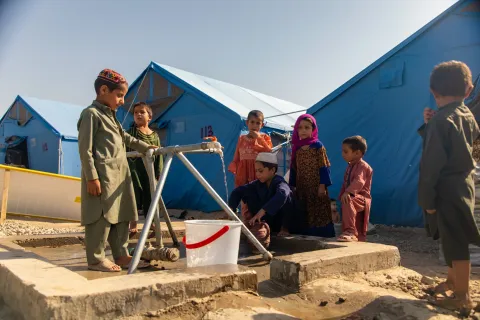
Afghanistan is among the top 10 countries worst affected by climate change globally, impacting children’s wellbeing and access to services. More than two decades of record droughts have depleted vital water sources, forcing tens of thousands of families to leave their homes in search of water. For many children, this means losing not only their homes but also their schools, friends, and sense of security.
“We had so many problems. The availability of water used to decide when to bathe, cook, and wash our clothes. But now, we have water just a step away from our kitchen and bathroom, available 24 hours a day, and seven days a week,” Fatima explains.
In Afghanistan, approximately 31 per cent of the population do not have access to basic drinking water and 42 per cent do not have access to basic hygiene services. A generation of children has already grown up struggling with water scarcity, but the burden weighs most heavily on girls and women. Many travel long distances daily to fetch water, exposing them to additional dangers, including the risk of exploitation.
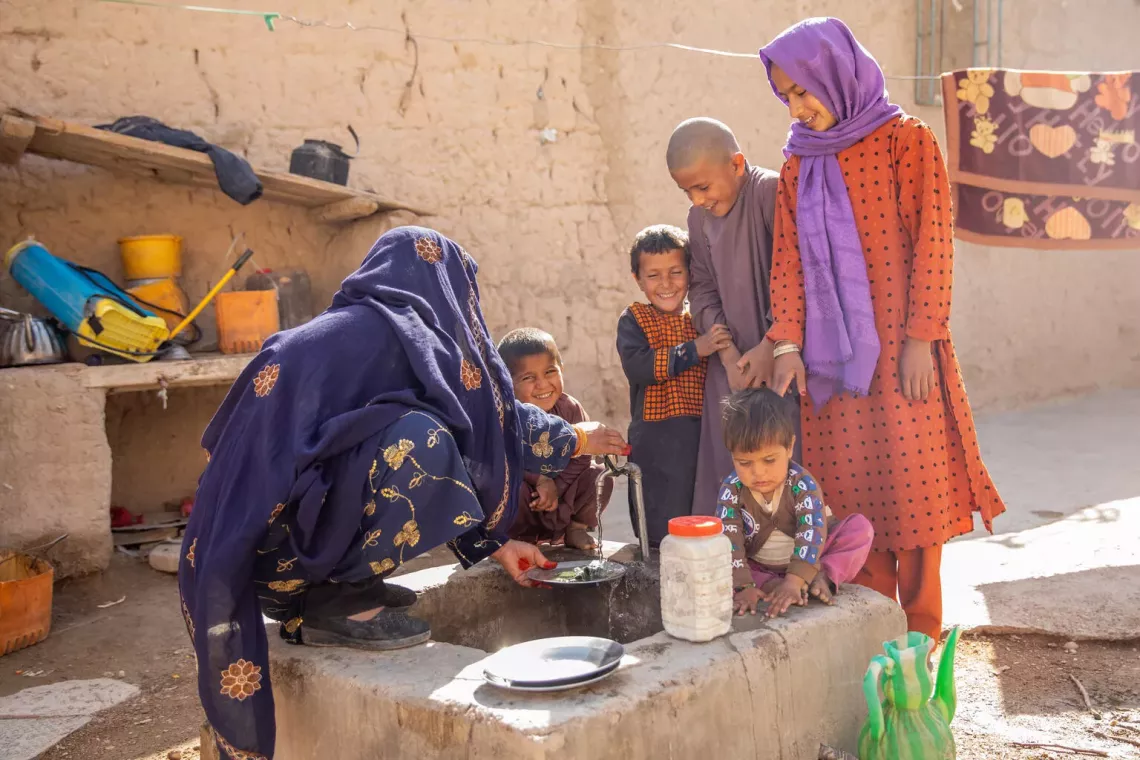
Back in Khormaloq village, Fatima’s neighbour, 48-year-old Amina, shares her struggles with water collection that took a toll on her health.
“My neck, shoulders, and waist are damaged because I carried heavy jerrycans of water on my head and shoulders for so many years,” Amina says.
“I have a large family, and we needed a lot of water. My daughters and I used to fetch water three to four times a day, and it still was not enough,” she adds.
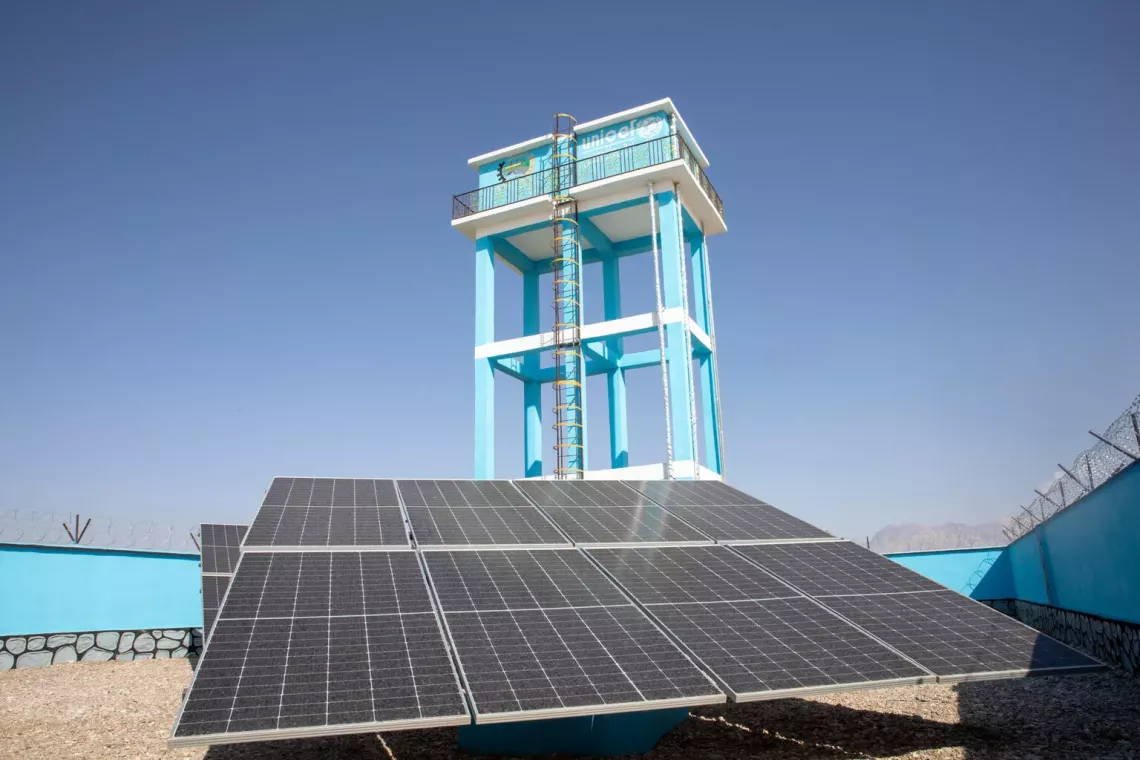
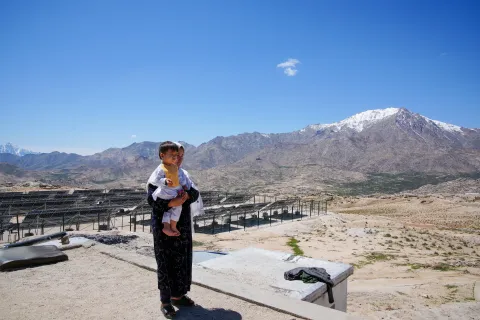
UNICEF has provided a long-term solution to this problem by installing a new solar-powered water supply system.
Since the system‘s installation, and the availability of clean drinking water on their doorsteps, life has changed dramatically for Fatima, Amina and the 2,500 other people in their community. The system includes a pipe network of over six kilometres and supplies fresh water from a 100-metre-deep well to 140 students at a nearby school as well.
Thanks to the Afghanistan Humanitarian Trust Fund, administered by the Islamic Development Bank with contributions from the Kuwait Society for Relief and the Saudi Fund for Development, UNICEF has constructed 34 new solar-powered projects for communities in Faryab, Helmand and Farah giving more than 69,000 people like Fatima and Amina access to safe drinking water.
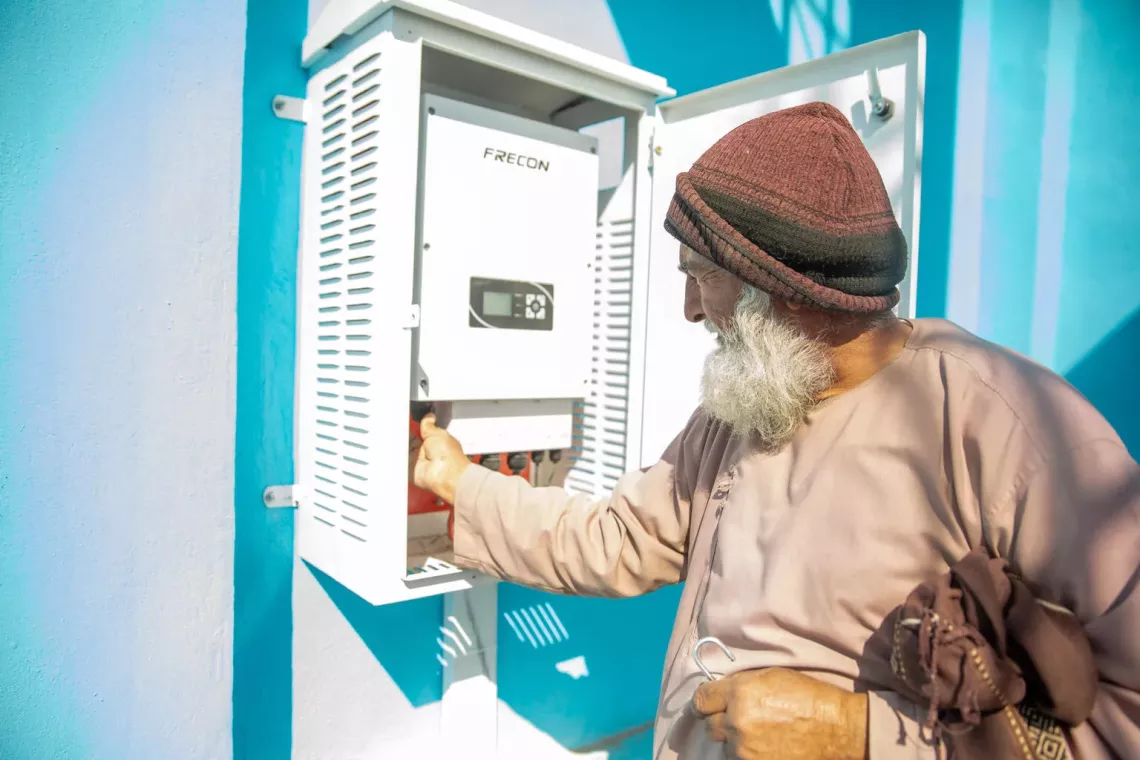
To ensure the sustainability of these systems, community members play a vital role. In Khormaloq, community leader Baran collects a small tariff to cover the maintenance and reparation costs, while Ghawsuddin, trained by UNICEF, keeps the system running smoothly.
“The entire village is very thankful,” says Baran. “The dream of clean drinking water is now a reality for hundreds of families living here."
"The new system offers us not just clean water, but dignity, security, health, and a brighter future for our children."
"For sure we will all do our best to keep the system running smoothly!” continues Baran, smiling broadly.
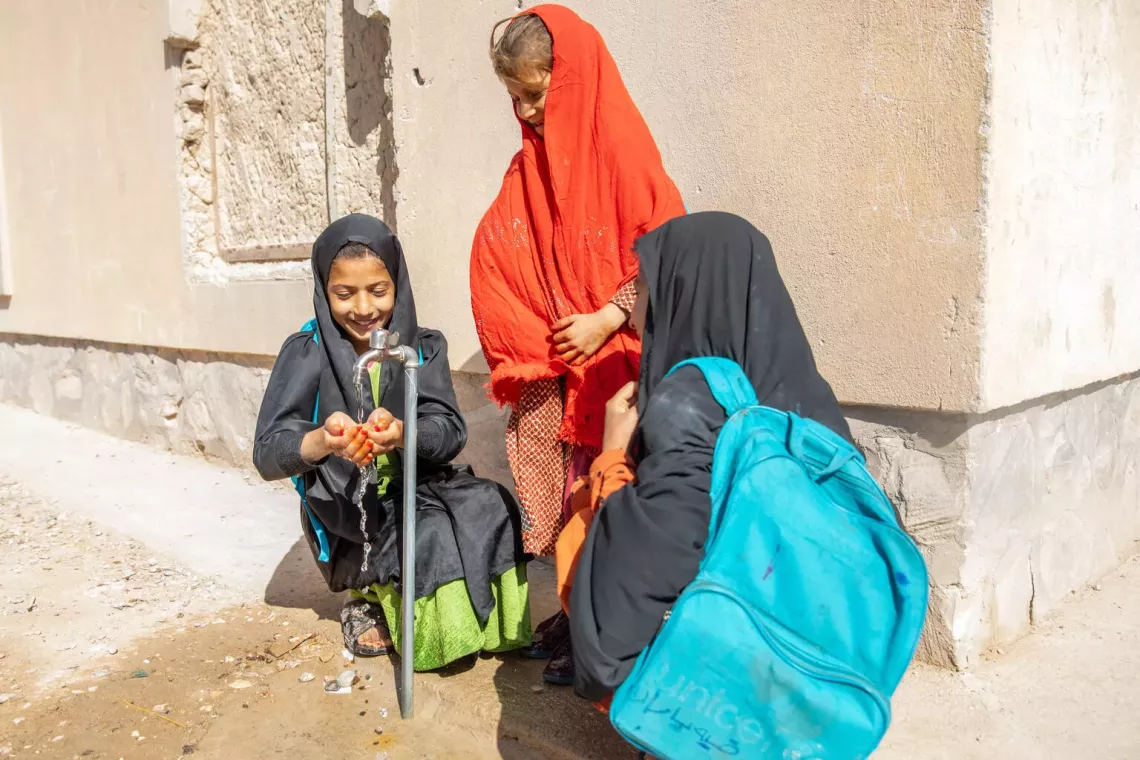
In 2024, with the support of donors and partners, UNICEF provided safe and clean drinking water to almost 700,000 people, prioritizing rural, newly accessible and emergency-affected areas.
UNICEF also delivered safe drinking water, hygiene and sanitation services to more than 1.1 million people in emergency situations. These include people affected by earthquakes and floods, those diagnosed with acute watery diarrhoea, and families returning from Pakistan and Iran.