A Drop of Hope
Preventing Malnutrition through Clean Water, Sanitation, and Hygiene in Daikundi’s Central Highlands

Daikundi, Afghanistan: Daikundi is the rocky heartland of Afghanistan, a place where jagged peaks rise sharply from deep valleys and communities depend heavily on agriculture and livestock to survive. Reaching these communities is never easy. From Nili city, it takes nearly nine hours of travel by car along narrow, muddy roads carved into mountain tops—crossing rivers and valleys, enduring constant bumps and uncertainty—before finally arriving at Kisaw District Hospital.


For the 30,000 people living in the surrounding districts, this hospital is a lifeline. Yet for years, its ability to save lives was hamstrung by a basic missing ingredient: clean, accessible water and basic sanitation
Poor water and sanitation services, combined with inadequate hygiene practices, significantly increase the risk of disease and malnutrition, especially for children under five. Diarrhoeal diseases, which are closely linked to unsafe water and poor sanitation and hygiene practice , interfere with a child’s ability to absorb nutrients, pushing already vulnerable children deeper into malnutrition. In such settings, the fight against undernutrition cannot be won without reliable access to safe water, sanitation and hygiene. At Kisaw, staff knew they couldn’t win the fight for nutrition without first winning the battle for hygiene.

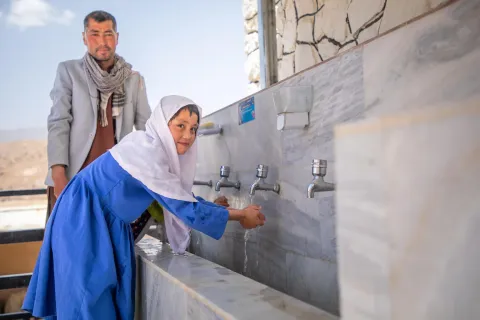
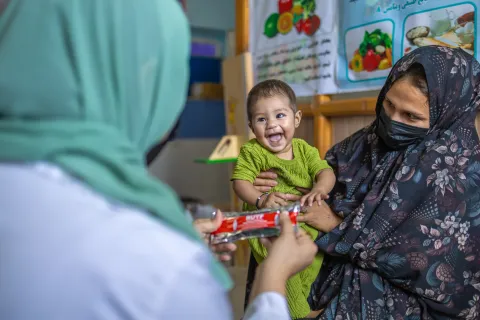
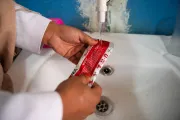
Feroza, a nutrition nurse in the inpatient department who has spent eight years at the hospital, remembers the struggle. “Before, we had no water inside the wards. Now, we have a water tap in every ward,” she says, washing her hands carefully before screening a child. “Before appetite testing using ready-to-use therapeutic food (RUTF), we must wash the sachets. Having water nearby makes this easy and safe and reduces the risk of infection.
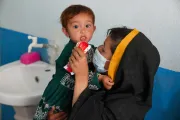
In the nutrition ward, the results are visible in children like 19-month-old Hania. When she arrived four months ago, she was suffering from severe acute malnutrition. Today, after consistent treatment and improved hygiene, she has gained a kilogram—a small weight that represents a massive victory. "She was weak and sick all the time," her mother, Faiza, recalls. "Now, I see a path to healing," said Hania's mother.
The transformation extends to the maternity ward, where midwife Fareshta no longer has to leave her patients to fetch water from outside. "We had to carry water in, which took time and increased the risk of infection," she explains.
"Now, with a tap right in the delivery room, we can clean immediately. It has made childbirth safer for every mother and newborn."


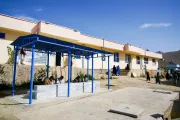
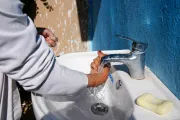
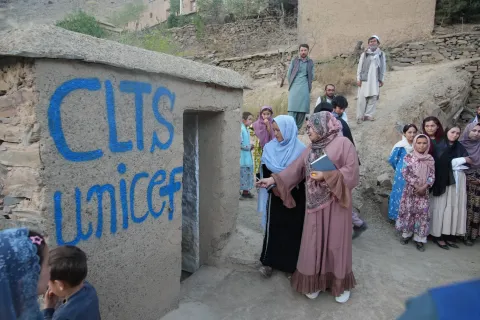
With support from the United Kingdom Foreign, Commonwealth and Development Office (FCDO), UNICEF has completed water, sanitation, and hygiene (WASH) facility upgrades in 28 health and nutrition centers across Daikundi and Paktia provinces. The intervention provides more than 439 healthcare workers with access to safe and reliable water inside health facilities and benefits over 678,702 people in the catchment areas. The WASH package includes boreholes, water reservoirs, staff bathrooms, separate male and female latrines, bathing facilities, waste management facilities, and handwashing points within clinic premises - strengthening infection prevention and control measures and improving hygiene conditions in some of Afghanistan’s hard‑to‑reach provinces.
In places like Kisaw, where the road is long and the challenges are many, a simple water tap is more than infrastructure. It is a safeguard against disease. For children like Hania, it is a drop of hope that turns a struggle for survival into a chance for a future.