Japan grants additional support for life-saving water and protection services in Afghanistan
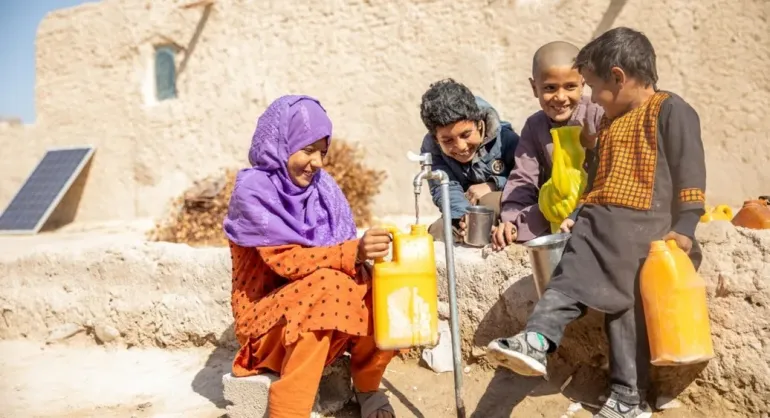
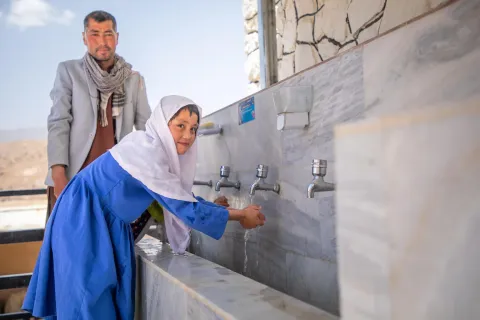
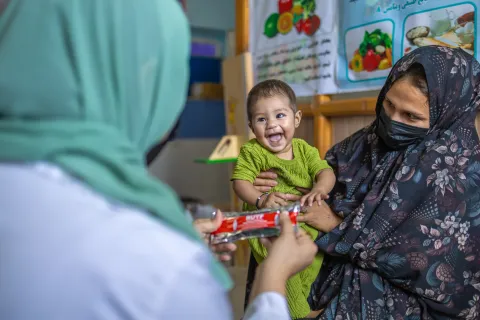
KABUL, 26 February 2026 – The Government of Japan has provided additional US$4.4 million for urgent life-saving assistance to Afghan communities affected by emergencies, natural disasters and large-scale population movement. Japan's contribution will enable UNICEF to reach over 60,000 people, more than half of them children, with lifesaving water, sanitation, hygiene and child protection services.
Humanitarian needs have become more complex as over 2.8 million people returned to Afghanistan from Iran and Pakistan in 2025, approximately 60 per cent of them women and children. According to the 2025 OCHA-led Whole of Afghanistan Assessment, 67 per cent of households reported drought and water scarcity, while 25 per cent relied on unimproved water sources. Areas hosting large numbers of returnees have already reported increases in acute watery diarrhoea, heightening the risk of disease outbreaks.
Compounding crises have eroded essential protections for Afghanistan's children. Between January and November 2025, 13,089 unaccompanied and separated children were identified, an increase of more than 50 per cent compared to the same period in 2024. Children face ongoing risks including explosive ordnance contamination, gender-based violence, child labour and early marriage.
"Japan stands with the people of Afghanistan particularly children and women who face the compounding challenges of mass displacement, natural disasters, and climate shocks," said H.E. Mr. Kenichi Masamoto, Ambassador of Japan to Afghanistan. “I hope that this assistance enabled by the partnership with UNICEF will not only deliver critical lifesaving relief but also empower affected communities to build long-term resilience and a safer, more stable future for the next generation."
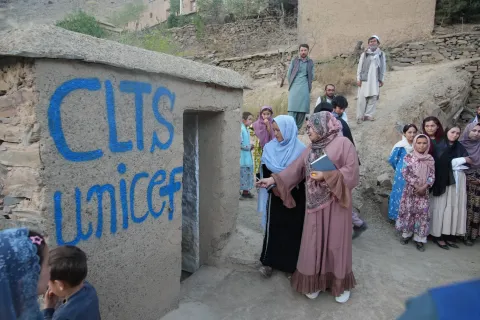
Japan's strategic investment goes beyond immediate relief to build resilient systems that protect children and communities over the long term. The project will support 25 solar-powered water supply systems, reinforced by strong community ownership through water user committees and trained village mechanics, helping ensure sustainable operation. This is paired with comprehensive child protection services addressing the psychological, social and physical risks children face, including mental health and psychosocial support, gender-based violence prevention and response, and specialized case management for family tracing and reunification of unaccompanied and separated children.
“Japan and UNICEF’s partnership for Afghanistan's children is founded on shared values and long-term vision. Together, we've strengthened systems that protect lives and enable communities to build their own resilience. This additional funding will deliver critical water, sanitation and hygiene, and child protection services for the children and communities facing the greatest risks.," said Dr. Tajudeen Oyewale, UNICEF Representative to Afghanistan.
Over the years, Japan has demonstrated consistent commitment to Afghan children's wellbeing across all critical areas, from classrooms and health facilities to safe water systems, nutrition programs and child protection services. This new 12-month initiative builds on that foundation, targeting high-priority provinces identified in the Humanitarian Needs and Response Plan 2026 where returnees and climate-affected communities need support most. Through this partnership, Japan and UNICEF continue to deliver services essential for children's survival, protection and development.
Media contacts
About UNICEF
UNICEF works in some of the world’s toughest places, to reach the world’s most disadvantaged children. Across 190 countries and territories, we work for every child, everywhere, to build a better world for everyone.
UNICEF has been in Afghanistan for over 70 years. For more information about UNICEF and its work for children in Afghanistan, visit https://www.unicef.org/afghanistan/ or follow us on X, Facebook, Instagram or subscribe to our YouTube channel.