Sanitation restores safety and dignity in Khas Kunar Camp
UNICEF emergency WASH services support recovery for earthquake-affected families in eastern Afghanistan.

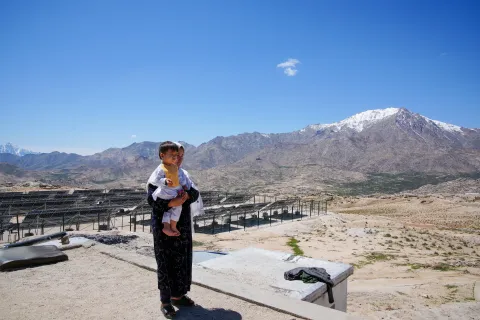
In the months following the devastating earthquake that struck eastern Afghanistan in August 2025, humanitarian needs escalated rapidly as homes were destroyed, lives were lost, and families were displaced across Kunar, Nangarhar, and Laghman provinces. More than 56,000 people, driven by difficult circumstances, moved into temporary settlements in Khas Kunar Camp. Amid overcrowding and uncertainty, a quieter yet critical crisis was unfolding.
A crisis of dignity.
For many families living in the camp, daily life quickly became a struggle that went beyond food, water, and shelter. The absence of safe toilets, bathing facilities, and waste management systems affected every aspect of their lives. The lack of privacy increased risks, especially for women and children, who were most affected.
“We felt exposed all the time,” says Kamina, a mother of seven displaced from Nurgal District in Kunar Province, now living in Khas Kunar Camp. “We would wait for nightfall to find a little privacy.”
UNICEF, as a first responder, quickly scaled up life-saving support in health, nutrition, and safe water, and distribution of WASH supplies, while placing sanitation and hygiene at the centre of the response. This rapid action helped restore a sense of stability and dignity in the early days of displacement.
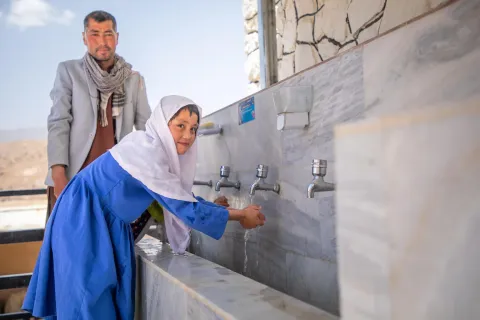
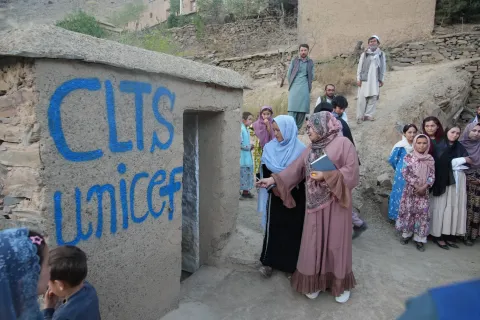
More than 500 emergency latrines and 151 bathing facilities were constructed along with the installation of handwashing points, transforming the daily life in the camp. In addition, over 28.1 million litres of safe drinking water were delivered to affected communities from September 2025 to early March 2026.

Today, more than 12,900 people have access to improved sanitation and hygiene services. While these facilities may appear simple, their impact is profound in restoring a sense of safety, privacy, and dignity.
“We are grateful for the sanitation services provided,” said Kamina with a sigh of relief. “Now we feel safer and more comfortable using the facilities at any time of day.”
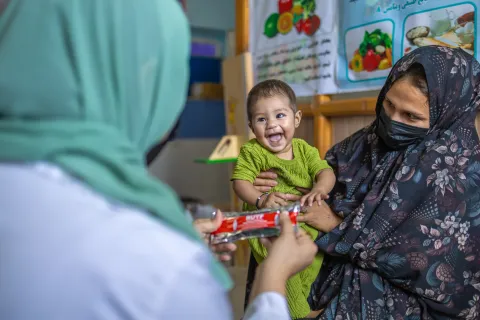
In addition, UNICEF distributed more than 2,600 hygiene kits, including soap, buckets and menstrual hygiene supplies for women and girls. These essential items are enabling families to maintain personal hygiene despite challenging living conditions, reaching more than 35,000 people.
Efforts to address health issues in the camp have also extended beyond infrastructure. UNICEF’s polio programme joined forces to support water sanitation and hygiene (WASH) teams by deploying social mobilizers to promote hygiene practices in the community and raise awareness on disease prevention.

“Small habits like handwashing can save lives,” says Hamdullah Babor, a hygiene promoter. “In camp settings like this, these practices are vital to reducing the risk of outbreaks, including polio and other waterborne diseases. When families understand this, they become champions of health in their communities.”
Nearly 16,000 families have taken part in hygiene education sessions, learning practical ways to prevent disease outbreaks and protect their children. Across the camp, cleanliness is increasingly seen not as an individual task but a shared responsibility. Community-led initiatives, such as weekly clean-up campaigns, are bringing residents together and encouraging longer-term behaviour change.
“When people come together for a common goal, it creates a sense of ownership,” says Noor Gul, a volunteer in the camp. “This is our temporary home, and we want it to be healthy for our children.”
Feedback mechanisms have also been introduced to ensure that residents can voice their concerns about privacy, safety, and maintenance. In a context where so much has been lost, the opportunity to be heard is itself a step towards restoring dignity.
The story unfolding in eastern Afghanistan is not only one of loss, but also of resilience and recovery. With support from the Central Emergency Response Fund (CERF) and the Centers for Disease Control and Prevention (CDC), UNICEF and partners continue to deliver essential services, including hygiene and sanitation to the earthquake affected communities.