"Now we have water all the time"
How a new UNICEF-supported water system, built in partnership with the IsDB, OIC, AHTF and KSRelief changed 31,000 lives in central Afghanistan

Fawzia used to miss a lot of class.
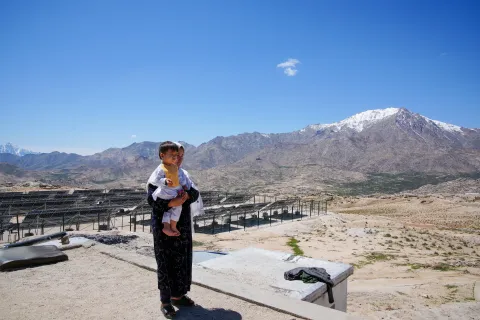
Just 10 years old, Fawzia would make daily trips to fetch water for her family in Charkh district, a remote part of Afghanistan's eastern Logar province. It was a 30-minute walk to the water tap, pushing her wheelbarrow full of jerrycans, then a one-hour wait in the queue. She would then walk back home, pushing a full wheelbarrow of water, before grabbing her backpack for school.
"Life was very hard when we did not have water. We could not cook, bake bread or wash ourselves properly,” explains Fawzia.
Safe water and sanitation facilities, paired with good hygiene practices like handwashing with soap, are key to preventing communicable diseases. However, access to safe water in Afghanistan is limited. According to UNICEF’s 2022-23 Multiple Indicator Cluster Survey (MICS), around 27 per cent of the population in Afghanistan does not have access to safe drinking water.

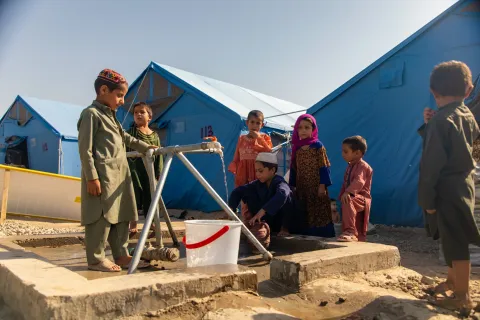
Fawzia’s family now has a new water tap, which brings safe water to their home through a piped water system installed in their village.
UNICEF built this water system with support from the Afghanistan Humanitarian Trust Fund, the Islamic Development Bank and Organization of Islamic Cooperation, with funding from King Salman Humanitarian Aid and Relief Centre (KSRelief). In total, this support helped build 18 new climate-resilient and sustainable water systems for 31,000 people in Logar and Paktia provinces.
"The engineers installed the tap in our house so now we have water all the time. We can cook whenever we want and I am happy," says Fawzia.

“Nobody can live without water,” says 14-year-old Fazel.
“Fetching water used to be very hard, especially in the winter. There was mud everywhere. I slipped many times and got injured. It is good to have safe water right at home, now.”
Construction of the 18 new water systems was led by the communities themselves, which developed operation and maintenance plans to keep the systems running. They also set tariffs for each family, with the money collected covering maintenance and repair costs.

For Salma’s family, now there is safe water for everyone - even the livestock. The seven-year-old is happy to have drinking water at home.
“Now I can use the water whenever I need to. I can wash my hands, we can wash the dishes, we can wash our clothes and I can give water to the cows.”

Zakiullah is one of the mechanics recruited to help with maintenance of the water systems in Logar province. He has been trained and fully equipped with tools to help keep the taps running through regular maintenance and repairs.
Over the next year, the Afghanistan Humanitarian Trust Fund (AHTF) managed by the Islamic Development Bank (IsDB) with contributions by the Kuwait Society for Relief (KSR) and the Saudi Fund for Development (SFD) will support UNICEF to construct additional water supply systems for 64,000 people in 32 remote communities in Faryab, Helmand and Farah provinces.