Finding water in the driest places
As recurrent drought remains a threat to children in Afghanistan’s changing climate, UNICEF implements climate-resilient solutions.
It is a long, bumpy drive to Kamana village, about 200 kilometres from Herat city in western Afghanistan. The village sits in dry, arid terrain, similar to much of the country suffering from drought and water scarcity.
Asiya, 11, has lived here her entire life. She attends school, about a 30 minute walk from home, and enjoys helping her mother with cooking and other house work. Until recently, their main source of water was the river four kilometres away.
"The water was not good to drink, even for animals, but this is all we had," says Asiya.
Asiya’s older brothers took turns fetching water from the river, transporting it back home on donkeys to lighten the load. It was never enough for the family of 10, nor was it safe for drinking or cooking.

A scarce, life-saving commodity
Clean water is particularly important for children, but it can be challenging to find in such dry environments with little rain. Without clean water, children are more susceptible to diseases like acute watery diarrhoea, which can exacerbate or cause malnutrition.
The solution for children and families in Kamana village was in the groundwater. But attempts to drill had yielded no water at all, even after drilling 120 metres into the ground.


No need for donkeys
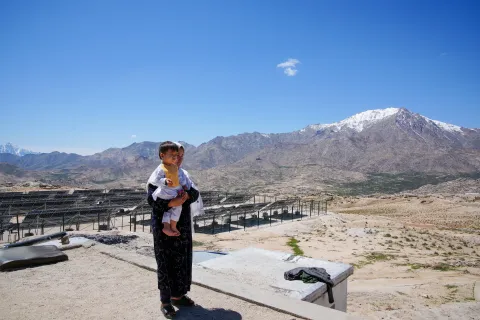
So UNICEF found another solution. In August 2024, with support from the United States Agency for International Development (USAID), a solar-powered water system was completed in Kamana village, bringing safe drinking water straight to the community from its source 26 kilometres away. Now Asiya - and her community of 7,000 people - have drinking water right at their doorsteps.
“You will not see donkeys in our village anymore," says Abdul Khalid, Asiya's father and community leader. "Now that we have clean water at home, we sold our donkeys because we do not need them to carry water anymore."
Abdul Khalid is also actively involved in maintaining his village's water system. Trained by UNICEF, he helps collect tariffs for water usage and works with local mechanics to ensure the system operates smoothly. If needed, tariffs are used to pay for repairs to the water system.

Exploring sustainable solutions
Nearly one-third of Afghanistan’s population do not have access to basic drinking water. With more than two decades’ worth of record droughts depleting vital water sources, Afghanistan is one of the top ten most climate-vulnerable countries on the planet.
Because of the changing climate and overextraction of groundwater for agricultural purposes, the country is also losing its water supply from underground aquifers. Coupled with insufficient groundwater monitoring stations across the country, this threatens the sustainability of water sources for future generations.
In addition to installing solar-powered pumps that make clean water accessible to communities, hospitals and schools, UNICEF is installing 45 dedicated groundwater monitoring wells in areas without groundwater monitoring systems. This is expected to improve knowledge about groundwater monitoring status, the level of depletion and required mitigation actions so that children like Asiya are guaranteed access to safe water for years to come.

Across Afghanistan, UNICEF has established 157 water systems in 2024. All are climate-friendly, either gravity-fed or solar-powered, like Asiya's. These water systems have reached more than 633,000 people with safe water.
For Asiya and her nephew Mohammed, this means a lifetime of safe water.