Indonesia
Youth clubs take the lead in disaster risk reduction and community change
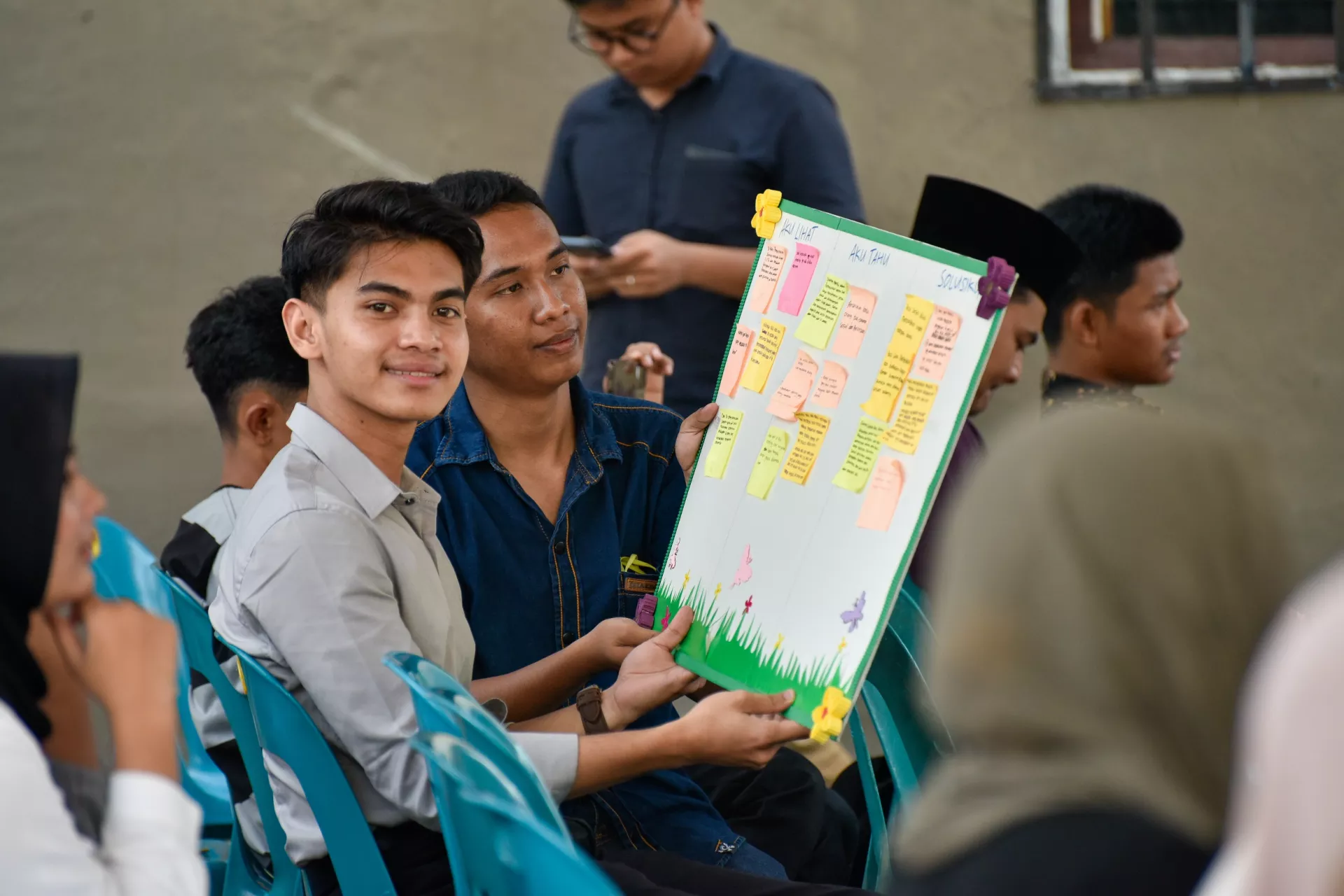
UNICEF Indonesia collaborated in the development and testing of the Adolescent Kit beginning in its earliest stages in 2013, and since then has been using the Adolescent Kit (locally called “Kit Remaja”) to empower adolescents, engage them in disaster preparedness, and build community resilience.
UNICEF Indonesia initially introduced the Kit as a programming resource for use in disaster response to ensure that the voices of young people are included in the response and recovery. Subsequently, recognizing its wider potential and a need for longer-term adolescent engagement, UNICEF has integrated the Adolescent Circles approach across all sectors that UNICEF focuses on, including education, child protection and social policy.
The Adolescent Kit is now integrated into UNICEF’s programming that addresses the growing risk of hazardous events and disasters that adolescents face, by strengthening adolescents’ policy knowledge and skills for identifying disaster risk, supporting them to develop realistic solutions through innovative approaches, and providing guidance for them to influence meaningful social and political change. UNICEF has contextualized this Kit to meet the diverse needs of adolescents in Indonesia by adding material on disaster risk reduction (DRR), child marriage and menstrual hygiene management (MHM).
Indonesia was also one of the pioneer countries of the Adapted Kit to provide complementary teaching materials during the COVID-19 pandemic in locations where schools and learning centres are closed. The Adolescent Kit was used for psychosocial support interventions as part of its COVID-19 response. This included hosting youth-led online sessions on mental health awareness and support for young people feeling isolated and vulnerable during the lockdowns across Indonesia.
The Kit in Action: Pemalang (Central Java)
The Kit in Action: Jayapura (Papua)
The Kit in Action: Mataram (NTB)
The Kit in Action: Banda Aceh (Aceh)
"I like being a leader. Now that we’ve seen our idea become a reality, we’ve realized that adolescents have a role to play to make our situation and living conditions better. We can have a say in our future."
18-year-old Devi, project participant
"The first idea we came up with was rainwater tanks for each house, but after we researched it a bit more, we realized it would be too expensive, so we kept exploring different ideas until we agreed on the water pump."
Ina, 17-year-old, Oeletsala village
"I thought to myself, these young people … can now express their ideas and are thinking about the village’s well-being through the activities in this adolescent circle."
Ayub Meto, Oeletsala village chief