Sanyati faces malnutrition as integrated outreach bring relief
‘I would never have known there was a problem.’ In Sanyati, children are suffering from malnutrition without mothers realising it, as drought-related poverty takes a toll. Integrated outreach programmes are coming to the rescue.

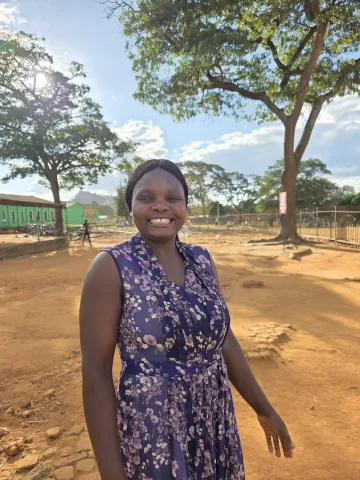
Letwin Shinginyayi braved the uncharacteristic heat in July to attend an outreach programme for primary health care services delivery, with the single goal of providing long-term family planning services in Sanyati district. The outreach programme, conducted in the Sanyati district by the Ministry of Health and Child Care in partnership with UNICEF, is supported by GAVI, the Vaccine Alliance, with funding from the Government of France.
But while the 35-year-old waited for her turn on the dusty grounds of a school where the exercise was taking place, a Village Health Worker (VHW) spotted an immediate danger. Shinginyayi’s seven-year-old daughter, Praise, was vomiting and looked wasted.

But while the 35-year-old waited for her turn on the dusty grounds of a school where the exercise was taking place, a Village Health Worker (VHW) spotted an immediate danger. Shinginyayi’s seven-year-old daughter, Praise, was vomiting and looked wasted.
The VHW took the girl and her mother to another desk where children were being screened for malnutrition. Nurses and a Nutritionist confirmed that Praise needed immediate attention. Praise weighed just 15 kg, as opposed to the average 22 kg for girls her age.
“I would never have known there was a problem; I was not going to take any action if I hadn’t come here,” said Shinginyayi, admitting that she had not bothered to take the child to a clinic because it is about 38 kilometres from her home. She said she struggles to provide the child with a balanced diet because of the El Nino-induced drought that destroyed any prospects of crop harvests that she usually relies on for food and income.
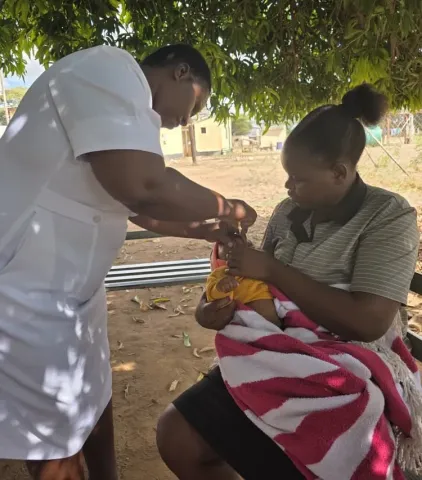
Health staff say integrated outreach programmes, conducted by the Ministry of Health and Child Care in partnership with UNICEF, have allowed for timely interventions in cases like Praise's.
“Outreach programmes have been instrumental in increasing our coverage of Vitamin A supplementation and an opportunity for us to reach children whose homes are far away from health facilities. Some children need immediate attention, and we alert mothers to visit the clinic or hospital,” said Zvikomborero Christina Taruvinga, the district nutritionist for Sanyati. She gave Praise some ready-to-use therapeutic food (RUTF) and educated the girl’s mother on the essentials of child nutrition.
Added Taruvinga: “We can identify more children because their mothers tend not to take them to health facilities, but they do come for outreach programmes. Also, some mothers have three or four young children who all need attention, but she only takes the infant during the few times she visits the clinic.”
She said the situation is particularly dire because many families lack adequate food stocks.
Praise shows how Zimbabwe’s El Nino-induced drought, the worst in four decades, devastates children. In a country where over 60 per cent of the 15 million population live in rural areas and rely on rain-fed agriculture for food and income, climatic shocks such as El Nino deeply affect children.
“These shocks dramatically lower the quantity, diversity, and quality of available food, negatively affect the care of children, and disrupt access to clean and safe water, exposing children to life-threatening childhood diseases including diarrhoea,” said UNICEF in a statement, warning that the health of millions of children in Zimbabwe and other southern African countries is at risk due to the severe drought.
Many parents struggled to properly feed their children before the drought due to the southern African country’s ongoing multi-faceted humanitarian challenges. As a result, malnutrition has remained a severe cause for concern and a considerable health burden.

For example, cases of wasting increased from 4.5 per cent in 2020 to 7.2 per cent during the lean season of 2022–2023, making it the highest prevalence in the past 15 years. More than a quarter of children are stunted.
Of the estimated 2.6 million people projected to require urgent humanitarian assistance due to the drought and other challenges such as cholera, 1.7 million are children.
According to UNICEF, 580,000 young children are living in severe food poverty in Zimbabwe, and the organization has warned that the number could rise due to the drought.
In May, they sent out an urgent appeal for US$84.9 million to fund its emergency response to provide life-saving interventions to 1.34 million people, including 866,000 children.
Meanwhile, the race to save affected children through integrated outreach programmes continues. “The interventions are also crucial in curbing the burden at health facilities already struggling with staff attrition,” said Sanyati District Nursing Officer Ellen Marara.
“Early detection at outreach points helps us reduce the number of children who come to clinics and hospitals with severe acute malnutrition. We hope that this programme can continue; it is saving the lives of a lot of children,” she said.