Piped water scheme transforms Matobo villages
Scheme a significant milestone in the face of El Nino’


Bekezela Dube speaks with a sense of relief when she describes how a newly rehabilitated piped water scheme in her community has ended a decade old routine of walking a distance of over eight kilometres daily to fetch water.
Dube (31), a mother of four from Lingwe Village in Matobo District of Matabeleland South Province, said she used to fetch water from unprotected wells along the Shashane River bed, which were also drying up fast due to the El Nino induced drought ravaging Zimbabwe.
She now has access to clean water at a point located about 60 metres from her homestead after the Government working with UNICEF and its partners rehabilitated the Lingwe Piped Water Scheme through the European Union funded Enhanced Resilience for Vulnerable Households in Zimbabwe (ERVHIZ) programme.
The Lingwe Piped Water Scheme, which had been non-functional for over a decade, was rehabilitated through the utilisation of sand abstraction technology and installation of a solar powered water system.
It is now supplying clean water to 169 households from Lingwe, Zamadube and Matshina villages as well as supporting their agriculture, nutrition and water, sanitation and health (WASH) needs.
“We used to walk eight kilometres every day to fetch water from the riverbed and it was not even safe for drinking,” Dube said.
“This water scheme was set up in 1992, but it broke down in 1999 and since then we have been fetching water from the Shashane River.”
Reduced GBV cases
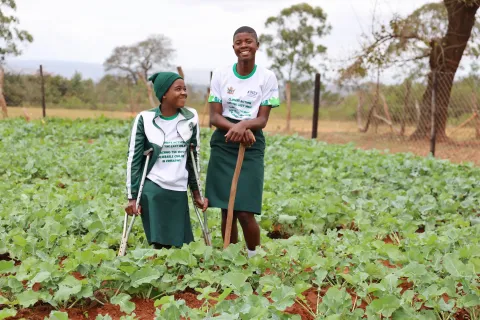
She said the rehabilitated water scheme has made it possible for the community to set up a nutrition garden and helped to reduce cases of gender based violence (GBV) that were rampant in the area.
Women were being waylaid by perpetrators in the bushes as they walked the long distances to fetch water, beneficiaries of the scheme said.
“We have a one hectare nutrition garden with 50 farmers that have come together to benefit from the piped water scheme and it is helping us a lot, especially women,” said another beneficiary, Evis Dube, a 46 year-old beneficiary.
“Most women were being raped on their way to fetch water because the area has thick forests,” she added.
“The water project has also helped to reduce incidents of gender based violence at homes because water had become a source of conflict as our husbands refused to accompany us to fetch water and they also didn’t appreciate the need to conserve water.”
Food security
Forty six year-old Martha Banda, another villager from Lingwe, said the piped water scheme had come as huge relief for the community, which can now achieve food security even in the face of perennial droughts.
“Clean water close to our homesteads means more than just hydration,” Banda said. “It also means (women and girls) no longer face the risks associated with travelling long distances to fetch water.”
Midas Ndebele, the headman for Lingwe Village, paid tribute to UNICEF and its partners for coming to the community’s rescue, especially at the height of the El Nino crisis.
Matobo District lies in natural regions IV and V, which traditionally receives annual rainfall of about 300mm that is poorly distributed across the area and this makes it difficult for communities to get underground water.
“This project is a significant milestone for us as it has addressed many issues in our community,” Ndebele said. “We now have access to safe drinking water.”
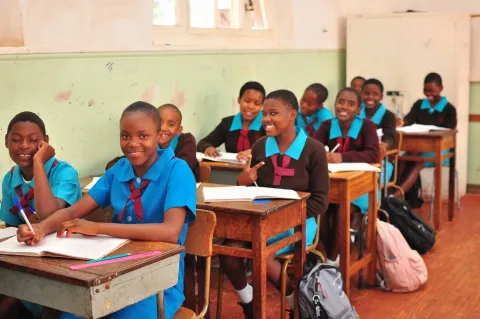
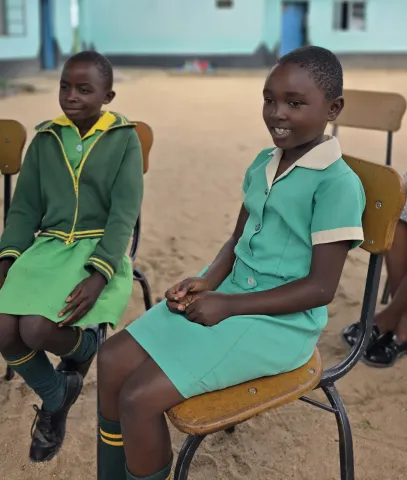
The project has also been a godsend for Lingwe Primary School with an enrolment of 223 pupils, which is now taking advantage of the abundant clean water to revamp its WASH facilities.
“We are in the process of constructing girl-friendly toilets thanks to the piped water scheme,” said the school’s headmaster Ferdinand Namate.
“We are also setting up taps outside the toilets. Handwashing is important. This project has ensured that our pupils and teachers are safe from many water-borne diseases.”
Flow for generations
Shepherd Shumba, the Lingwe Piped Water Scheme project officer, said the community’s active involvement will ensure sustainability of the investment.
“We didn’t just build a well, we built a future,” Shumba said. “By training our community and involving them every step of the way, we ensured this clean water will flow for generations to come.”
The infrastructure that includes solar panels, pumps and tap stands is protected by a fence and a security guard was hired to safeguard the investment. Livestock will also benefit through regular dipping services and clean drinking water.
In response to the El Nino crisis, UNICEF has embarked on initiatives such as solarisation of schools to promote climate-smart agriculture and WASH through piped water schemes to prevent further climate degradation and ensure continued access to basic services even during climate shocks.
UNICEF early this month launched an urgent appeal for US$84.9 million to fund its emergency response aimed at assisting children and women affected by the El Nino crisis in Zimbabwe at a time the country is battling a complex humanitarian crisis exacerbated by water and food shortages.