People in rural Zimbabwe say they owe their lives to Village Health Workers
From COVID-19 education to malaria doses and help with pregnancies and babies: Zimbabwe’s rural people say Village Health Workers are saving lives.

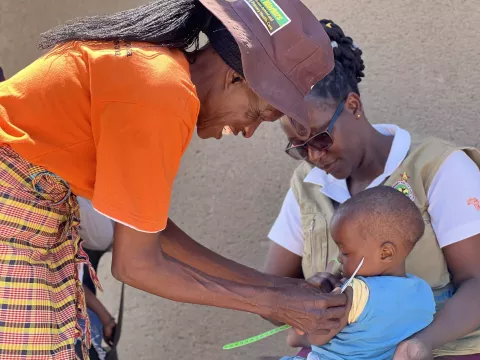
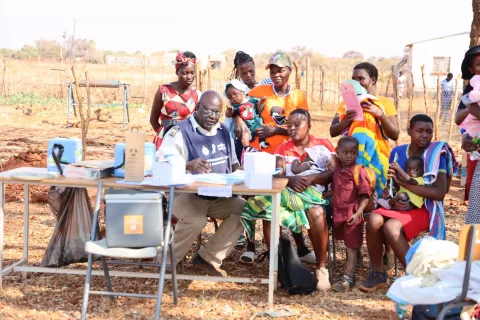
“I could have died if it weren’t for her.” People in remote Zimbabwean communities distanced from medical facilities trust Village Health Workers who live in their localities with their lives. Many say they owe their health and that of their children to women and a few men who sacrifice their time to offer health education and basic services to communities who lack quick access to health centres.
“Granny is a lifesaver,” said Constance Dhliwayo (40), a resident of Zimbabwe’s eastern Chipinge district. She was referring to local Village Health Worker (VHW), Prisca Gwenzi, whom she credits with saving her life in October 2019.
Dhliwayo was at Gwenzi’s house on a social visit on a recent day. But, more than a year on, she still talks about how Gwenzi saved her life.
“I could have died if it weren’t for her,” said Dhliwayo. “I could barely walk, the headache was severe and my joints were weak. I felt pain all over the body,” recalled Dhliwayo. Gwenzi tested Dhliwayo for malaria, before giving her a dose of malaria medicine, and shelter for the night in her tiny living room.
“I was not going to make it to the hospital, I even slept here,” said Dhliwayo, sitting in the verandah with two other village women and Gwenzi and her husband.
Gwenzi, a VHW for 10 years, is one of thousands supported by UNICEF through the Zimbabwe Idai Recovery Project (ZIRP) funded by the World Bank and the Health Development Fund (HDF), supported by the EU, UK Aid, Sweden, Irish Aid and Gavi. Their homes are always a hive of activity from people needing health services and education.
The rains pounded outside Gwenzi’s house, forcing the socially distanced group wearing masks to shout as they discussed social issues as well as current challenges such as COVID-19. The threat of malaria also follows the rainy season in the district.
Battling to keep their fidgeting babies calm, each of the women had a story to tell about how Gwenzi helped them.
When Eunice Nhamo (37), one of the village women, felt labour pains in 2018, she didn’t want to go to hospital, preferring to manage the pains, and even give birth at home.
“She forced me to go to hospital, I didn’t want but she forced me,” said Nhamo, who eventually gave birth to a daughter at Mt Selinda Mission Hospital. Princess, the now 2-year old daughter, played on Nhamo’s lap as she narrated the story.
Sithembile Makuyana (38) recalled the time she was rushed to Gwenzi’s house 2 kilometres away from her home deep at night when she felt labour pains in 2014.
“We got here very late, we shouted and she came out. We spent three hours here waiting for the ambulance and she kept calling and pestering the ambulance people until they came,” said Makuyana.
“Being a Village Health Worker is like running a 24-hour service. The people come at all sorts of odd hours. I cannot turn them away because I have dedicated my life to helping them,” Gwenzi said.


Local traditional leaders such as Shingirai Simon Nyowana say they are grateful for the work done by VHWs and are willing to help ensure their work succeeds.
“For those who refuse to take their children for checkups or participate in COVID-19 education, she (the VHW) brings the names to me. I follow up because those who refuse to be part of these campaigns are dangerous, they can spread infections in the community because of their refusal to listen to the village health workers,” said Nyowana.
Tsitsi Nyanhete, the Ministry of Health and Child Care district health promotion officer for Chipinge district, said VHWs play a crucial role in ensuring that rural people who live far from medical facilities are linked to the health system.
“Each village has a VHW who keeps records of households and links the community to health services. Communities are accessing services much easier though these village health workers,” said Nyanhete.
For beneficiaries such as Dhliwayo, life without VHWs is unimaginable.
“I don’t think I am done giving birth just yet,” said Dhliwayo, giggling. “How will I survive the pregnancy without granny? Plus we need her even more now with this COVID-19 outbreak,” she added.