

Nationwide vaccination campaign launched to stop the spread of Polio
Campaign targets more than four million children under ten years old

The proverb says, ‘it takes a village to raise a child’. This is also true in Zimbabwe’s polio outbreak response efforts, where ‘whole of society’ approach is making a difference for getting all under 10 years children vaccinated against the deadly polio disease so that they can grow healthy to become productive citizens in their family, community and society. Following the confirmation of circulating poliovirus type 2 (cVDPV2) in Zimbabwe, the Ministry of Health and Child Care (MOHCC), in collaboration with UNICEF, the World Health Organization (WHO), and partners launched on 20 February 2024 a nationwide polio vaccination campaign using the novel OPV type two (nOPV2) vaccine.

Through routine environmental surveillance several cases of circulating poliovirus type 2 (cVDPV2) were detected in sewage samples collected in Harare. Additionally, through intensified disease surveillance the Ministry of Health and Child Care identified human cases of polio in Mashonaland West and Harare Provinces. Without urgent action there is a high risk of spread of polio. Hence, the Ministry of Health and Child Care decided to launch a nationwide polio vaccination campaign to protect children against the disease. This nationwide campaign, targeting all children under 10 years old, aims to rapidly interrupt virus transmission and prevent further outbreaks. The campaign utilizes the high-quality oral polio vaccines. It is organized in two phases, targeting more than four million children across the country during each round. To ensure wide coverage, the campaign combines vaccination at health facilities with a door-to-door approach, with vaccination happening in markets, schools, bus stations etc.
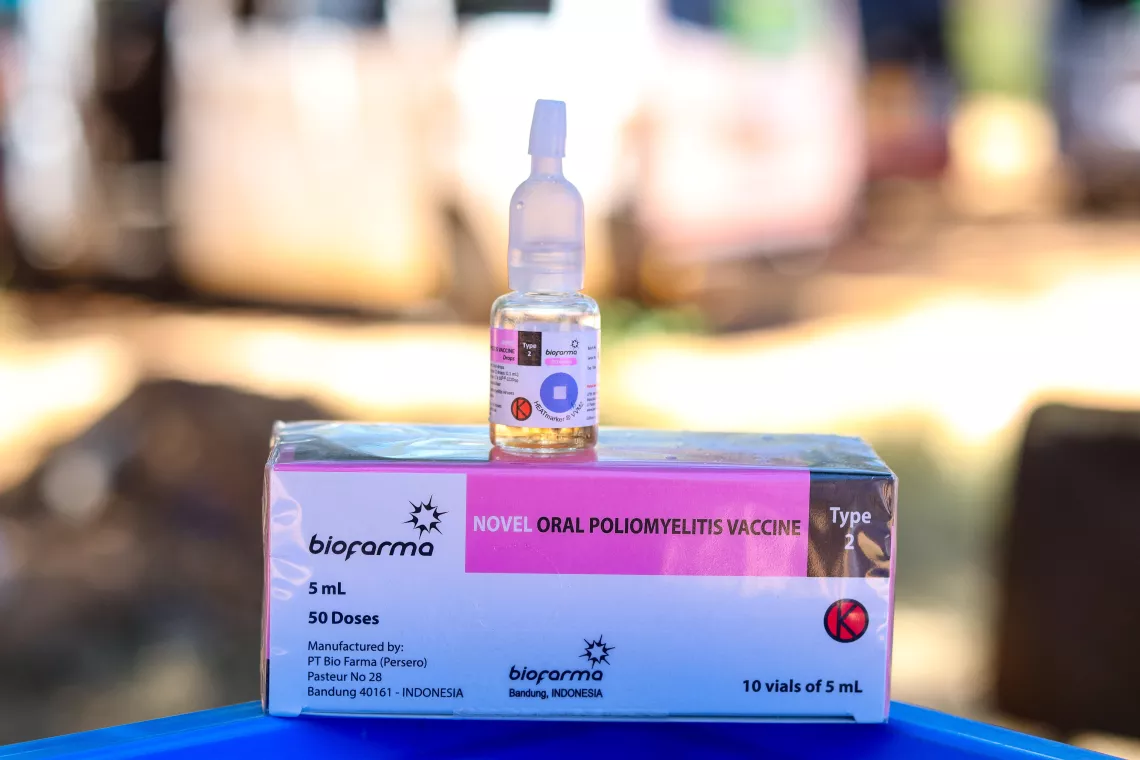
This is the first time Zimbabwe is using the novel OPV2 vaccine, a critical new, but tested and safe tool in the fight against cVDPV2 launched by the Global Polio Eradication Initiative in 2021. The nOPV2 has been successfully used in several African countries, including Ethiopia, Benin, Congo Republic, Liberia, Nigeria and Sierra Leone.

Catherine is living in Chitungwiza, south of Harare. She responded to the call to come to the vaccination point with her child. Catherine is happy her child can be protected from polio. “Together, we can build a Zimbabwe where polio is just a story in a book, not a threat in our streets. I advise all parents to get the polio vaccine for their children. As parents we can be part of the solution to kick polio out of our country. It’s free to vaccinate your child against polio.”

In support of the polio vaccination campaign, large scale multi-channel and multi-platform communication and community engagement activities are rolled-out to ensure parents are fully informed and motivated to have their children vaccinated. The social mobilization campaigns include the use of mass media and inter-personal communication through community and religious leaders, social workers and health care workers. Ahead of the vaccination campaign UNICEF supported early February a national trainer-of-trainer workshop for health workers organized in Masvingo by the Government of Zimbabwe and funded by the Polio Eradication Initiative (GPEI). Strengthening health workers in outbreak response improves the readiness, effectiveness, and quality of the planned campaigns to mitigate the impact of the virus. More than 80 participants from all provinces attended the two-day intensive training to further support cascade trainings and operations throughout the country.

Ruvarashe is glad thanks the polio vaccaine her child is now protected from polio. "This tiny drop is a giant lead towards a healthy life for my child. No limping, no struggle to breathe – just the freedom to run and play like she deserves.” During the polio vaccination campaign, the Ministry of Health and Child Care, UNICEF, and WHO are calling for all parents and caregivers to bring their children under 10 years old for vaccination during the campaign; healthcare workers to be vigilant in identifying and reporting suspected polio cases; and community and religious leaders to support communities during the vaccination campaign and promote public awareness about polio.

Supportive supervision and monitoring of the vaccination campaign is crucial. The Ministry of Health and Child Care with support of UNICEF, WHO and partners has trained and deployed about 85 supervisors across the country to support and ensure quality implementation of the vaccination. These supervisors are sent to the field in all corners of the country to supervise the implementation of vaccination campaign.
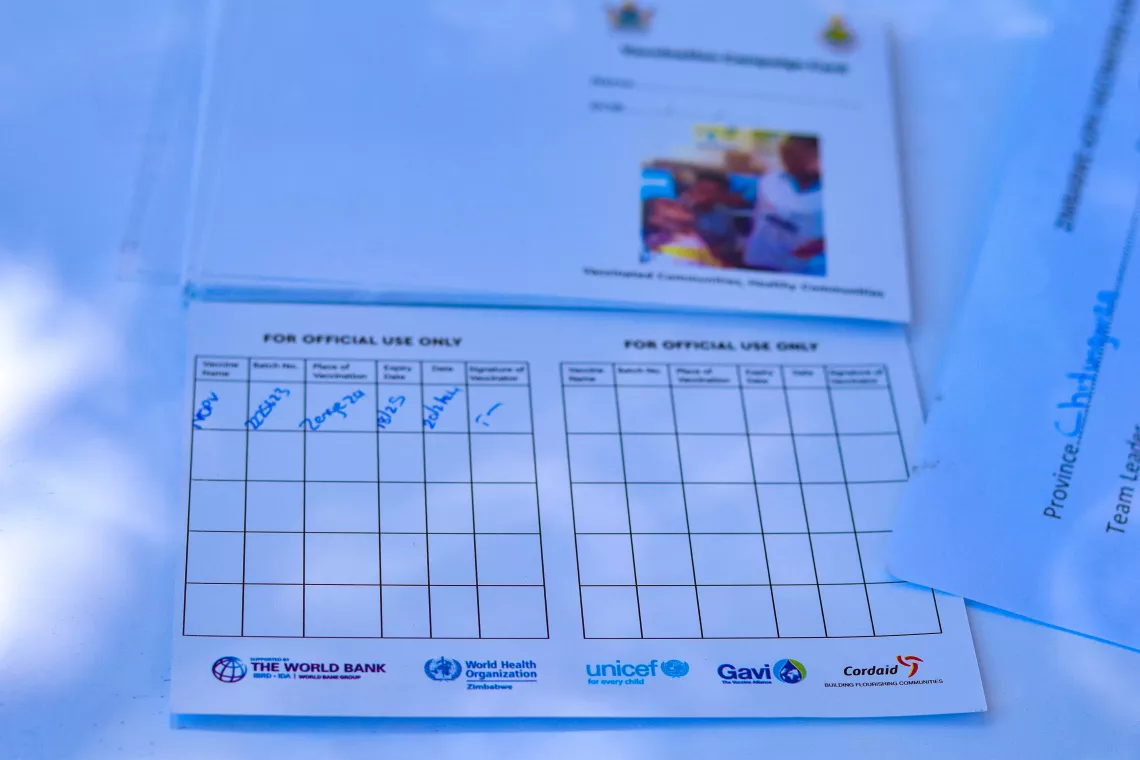
Zimbabwe’s health workers are moving house to house to vaccinate and protect children from polio while teams are also stationed at the health clinics and facilities during the campaign. The teams are well trained, using different accountability tools for administering the polio vaccine, keeping records and engaging caregivers and communities to make this campaign successful.

A swift response to the outbreak to protect children at risk of polio and prevent further spread of the virus is possible thanks to the technical and financial support from the Global Polio Eradication (GPEI) Initiative, a consortium that includes Rotary International, the US Center for Disease Control and Prevention (CDC), the Bill & Melinda Gates Foundation, GAVI-The Vaccine Alliance, WHO and UNICEF.

Panashe (Chitungwiza): “This vaccine is a gift, a chance to give our children a healthy start. It’s free and painless. By having our children vaccinated against polio, we show them how much we love them.”


