I did not know what to do when I was diagnosed HIV positive
With UNICEF’s support Zvandiri is providing young people living with HIV the mental support they desperately need

Awanda (not her real name) was diagnosed HIV-positive four years ago when she gave birth at the Madabe health facility in Matabeleland South.
In Zimbabwe over 117, 000 young people aged 15 to 24 are living with HIV. While knowledge about HIV in communities has increased, many people living with HIV are still suffering from stigmatization.
“I did not know what to do when the nurse told me, I was positive. When I went back home, I was in shock. I couldn’t sleep. I did not dare inform my grandmother with whom I am living. It was very emotional,” Awanda says.
She finally decided to tell her grandmother. Luckily her grandmother was very supportive. She did not judge her. With her grandmother's support, she returned to the health facility and started her antiretroviral therapy (ART) treatment.
ART is a demanding therapy involving taking a combination of HIV medicines daily. ART cannot cure HIV, but HIV medicines help people with HIV - like Awanda - live longer and healthier life.
Life will never be the same again for Awanda. But thanks to the support of her grandmother and the nurse at the health facility, she is now living everyday life. She has big ambitions for the future. She decided to start a poultry project. She sells her poultry products on the local market.

“Unlike in the past, being diagnosed with HIV is no longer a death sentence. You can have a good life, while being HIV infected.” That is the message Awanda wants to pass on to her peers.
“When the nurse at the health centre asked me to help other young mothers living with HIV, I did not hesitate. She invited me to become a Young Mentor Mother (YMM). I was happy to take up that responsibility,” she recalls.
Pregnant women that come to Madabe health center are systematically being screened on their HIV status. Those who test HIV positive get the needed medical assistance, including the antiretroviral therapy. But young mentor mothers add a lot to the support young women that are diagnosed with HIV need.
“My real life experience which I share as a young mentor mother with my peers is important to them. It is easier for young mothers to share their feelings with me,” stresses Awanda.
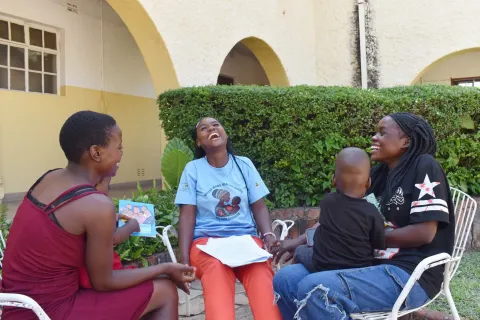
Awanda’s support for young mothers is an essential complement to the work of the nurse at the health centre. Through talks, she helps young mothers to accept their HIV status and to disclose it in their communities. She provides information about HIV and encourages young mothers to continue their therapy.
Young mental mothers like Awanda also help in tracking mental health problems among young mothers living with HIV. They use a mental health checklist developed by the Ministry of Health and Child Care in partnership with Zvandiri. The checklist includes questions on suicidal feelings, use of drugs and experiences of hallucinations. When some of the answers provided by a mother living with HIV highlight a mental health problem, the young mentor mother refers her to the nurse for further counselling and if needed to professional mental health treatment.
“Mental health is important. Emotions are strong when you live with HIV. Some of the peers I talk to, aresuicidal. They often lack confidence and have a low self-esteem. Some start taking drugs.”
Awanda meets with young mothers living with HIV twice a week at the health facility. She also does home visits in the communities to track young mothers that need assistance or have not come to the health facility to collect their medicines.
“I like assisting young mothers like me with advice and confidence. It makes me happy and proud”, says Awanda.
Common mental disorders such as anxiety and depression are highly prevalent among adolescents living with HIV. Research done in Zimbabwe has shown that 63% of adolescents and young people living with HIV have symptoms of mental disorders. At the same time, young people and their caregivers have limited information on mental well-being.
UNICEF has partnered with the Ministry of Health and Child Care and the non-governmental organization Zvandiri (as I am) to provide peer assistance to young people living with HIV, guiding them in their medical treatment, encouraging them to take their medication and providing them with mental support and referral in case of mental health disorders.

Pretence Bhebhe, registered general nurse at the Dingumuzi health facility in Plumtree (Matabeleland South) is happy with the support she gets from the young mentor mothers and the Community Adolescence Treatment Supporters (CATS), living with HIV.
“Since the programme started, I have seen a better follow-up of the medication treatment by the young people living with HIV. The programme has also created awareness of HIV within the communities, and helped combatting stigmatization,” says Prudence.
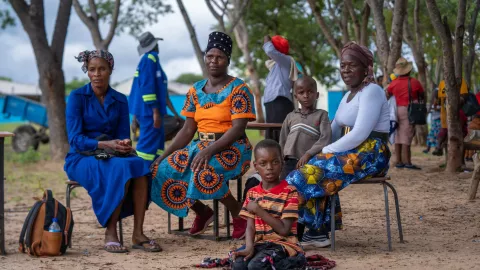
Samukele (not her real name) is a young mentor mother at Dingumuzi health facility. While she talks to the UNICEF Adolescent Development Specialist Masimba Nyamucheta and Takunda Chanitsa, Zvandiri Associate, the young mothers with HIV she assists, listen with great attention.
“I have a passion to assist young mothers living with HIV. I share with them my own experience, hoping that it will inspire them not to lose confidence. My biggest pride is to be able to help pregnant young girls living with HIV through a good treatment to deliver HIV-negative and healthy babies,” Samukele says with a big smile.
In coordination with the Ministry of Health and Child Care and with the support of UNICEF and partners, Zvandiri has recruited and trained throughout Zimbabwe young mentor mothers and Community Adolescent Treatment Supporters to assist their peers, to accept their HIV status, take their medication and have happy life.