Humanitarian Cash Transfers strengthen Social Protection Systems in Zimbabwe
Cash transfer programmes are an effective instrument to support vulnerable populations to meet their immediate needs and cope with various crises

Zimbabwe has faced numerous shocks in recent years, some climate-related such as cyclone Idai and the recurrent droughts, others due to economic crises, exacerbated by the globally driven events. The COVID-19 pandemic put further strain on the economy and the ability of vulnerable households to cope.
Cash transfer programmes as well as other in-kind support such as the provision of food rations and vouchers have been used in Zimbabwe and across the globe as an effective instrument in supporting the vulnerable populations to meet their immediate needs and cope with the strains of the various crises.
In August 2020, UNICEF in close partnership with the Ministry of Public Service, Labour and Social Welfare and with financial support from the Governments of Germany and Sweden introduced the Emergency Social Cash Transfer Programme (ESCT) with two aims: first to provide immediate support to chronically vulnerable households in urban locations, to cope with the impact of COIVD-19 and second to align closely with the Government led Harmonised Social Cash Transfer Programme (HSCT) and support its functioning and reach, across the country.
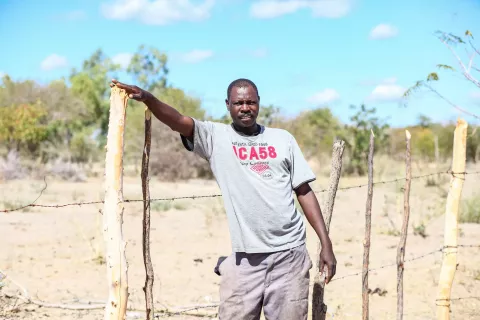
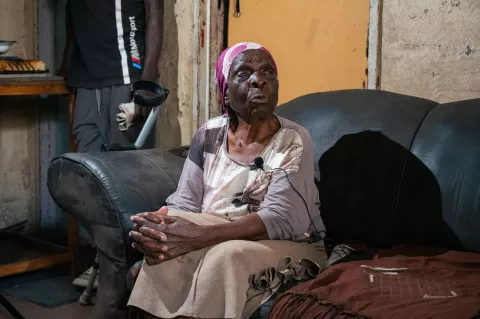
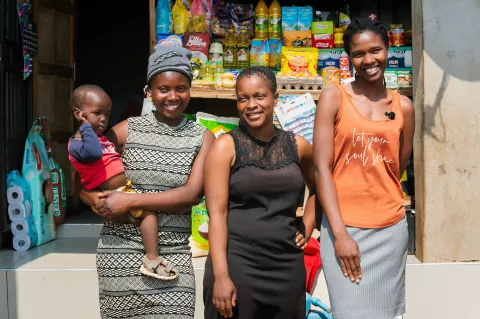
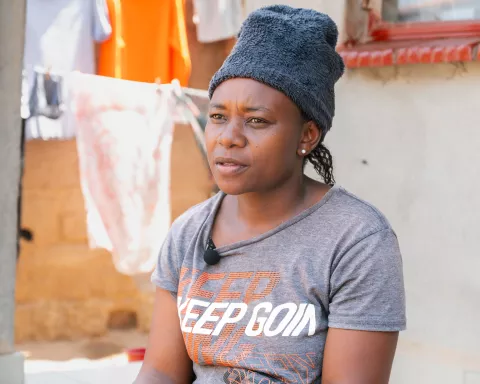
The programme started its support in 2020 to a limited number of households in the two districts of Gutu and Highfields situated within Masvingo Province and Harare respectively. It has since expanded to reach over 113,500 people within 25,000 households, including close to 53,000 boys and girls across the urban localities of eight districts in Harare, Bulawayo, Masvingo, Matabeleland North and Matabeleland South, providing them with timely cash transfers every month and linking to complementary nutrition and child protection services.
The Ministry, UNICEF and our implementing partners worked closely to prioritise the most food-insecure districts and together identified vulnerable households that needed support.
We put in place a robust system to ensure the integrity of the programme, including verification led by District Social Development Officers of information provided by a subsample of households initially visited and the establishment of a grievance mechanism to ensure that any concerns about households wrongly excluded or included are captured, investigated, and resolved.
Furthermore, we carried out regular joint monitoring visits to witness how the programme was being implemented and resolve any arising issues.
Throughout the process, the Ministry’s commitment to ensuring continuity beyond the lifetime of the funded support was made clear and as a result, a transition plan was developed.
During the transition process, we worked on how to integrate household details within the Ministry Management Information System, revalidated the details of 20% of the households and supported households to connect to Econet, the payment modality under the HSCT. We are proud to have successfully delivered this programme with our various partners, including the Ministry of Public Service, Labour and Social Welfare, which has absorbed the programme into its Harmonised Social Cash Transfer Programme (HSCT) programme. As I write, the Government has taken over the support to 6,778 households in the two districts of Gutu and Highfields, and preparation is in place for the transition of the remaining six districts supported under the ESCT programme. In doing so we are ensuring a more sustainable approach to channelling humanitarian support in the country.
Our joint initiative has shown that there is a better way of delivering humanitarian programmes and leveraging them in supporting the strengthening of the social protection system and extending the reach of longer-term social protection programmes.
Going forward we will continue work on this new way of engaging on the humanitarian and development nexus and to ensure that it paves the way to a more robust and strengthened longer-term social protection system that deals with the needs of the population in a coherent and sustainable manner.