Cash transfer programme brings relief to Bulawayo’s elderly
Programme reduces food insecurity, improve dietary diversity, maternal and child health outcomes of vulnerable households

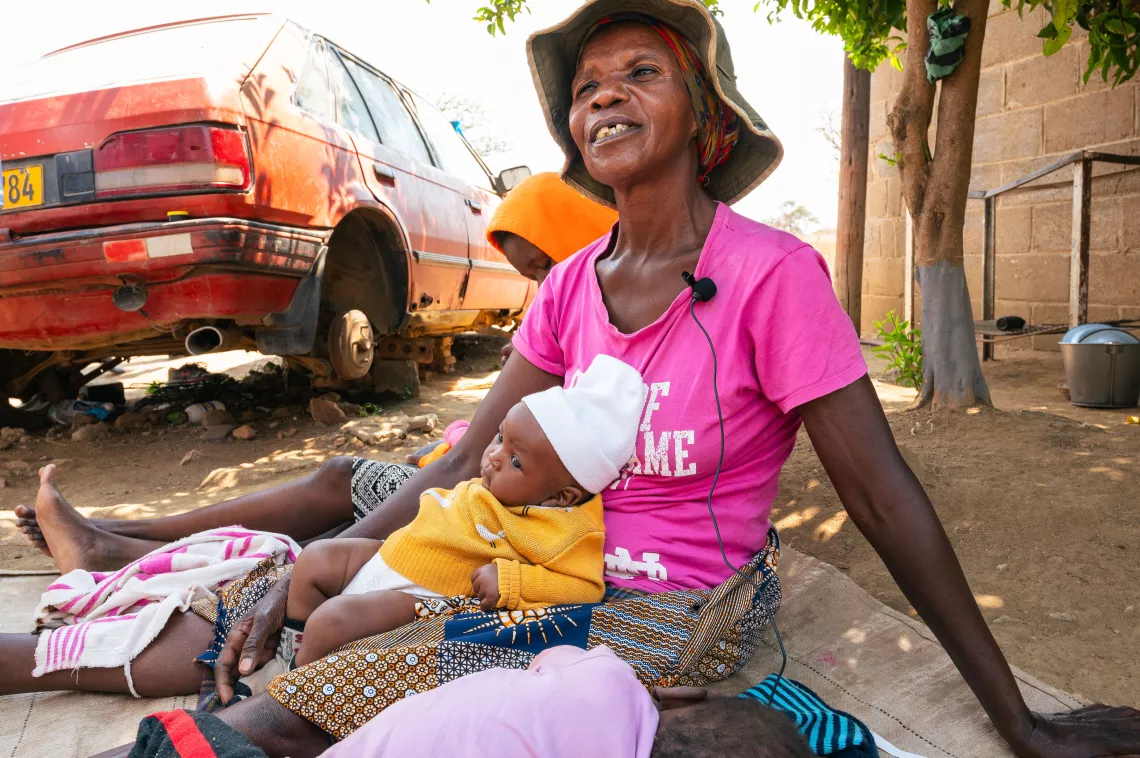
For 82-year-old visually impaired Moddie Masiya putting food on the table for her two orphaned grandchildren is a daily struggle.
Masiya, a widow from Bulawayo’s Old Luveve suburb, mainly survives on handouts from well-wishers and sometimes gets help from her unemployed children in South Africa.
“I am visually impaired, and I have constant pain on my legs,” she said.
“I go to the local clinic frequently for treatment, but the biggest challenge has been providing food for my two orphaned grandchildren.
“My only son, who is still in Bulawayo and used to support me, has since stopped doing his informal business because of old age while the others in South Africa that used to send me money are out of employment.
“I have had the misfortune of losing five of my children, but five are still alive.
“So, survival has been tough.”
Masiya’s burden eased after she was enrolled on the Emergency Social Cash Transfer (ESCT) programme implemented by UNICEF, Ministry of Public Service, Labour and Social Welfare and World Vision with financial support from the Government of Germany through the Kreditanstalt für Wiederaufbau (KfW) Bank.
The programme provided vulnerable families in Zimbabwe with monthly payments to alleviate poverty.
Beneficiaries of the programme were supported through monthly cash transfers and complimentary child protection services.
Buying food
Masiya was receiving US$12 a month until the programme was paused in July.
“The money I received from UNICEF and World Vision helped us a lot because there were times, we had absolutely nothing to eat before I joined the programme,” she said. “I would use the US$12 to buy mealie meal, sugar and cooking oil.”
She will also use the money to buy medication.
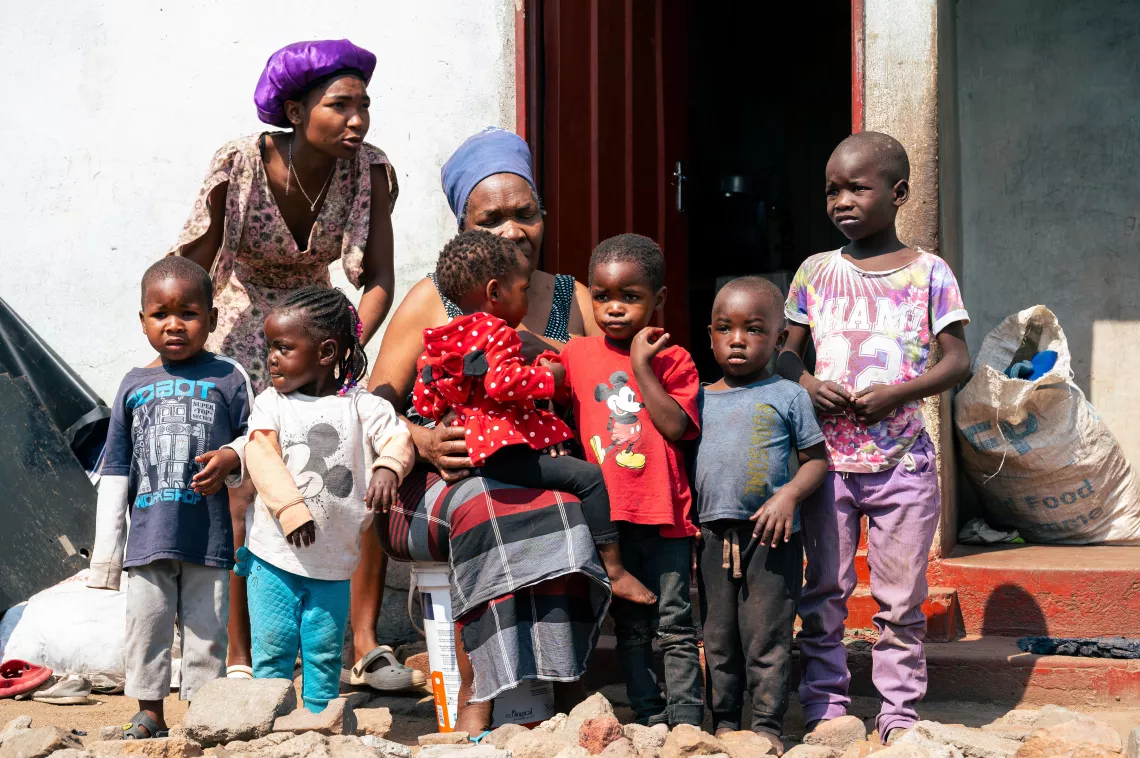
Elsina Mpofu (66) from Old Luveve, who is taking care of 10 grandchildren and struggles to walk after breaking her leg, said she used the ESCT money to buy medication, pay school fees and to buy food the family.
Mpofu also takes care of one of her grown up sons with a mental illness.
“I was struggling to take care of these children, especially after I broke my leg and needed money for medication and x-rays as my husband who repairs shoes is the only breadwinner,” she said.
“The money has gone a long way in assisting us to pay council bills, school fees for my grandchildren and to buy medication.
“I would like to thank UNICEF and World Vision for assisting us in our hour of need.”
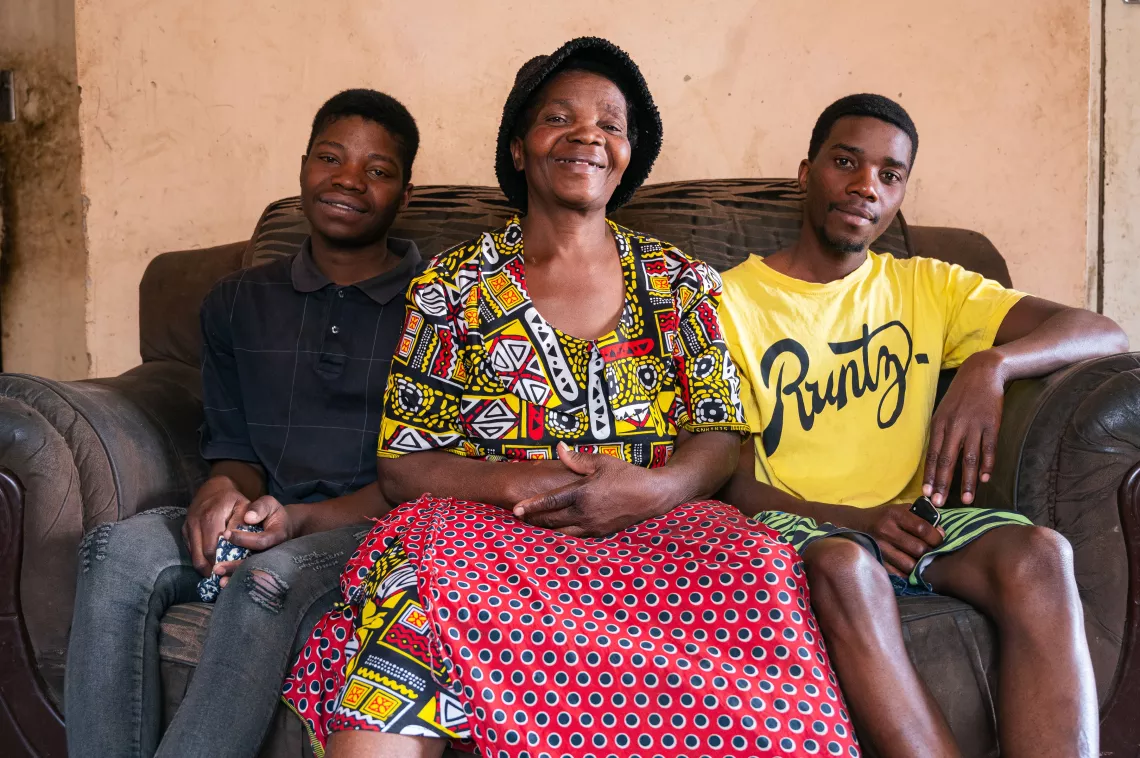
Agnes Kamujoma, a 60-year-old widow, had just suffered a stroke when she enrolled for the same programme in April last year.
Kamujoma, who stays with her children and two school going grandchildren in Bulawayo’s Nketa 6 suburb, had to abandon her vending business that was the family of seven’s only source of income.
She is also taking care of her eldest son, who suffers from a mental illness while her other sons are unemployed.
“Putting food on the table became very difficult when I suffered a stroke, but things changed a lot when I started receiving money through World Vision as we could afford to buy food and electricity tokens,” she said.
“Initially I was getting US$48 a month and was later reviewed to US$52. The money really helped us a lot.”
Kamujoma said her grandchild in Grade 4 had been registered under the government’s Basic Education Assistance Module (BEAM), a national school assistance programme that was created to cater for orphans and vulnerable children and appealed for help with her medical
Back to school
Another Nketa 6 resident Lydia Nhliziyo (63) said she was grateful that money she received through the ESCT Programme made it possible for her two grandchildren to return to school.
Nhliziyo, who is also widow, is taking care of her 91-year-old chronically ill mother, three grown up children that are on antiretroviral treatment and two grandchildren.
Her grandchildren aged nine and 13 are back in school and she has very high hopes for them.
“I used to survive by picking waste in the neighbourhood and selling it to a recycling company, but that was never enough to take care of this big family and send my grandchildren to school,” said an animated Nhliziyo.
“Apart from enrolling on the programme where I received US$52 a month, the people from World Vision advised me about other government programmes such as (the Basic Assistance Module) BEAM and I got assistance for my grandchildren.
“I used the money to buy food, uniforms and stationery for my grandchildren. I had to sacrifice so that they don’t feel like outcasts when they are among other children.
“I am very happy about the progress they are making at school, especially for the youngest one and for that I am very grateful to UNICEF and World Vision for what they have done for me and my family.”
The ESCT programme has helped to reduce food insecurity, improve dietary diversity and maternal and child health outcomes of vulnerable households in Zimbabwe whose situation was worsened by the outbreak of COVID-19 three years ago.
The Emergency Social Cash Transfer (ESCT) Programme’s foundation was born from the Harmonised Social Cash Transfer (HSCT) Programme, focusing on increasing the programme’s coverage and strengthening its delivery systems. The HSCT Programme began in 2011 and was funded by the Department for International Development (DfID); the European Union (EU); Swiss Development Cooperation (SDC); Kingdom of the Netherlands, Embassy of Sweden/Sida.
The Government of Zimbabwe, through the Ministry of Public Service, Labour and Social Welfare, has maintained the programme supporting 33 districts. The ‘harmonised’ feature of the programme focuses on a set of child protection interventions that enhance household food security and promote children’s human capital (schooling, nutrition). Key successes of the HSCT were increased capacity for households to purchase their food and other non-food items, thus promoting self-reliance and reducing negative coping mechanisms.
It is primarily focused on households headed by the elderly, those with pregnant women or with young children, persons living with disability and child-headed households.