CCWs spearhead child protection services in Tsholotsho
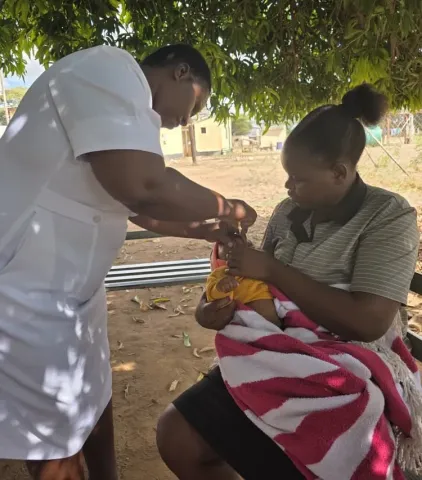
CCWs such as Nyathi are responsible for identifying and responding to cases of child abuse, neglect and exploitation in the community and promoting children’s rights.

Seventy-four-year-old Margaret Nyathi has dedicated most of her adult life to caring for vulnerable children in her community, where she has turned her home into a sanctuary.
Nyathi from Matabeleland North’s Tsholotsho District started as a foster parent for orphans and other vulnerable children when she was 35.
She is now the lead community childcare worker (CCW) in Ward 13, which encompasses Mvundlana, Ngqoya, Lupinde, Jahe and Nhlangano villages, a role she took up in 2015.
CCWs such as Nyathi are responsible for identifying and responding to cases of child abuse, neglect and exploitation in the community and promoting children’s rights.
“I became a foster parent when I was young because I was passionate about children’s rights,” she said in an interview at her homestead.
“I have raised many children here after taking them in without knowing any of their relatives, and one of them recently completed her university studies.
“I have faced court battles and other obstacles such as relatives that do not want to cooperate when we try to secure birth certificates and national identity documents (IDs) for the children in our care.”
Nyathi’s lifelong passion for protecting children’s rights saw her playing a crucial role during the massive mobile registration blitz in 2022, where the government issued birth certificates and IDs as it sought to address difficulties faced by citizens in obtaining identification documents.
The programme by the Registrar General’s office was supported by the Ministry of Public Service, Labour and Social Welfare in collaboration with UNICEF and funding from the government of Sweden.
“I worked with other CCWs in my ward to mobilise people to get birth certificates and IDs and a lot of people were assisted during the exercise,” Nyathi said.
“In Tsholotsho, we have challenges. Some children are smuggled from South Africa without identity documents, while others from remote areas do not have transport money to visit the civil registry offices.
“The mobile registration exercise assisted a lot in dealing with the backlog for identity documents in this area and we would be grateful if another mop up exercise is done to cater for those that missed the mobile registration blitz.”
Community Child Workers
Community Child Workers are responsible for identifying and responding to cases of child abuse, neglect, and exploitation in the community. When child abuse cases are identified, they refer the victims to appropriate social services. Community Childcare Workers also promote child rights and build community awareness of child protection issues. Community Childcare Workers to support the child protection programme were introduced in Zimbabwe in 2014, initially in a few districts and from 2016, scaled up to 37 districts with UNICEF funding. All 65 districts in Zimbabwe now have Community Childcare Workers. Sweden supports the Community Childcare programme through Child Protection III, managed by UNICEF.

Nyathi's sentiments were echoed by Simangele Ndebele, another CCW from Efusini in Tsholotsho town, who assisted at least 35 children in obtaining birth certificates during the exercise.
“I managed to help parents and guardians from Tsholotsho town and the surrounding villages to obtain birth certificates during the blitz,” Ndebele said.
“Some of those I assisted were abandoned children while others were children sent by their parents from South Africa without identity documents.
“Lack of birth certificates hinders children from participating in some school activities such as sports and other competitions.”
Tsholotsho has many people who migrate to countries such as South Africa and Botswana for jobs.
Most immigrants remain undocumented, making obtaining identity documents difficult for their offspring back home.
“In cases where both parents were unavailable either because they are in South Africa or they are late, we were able to assist them in getting birth certificates through the Department of Social Development,” said Ndebele, who also doubles as a foster parent in the community.
Tawanda Zimhunga, the director for social development in the Ministry of Public Service, Labour and Social Welfare, said CCWs played a central role in mobilising communities in Tsholotsho to secure identification documents, especially for children.
“Social workers, with the support of community childcare workers, identified vulnerable persons and, where necessary, assisted them with transport to access mobile registration centres near their localities,” Zimhunga said.
“Social workers further conducted assessments and prepared sociological reports to assist civil registry authorities in registering vulnerable persons in instances of abandoned children with no traceable relatives.
He added: “For most communities accessing registration centres is a major challenge as some members of the community are incapacitated to get to the registration centres, and the government, through the Department of Social Development with support from UNICEF, availed the emergency fund to cater for such vulnerable persons to ensure that they reach the registration centres to register the birth of their children.”
Zimbabwe has low birth registration rates, only 47 per cent of all births registered.
There are also huge disparities in birth registration, with only 40 per cent of all births registered in rural areas such as Tsholotsho and the urban regions having an average of 67 per cent registration levels.
UNICEF, working with partners, with funding under the Child Protection Fund II and the Government of Sweden, supporting the government in strengthening the civil registration systems in Zimbabwe, which has increased the number of service points where children can be registered.
Support has also gone towards developing or updating birth registration policies and fostering innovation in registration technology.