Allowances provide crucial support to Village Health Workers in Zimbabwe
VHWs form a critical backbone of the country’s public health system in rural areas.

With regular earnings from farming or other activities eroded by the COVID-19 outbreak, Village Health Workers in Zimbabwe’s Chipinge district rely on the allowances provided through UNICEF to help pay for things such as children’s school fees, household items and save for future expenses.
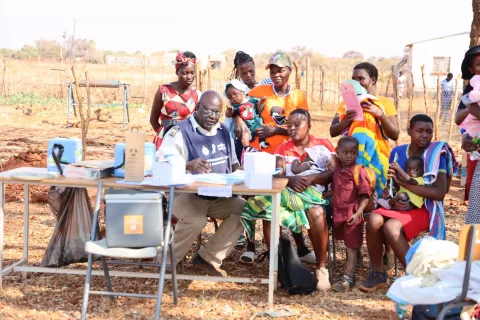
When Loveness Maphosa, a Village Health Worker (VHW) in Zimbabwe’s eastern district of Chipinge received her quarterly allowance of USD 42 paid through cash in transit in November, she felt a huge burden lifted off her shoulders. The cash in transit facility delivers cash payments at cluster pay points throughout the districts implemented by UNICEF and supported by the World Bank funded Zimbabwe Idai Recovery Project (ZIRP) and the Health Development Fund (HDF), funded by the EU, UK Aid, Sweden, Irish Aid and Gavi. This arrangement has eased the cash access challenges.
Her three now adult daughters dropped out of school due to lack of money for school fees after her husband died in 2015. She hopes to change that fate for her youngest daughter, Caroline, who is 11 years old and is still in primary school. The allowance came in handy towards achieving that dream.

“Caroline is still young, but I am already focused on her future. I want to keep her in school for as long as possible. She has to be successful in life, but school fees was proving to be a problem. I rushed to pay the fees debt I owed the school as soon as I received the allowance,” said Maphosa.
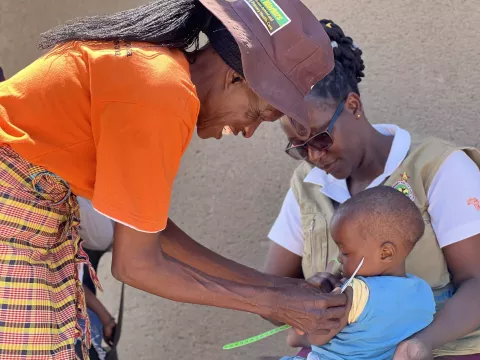
Caroline wore a mask, carried some health education material and tagged along as her mother moved around the sprawling Chako Shopping Centre in Chipinge, teaching people about COVID-19, malaria prevention and baby health.
VHWs form a critical backbone of the country’s public health system in rural areas. They provide a crucial link to hospitals and health clinics for people who often stay long distances from health facilities and rely on the first line help from VHWs who live in their communities.
VHWs deliver health assistance by conducting health promotion services ranging from maternal, neonatal and child health, nutrition, water, sanitation and hygiene (WASH) related information and management of common childhood illnesses.
Although VHWs are volunteers, the UNICEF with funding from the World Bank is supporting those such as Maphosa under the Zimbabwe Idai Recovery Project (ZIRP) with training and a quarterly incentive of $42.
For Maphosa, the money couldn’t have come at a better time. Not only was she able to pay school fees for Caroline, the allowance also eased the hardships brought by a slowdown in her sweet potato trading business due to the pandemic – that saw most of her customers stay at home and markets closed.
Other VHWs in Chipinge echoed Maphosa’s story, as their regular earnings have been eroded by the outbreak of COVID-19. Boasting fertile soils, many people in the district grow and sell crops and fruits such as sweet potatoes, pineapples, bananas and avocados that they sell to motorists passing through the area.
“Customers are few these days because of COVID-19. The allowances really helped a lot, we managed to pull through,” said Miranda Moyana, another VHW.
Many said they were also saving part of the money for the difficult days that traditionally follow the festive season.
“January disease is not going to be a problem for me. Books, fees and uniforms, they are all sorted,” said Maphosa.