From Survivors to Protectors
Social mobilisers on the frontlines of Zambia’s last mile to polio eradication

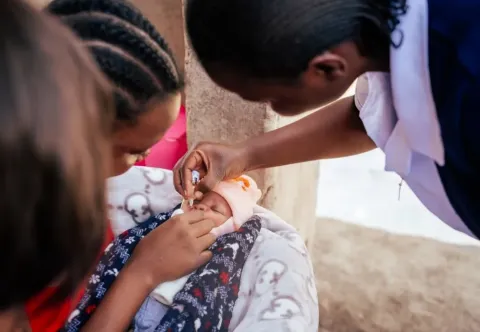
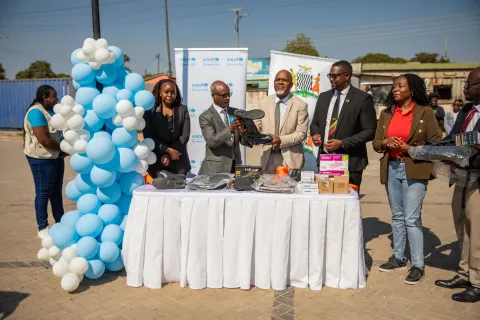
LUSAKA, Zambia, April 2026 --- On the second day of Zambia’s sub-national polio vaccination campaign, launched leading up to the commemoration of Africa Vaccination Week by the Government of the Republic of Zambia alongside UNICEF, World Health Organization, and Rotary International. The campaign follows the recent detection of vaccine-derived poliovirus type-2 (VDPV2), prompting urgent action to protect children and prevent further spread. The campaign primarily uses a door-to-door strategy, ensuring vaccinators reach children directly in their homes, especially in high-risk and underserved communities.
The energy at Chawama Level-1 Hospital was unmistakable. Health workers moved with urgency, caregivers queued patiently, and in the midst of it all stood a group of individuals whose presence carried a powerful message: polio ends with them.
These were not just volunteers. They were survivors.
In Zambia’s effort to end polio, those once affected by the disease are now leading the charge - moving door-to-door to ensure no child suffers what they did.
Turning pain into purpose
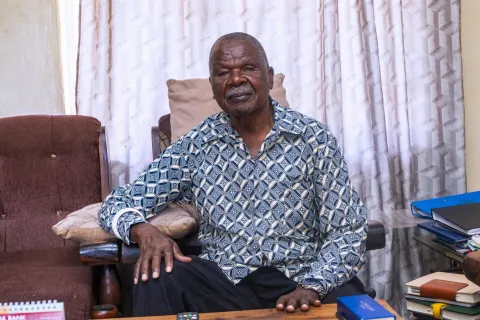
Among the social mobilisers preparing for fieldwork was a woman who knows polio not from textbooks, but from lived experience. Like many others in her group 39-year-old Felistus Ngoma carries the physical reminders of a disease that once changed the course of her life. Today, she channels that experience into purpose - ensuring no child suffers the same fate.

Polio affected how I move, how I live. But it also gave me a mission. I go door-to-door so that parents understand what is at stake. No child should go through this.
Across Chawama community, these social mobilisers are on the frontlines moving long distances, knocking on doors, and speaking directly with caregivers. Their stories cut through doubt and hesitation in ways no leaflet or announcement ever could.
They solidify messages by contextualizing them, enough for communities to ‘see polio’ in reality.
Trust that transforms behaviour
At the hospital, preparations quickly transitioned into action. Equipped with registers, information materials, and unwavering determination, the mobilisers headed into the community. Their approach is simple but deeply effective: conversation rooted in lived experience.
"When I meet a hesitant parent, I tell them my story," another mobiliser explained. "I show them what polio did to me. That is when they understand why vaccination is important.”
This emotional connection is critical in communities where misinformation or fear can prevent children from receiving life-saving vaccines.
According to Dr. Gladys Muyembe, the Public Health Specialist at Chawama Level 1 Hospital, the role of social mobilisers - especially polio survivors - is indispensable.
They are key to our success. They bring credibility and trust. When caregivers hear directly from someone who has lived with polio, it changes perspectives.
Reaching every child, every time
In this sub-national campaign, children under five in six targeted provinces will be reached. Despite strong national efforts, the last mile in polio eradication remains the most challenging. Reaching every child under five requires persistence, coordination, and community trust.
“Some families are not at home during the day, others are hesitant, and some simply lack information, while the vastness of the catchment area also poses a challenge,” Dr. Muyembe explained. “That is why these mobilisers are so important. They help us close those gaps."

Stephen Sichone, UNICEF Zambia’s Behaviour Change Officer emphasized that behaviour change is at the heart of eradication efforts.
“Vaccines are available, but uptake depends on trust,” he said. “Polio survivors bring a level of authenticity that resonates deeply within communities. They are not just messengers - they are living proof of why vaccination matters.”
A shared responsibility
Back in the community, the impact of these interactions is visible. Doors that might have remained closed are opening. Conversations are turning into action. Children are being vaccinated. For the mobilisers, every vaccinated child is a step closer to a future they never had.
“To see polio eradicated would mean everything," Felistus said. "It would mean that what we went through was not in vain.”
Their work is a reminder that the fight against polio is not only a medical effort, but also a collective responsibility. Governments, partners, health workers, and communities must work together to ensure no child is missed.
The final mile
Zambia stands at a critical moment. With sustained commitment and community engagement, polio eradication is within reach. But the final steps require unwavering focus.
At Chawama Level-1 Hospital and beyond, polio survivors are leading the charge - transforming their past into a force for protection, advocacy, and hope. Their message is clear: the end of polio is possible, but only if every child is vaccinated. And in this last mile, those who once suffered most are ensuring that no child is left behind.
UNICEF thanks polio survivors for championing child vaccination in their communities, and partners including the Government of the Republic of Zambia, Global Polio Eradication Initiative, the Gates Foundation, United States Centers for Disease Control and Prevention and Rotary International for their unwavering support in the effort to end polio.

To all parents and caregivers: protecting your child’s health is love in action. There is no cure for polio, but it is 100% preventable through vaccination. The drops provided at health facilities are safe, free, and globally tested - don’t wait, take your child for vaccination today.