Zambia Launches Final Round of Polio Vaccination Campaign Targeting 3.9 Million Children
The third round of the polio sub-national campaign builds on two previous rounds and continues in the same six provinces to ensure all children under five are reached and fully protected against polio
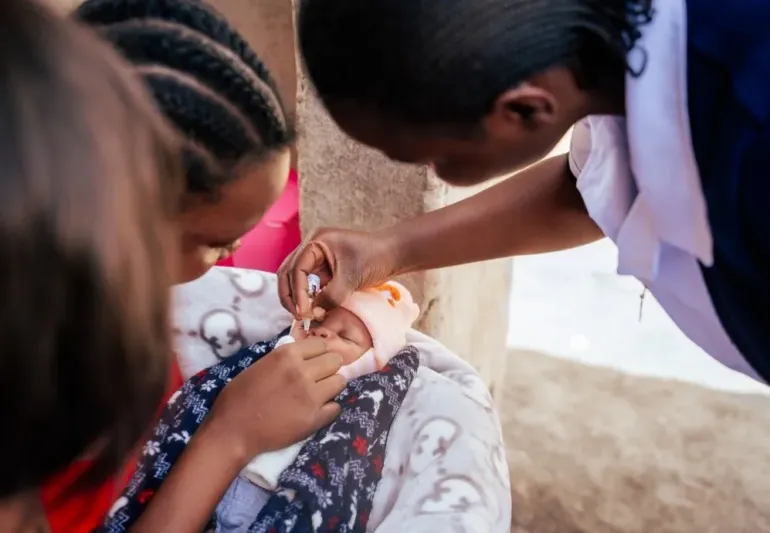
19 July 2026 – LUSAKA, Zambia. The Government of the Republic of Zambia, through the Ministry of Health, in partnership with the World Health Organization (WHO), Rotary International, UNICEF and other partners of the Global Polio Eradication Initiative (GPEI), has launched the final round of the Sub-National Immunization Activities (SIA) polio campaign targeting about 3.9 million children under the age of five.
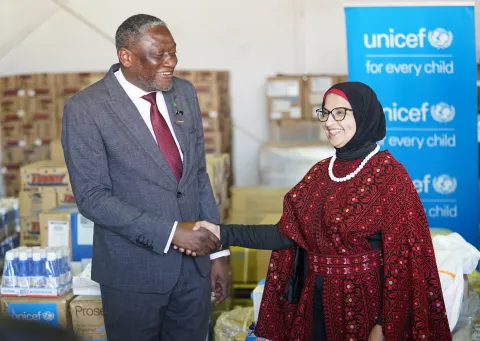
The Government of the Republic of Zambia leveraged the launch of the third polio round to inaugurate the solarized National Vaccine Store, marking a major step in strengthening the country’s vaccine cold chain and immunization system. Supported by UNICEF under the Africa CDC Saving Lives and Livelihoods initiative, the newly installed 100-kW solar photovoltaic system will provide reliable and sustainable power to Zambia’s primary vaccine storage facility, helping to safeguard vaccine potency, reduce the risk of losses caused by power disruptions, and ensure uninterrupted vaccine storage. The initiative is also expected to generate annual power cost savings of approximately US$ 48,000, reinforcing Zambia’s commitment to resilient, efficient and sustainable health systems as the country launches the third round of the polio vaccination campaign.
This third round, taking place from the 21st to the 26th of July 2026, follows two earlier vaccination rounds implemented in April and June 2026 as part of a regional outbreak response to strengthen immunity among children under five years of age in six priority provinces: Lusaka, Southern, Eastern, Central, Western, and Muchinga.
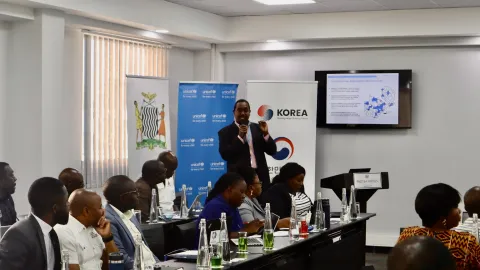
Reflecting on the importance of sustained community participation, Secretary to the Cabinet, Mr. Patrick Kangwa, who officiated at the Launch, emphasized that Zambia's success in protecting children depends on sustained collaboration between Government, cooperating partners, health workers, community leaders, and caregivers. He noted that while the earlier rounds of the campaign delivered encouraging results, continued efforts remain essential to interrupt poliovirus transmission. "This final round is a critical step to ensure that every child is fully protected, and we call on all caregivers to take advantage of this opportunity to close the last remaining immunity gaps,".
Across both rounds, the vaccination campaign achieved strong reach and implementation at scale, covering 6 provinces, 71 districts and 1,985 health facilities, supported by 7,830 vaccination teams and 8,006 social mobilizers and supervisors. Round 1 reached 3,841,940 children under five against a target of 3,759,057, achieving 102 per cent administrative coverage, while Round 2 reached 3,979,228 children against a target of 3,845,667, increasing coverage to 103 per cent. The campaign also showed notable quality improvements, with the proportion of zero-dose children declining from 1.5 per cent to 0.55 per cent.
These results reflect the sustained commitment of health workers, community-based volunteers, and families who ensured that children were reached even in the most remote areas, or when on the move.
Dr. Clement Peter Lasuba, WHO Representative in Zambia, emphasized that outbreak response requires persistence beyond initial success. “Each round builds on the previous one, increasing immunity and reducing the risk of transmission. WHO continues to work closely with the Government and partners to ensure that vaccination reaches every eligible child without exception,” he highlighted.
Following the detection of poliovirus in environmental samples in Lusaka earlier this year, the polio campaign started to ensure repeated doses of the polio vaccine were administered, which is the only way to fully protect children against the disease and interrupt potential poliovirus transmission. This final round aims to consolidate these gains by providing a final extra dose of vaccine to children under five who have received doses in the previous rounds, and to reach any children at risk that may have missed previous doses.
During this final phase of the campaign, vaccination teams will continue to reach families through door-to-door visits, while also operating in schools, markets, churches, and health facilities. All children under five years will be offered the oral polio vaccine, even if they have received previous doses.
UNICEF Zambia Representative Saja Farooq Abdullah emphasized that the campaign is not meant to be a stand-alone intervention. “While these rounds are essential to stop poliovirus transmission, lasting protection depends on strong routine immunization systems that continue well beyond the campaign period. And here caregivers play a critical role, sustaining gains by keeping children up to date with all essential vaccinations provided by routine services,” she said.
The polio campaign is supported by the Global Polio Eradication Initiative (GPEI), including WHO and Rotary International, with generous contributions from the Kingdom of Saudi Arabia (KSRelief), and the United Arab Emirates (UAE).
Note To Editors:
The Global Polio Eradication Initiative (GPEI) is a public‑private partnership led by national governments and six core partners — the World Health Organization (WHO), Rotary International, the US Centers for Disease Control and Prevention (CDC), UNICEF, the Bill & Melinda Gates Foundation, and Gavi, the Vaccine Alliance. Launched in 1988, GPEI has helped reduce global polio cases by more than 99% and continues to support countries with vaccination, surveillance, outbreak response, and the innovations needed to achieve and sustain a polio‑free world.
-For more information, please contact:
Twaambo Siavwapa, Head of Communications and Public Relations, Ministry of Health, [email protected]
Kristina Seris, External Relations and Communications Officer, WHO Zambia, [email protected]
Sarah Olympia Talon Sampieri, Communications Officer, UNICEF Zambia, [email protected]
Media contacts
About UNICEF
UNICEF promotes the rights and wellbeing of every child, in everything we do. Together with our partners, we work in 190 countries and territories to translate that commitment into practical action, focusing special effort on reaching the most vulnerable and excluded children, to the benefit of all children, everywhere.
For more information about UNICEF and its work for children in Zambia, visit www.unicef.org/zambia.
Follow UNICEF Zambia on Twitter, Facebook and Instagram