A Lifeline for Zambia’s Children
Raising Voices Through the 116 Helpline

LUSAKA, Zambia, June 2025 ---"To be trusted by people who don't even know me … that's when I truly see the impact of my work come alive in communities. It's what has kept me going for the past seven years," says Busiku Lumamba Mvula, a counsellor at Lifeline/Childline Zambia. Her words quietly capture the deep and personal power behind the organization’s mission. For 22 years, Lifeline/Childline Zambia has been a lifeline in every sense, providing a 24/7 toll-free telephone counselling and support service offering safety, guidance and hope to countless children and families across the country.
Operating the Government of the Republic of Zambia (GRZ)’s mandated lines 116 and 933, the Lifeline/Childline Zambia has become a critical voice of comfort, hope and urgent intervention for children facing abuse, neglect, exploitation and violence.
Lifeline/Childline Zambia serves as a vital first point of contact for children and communities in need of support. Its wide-ranging services include 24/7 emergency and first aid counselling, a confidential reporting platform, and case management in coordination with the Ministry of Community Development and Social Services (MCDSS) and other partners. The organization also provides critical information on child protection issues, offers a grievance redress mechanism during drought emergencies, and engages in community outreach to raise awareness. In addition, it builds local capacity on child protection and conducts research on pressing issues such as suicide prevention among children.
Since its establishment in 2003, Lifeline/Childline Zambia has grown into a trusted national support service, thanks to the strong backing of UNICEF Zambia, UNFPA, UNHCR and partners such as CHAZ, Save the Children, Plan International, ZICTA. Key support also comes from service providers including Airtel, MTN, Zamtel and most recently, ZED Mobile. The organization now operates with a dedicated workforce of 58 staff members, 35 of whom are trained counsellors, providing frontline support to children and families across the country.

As the first point of contact for communities across the country, we are central to the national response, available around the clock to those in need. At Lifeline/Childline Zambia, we believe that help should always be just a phone call away and we truly mean it.
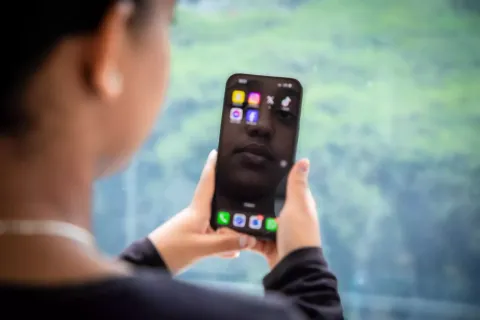
Many children reach out seeking help without realizing their concerns relate to mental health. They express worries about their future, access to food, school and safety. Others call to report serious issues such as gender-based violence, sexual abuse, challenges around sexual and reproductive health, child marriage and the impact of poverty. All of which expose them to significant risks.
The parent ministry MCDSS, complements the Government of the Republic of Zambia (GRZ)’s efforts in child protection by providing technical support and deploying field volunteers across districts. Lifeline/Childline Zambia continues to demonstrate measurable impact, serving as the first point of contact in cases involving child protection, emergencies and crises. The organization also provides essential referral services to one-stop centers and functions as the official Grievance Redress Mechanism for the Disaster Management and Mitigation Unit (DMMU) during the national drought response.
Despite its life-saving role, many communities in Zambian remain unaware of the helpline’s existence or the scope of its services. That’s about to change.
Zambia is set to host the 11th International Consultative Conference for Child Helplines (ICCH), a prestigious global gathering organized by Child Helpline International in partnership with the GRZ through the MCDSS, Lifeline/Childline Zambia and UNICEF. The conference, held every three years, brings together over 150 member helplines from 133 countries, along with government officials, child protection experts, youth councils and international partners. The last conference was hosted in Stockholm, Sweden, in 2022.
This is more than just a conference, it’s a platform to raise awareness, strengthen global collaboration and reaffirm our commitment to protecting every child. While hosting this event puts Zambia on the global child rights map, it also challenges us to ensure that systems like 116 are accessible, reliable and known by every child in every village.

Answering the Call
The helpline, supported by the MCDSS, provides not only emotional support but also emergency interventions, referrals and follow-ups. Taking in a total of up to 2,000 calls and providing at least 1,300 responses in a day, it's a vital tool in Zambia’s child protection system yet it often goes underused due to limited public awareness.
"Many children don’t know they can call 116 for help, says Busiku Lumamba Mvula, Counsellor and Childline Operator at Lifeline/Childline Zambia. Sometimes, it’s the first time they have been heard without fear or shame.”
While counsellors are available in English and all seven major Zambian languages, support from UNICEF Zambia has enabled the recruitment of five multilingual counsellors who speak Amharic, Arabic, French, Lingala, and Swahili. These counsellors not only support diverse communities but also assist the Judiciary of Zambia by providing interpretation services in child protection case proceedings.
Whether it's reporting sexual abuse, seeking guidance in a crisis, or just having someone to talk to, Lifeline/Childline Counselors are trained to listen without judgment.
Why the ICCH Matters
The upcoming ICCH will spotlight not only global innovations in helpline services but also Zambia’s evolving role in child protection. It’s a recognition of the country’s strides in advocacy and multisectoral collaboration. Workshops, panels and youth-led dialogues will cover critical themes, including digital online safety to trauma-informed care and cross-border protection for children on the move.

Barriers to Breaking the Silence
Despite progress, systemic issues remain, limited connectivity in rural areas, cultural stigma around reporting abuse and insufficient funding for expanding Lifeline/Childline services.
“We can’t protect children if they can’t reach us, public education is crucial and so is investment in staff training and infrastructure,” notes Florence Nkhuwa, Chief Executive Officer of the Lifeline/Childline Zambia.
Voices of Hope
In preparation for the ICCH, Lifeline/Childline Zambia is launching awareness campaigns in schools, communities and on radio. Young people themselves will have a seat at the table, bringing firsthand insights on what protection means in their lives. For survivors of violence and abuse, the Lifeline/Childline is more than a phone number. It gives them a voice.
A Collective Responsibility
“As Zambia prepares to welcome the world to the ICCH, the message is clear: protecting children is a shared responsibility. From government leaders to parents, from teachers to technology companies, every sector has a role to play. When a child calls 116, someone must answer,” says Henri Heikura, UNICEF Zambia Representative.
The ICCH serves as a unifying platform, bringing together stakeholders from around the world to share experiences, identify common challenges and explore practical solutions. It also aims to engage development partners and governments in efforts to make child helpline services sustainable, while raising awareness of their critical role in protecting children and supporting communities globally.

Conclusion
While progress has been made, raising awareness about Lifeline/Childline Zambia and its essential services remains a challenge. In some communities, even when people are aware of the helpline, access to a phone or internet is still limited. There is a clear need for increased sensitization, wider promotion of the platform, and greater investment to ensure every child can access support when they need it most. As Zambia welcomes delegates to the International Conference on Child Helplines, we do so with pride - and with the united voice of all the children of Zambia.
Every child deserves to be heard, protected and supported, no matter where they live or what language they speak. Let the ICCH be a turning point, where we move from dialogue to action and ensure that no call for help ever goes unanswered.