Traditional Leaders Commit to Uphold and Protect the Rights of Children in North- Western
Zambia’s traditional leaders play a significant role within their communities
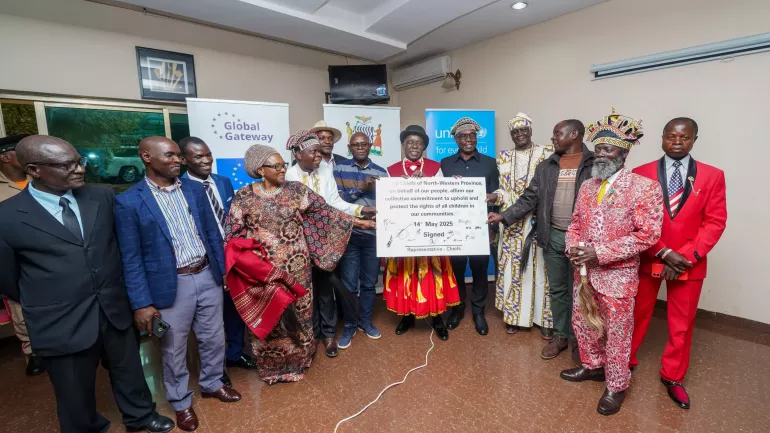
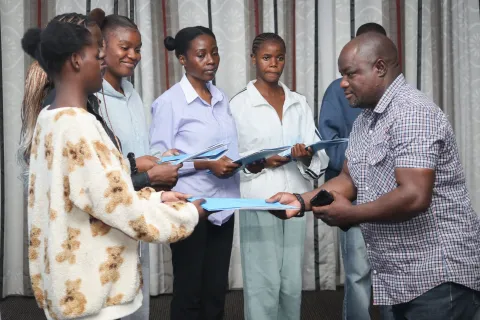
14 May 2025, Solwezi, Northwestern Province – In a significant step toward strengthening community- driven development, traditional leaders from fifteen chiefdoms in Kalumbila, Mushindamo, Mufumbwe, Kabompo, and Zambezi districts convened today in Solwezi. Hosted by the Permanent Secretary of North-Western Province, Colonel Grandson Katambi (retired), the leaders pledged to uphold and protect the rights of children in the province.
This significant gathering marks a unified commitment to support the implementation of the European Union Human Development Programme (EU-HDP). The programme aims to enhance the well-being and development of children across the region, ensuring their rights are respected and protected. This four-year initiative implemented by UNICEF Zambia, together with two civil society partners – Marie Stopes and Care aims to support children to reach their full potential and to improve young female adolescents’ resilience in alignment with Zambia’s human development commitments.
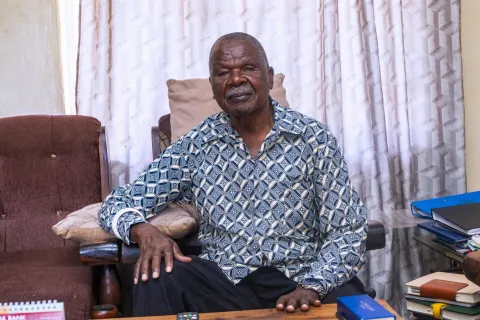
“We have seen firsthand how early marriages rob our girls of their potential, their education and in many cases, their lives. As traditional leaders in North-Western Province, we have already been active in addressing these challenges. Working with partners, we have developed and implemented harmonized customary by-laws aimed at addressing gender-based violence, early marriages and defilement which have empowered our communities to be actively involved in the fight against these negative vices. Let us all work together to protect the investment that is being made through the construction of the Early Childhood Development and Education Centres. These centres will provide an opportunity for our young children to have a good start early in life. This would set them on a path of success," said HRH. Dr. Chief Mumena.
Zambia’s traditional leaders play a significant role within their communities. They are highly respected and influential, often acting as key intermediaries between the Government, development partners, and the people they serve. Their endorsement and active participation can facilitate smoother implementation of development projects by ensuring community buy-in and addressing any cultural or social concerns that may arise.
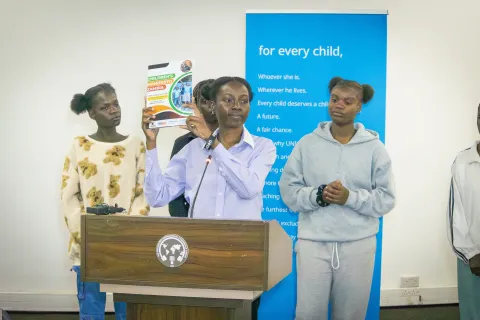
“This programme’s overall objective is to support children to reach their full potential and to improve young female adolescents’ resilience in alignment with Zambia’s human development commitments under the 8th National Development Plan (8NDP). As a province, we look forward to fostering collaboration between the European Union, local governments and communities in creating sustainable and impactful changes in the critical areas of Early Childhood Development and adolescent pregnancy/ending child marriage through this intervention,“ said Colonel Grandson Katambi (Retired), Permanent Secretary, North-Western Province, while emphasizing that active participation in this programme by key stakeholders in crucial to generate trust, cooperation and sense of ownership among the local population.
“Traditional leaders are key partners in shaping the future of Zambia. Your leadership carries the wisdom, trust, and cultural influence needed to drive lasting change in communities. The European Union deeply appreciates the vital work Chiefs across North-Western Province are already doing to end child marriage and support early childhood development. We are committed to supporting your current efforts so that together, we can ensure that every child has the chance to grow up safe, educated, and empowered, and every adolescent girl is protected and free to make informed choices’ remarked Ms. Sonia Godinho, Education Programme Manager, European Union Delegation in Zambia.
The first years of life are foundational. A child’s brain develops faster in the first five years than at any other time. What we invest in these early years determines a child’s ability to grow, to learn, and to contribute to society. Yet, the current national investment in Early Childhood Development, while improving, remains far below global benchmarks. Pre-primary education receives less than 2 per cent of the education budget, and many children do not have access to early childhood education and early learning opportunities.
Adolescence is another critical period that offers a second window of opportunity to influence developmental trajectories, compensate for poor childhood experiences and facilitate a productive transition into adulthood. In Zambia, adolescents aged 10 to 19 years, make up about 26 per cent of the total population. They face critical challenges that affect their well-being and success. For example, 29 per cent of women aged 20-24 were married before turning 18, and about 28 per cent of girls aged 15-19 have already borne children.
“Early Childhood Development, ending child marriage, and preventing adolescent pregnancies are not just development priorities, they are moral imperatives. Every child deserves the right to grow up in a safe, nurturing environment where they can reach their full potential. At UNICEF, we remain deeply committed to these causes because we know that investing in the earliest years of life and protecting girls from early marriage and motherhood transforms entire communities. But we cannot do it alone. Your Royal Highnesses, your leadership, is central to this effort. As custodians of tradition and agents of change, you have the power to influence mindsets and protect your children’s futures,” stated Dr Nejmudin Kedir Bilal, UNICEF Zambia Deputy Representative Programmes, while acknowledging that funding cuts are putting at risk hard-won gains, and therefore, “collaboration between UNICEF, traditional leaders, government, and partners, is more important now than ever.
This meeting follows the first in a series of two key engagements with traditional leaders, the initial one having been held in Luapula Province on 25 April 2025, hosted by UNICEF Zambia. Following these two engagements, UNICEF will work with the Local Government through the Permanent Secretaries in Luapula and North-Western provinces to deliver key interventions under this programme, including:
- Train social welfare, health workers, and teachers so that children and adolescents receive quality services.
- Support communities with parenting programmes that promote nurturing care and well-being of children and adolescents and create a protective environment for children and adolescents to prevent harm.
- Ensure WASH services are functional and sustainable by strengthening district and community maintenance structures.
- Collaborate with the government to strengthen systems—from teacher recruitment to supply chains—to ensure the Early Childhood Development and Education centres are not only built but thrive.
Media contacts
About UNICEF
UNICEF promotes the rights and wellbeing of every child, in everything we do. Together with our partners, we work in 190 countries and territories to translate that commitment into practical action, focusing special effort on reaching the most vulnerable and excluded children, to the benefit of all children, everywhere.
For more information about UNICEF and its work for children in Zambia, visit www.unicef.org/zambia.
Follow UNICEF Zambia on Twitter, Facebook and Instagram