The partnership with the European Union strengthens emergency preparedness and response for children in Zambia
An eight-day EU Humanitarian Aid Operations mission reviews support for life-saving assistance, cholera response and anticipatory action, from national coordination to frontline implementation
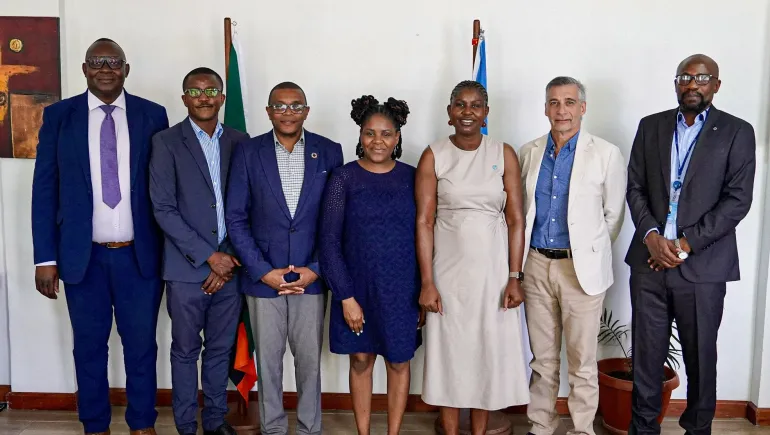
LUSAKA, 8 October 2026 – A delegation from the European Civil Protection and Humanitarian Aid Operations (ECHO) concluded an eight-day mission to Zambia today. The visit highlighted how the European Union’s humanitarian support and strong partnership are helping to strengthen the country’s preparedness for and response to emergencies affecting children and communities.
The mission comes as Zambia continues to face overlapping public health and climate-related crises, from droughts and floods to food and nutrition insecurity and recurrent public health emergencies such as cholera, with the recent outbreak declared by the Ministry of Health. The EU humanitarian assistance provides comprehensive support to respond to the different crises affecting the country, both by supporting life-saving delivery of services to address immediate needs, while also strengthening national and local capacities to prepare and act earlier for crises that can be anticipated, such as climate-related emergencies.
“This partnership places people at the center, ensuring that funding directly benefits those most affected, especially children,” said Pablo Torrealba, Head of Office - Southern Africa & Indian Ocean (SAIO), DG ECHO.
From 28 September to 7 October, the mission, logistically coordinated by UNICEF, brought together partners across Zambia’s humanitarian preparedness and response. The delegation engaged with the Government of Zambia, including the Disaster Risk Management Division (DRMD), the Ministry of Community Development and Social Services (MCDSS) and health authorities; the UN Resident Coordinator and UN Country Team including UNICEF, FAO, WHO, WFP and IOM; the Zambia Red Cross Society and the International Federation of the Red Cross (IFRC); Action Against Hunger; civil society organisations; and the European Union Delegation to Zambia.
Partners reviewed progress, challenges and lessons from ongoing humanitarian interventions and explored how stronger coordination can help ensure assistance reaches children and communities when and where it is most needed.
“ECHO’s contribution is critical to helping Zambia protect children and communities when emergencies strike, while also strengthening the systems needed to anticipate risks and act before crises escalate. This partnership enables UNICEF and its partners to deliver life-saving support today and build stronger preparedness for tomorrow,” said Tinkhani Msonda, UNICEF Deputy Representative a.i. in Zambia.
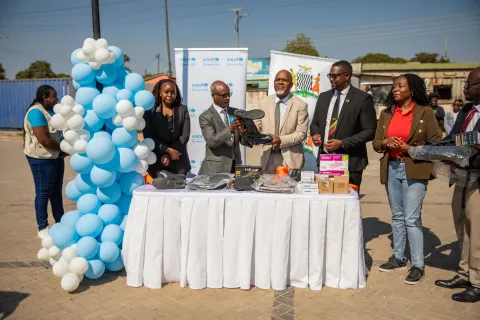
Following meetings in Lusaka, the delegation traveled to the Western and Luapula provinces to visit ECHO-supported interventions and meet communities and frontline workers.
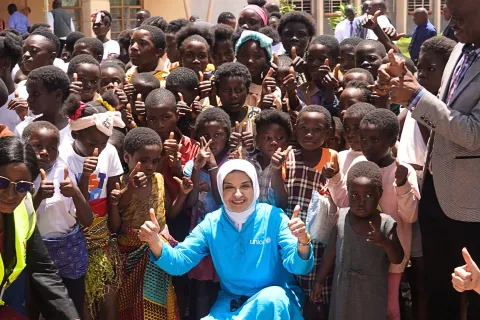
In Sikongo District, Western Province, the delegation met children, families, community volunteers, health workers and local authorities driving nutrition and child protection efforts. The delegation also paid a courtesy call on Sikongo District Commissioner Henry Mwalye before visiting Lwahumba Health Facility, where community volunteers, families and local leaders demonstrated how coordinated services are improving child nutrition. The visit traced the continuum of care—from community screening and referral to the provision of ready-to-use therapeutic food at the health facility and follow-up support for families through Social Welfare. “Through this multisectoral collaboration, Sikongo is identifying children earlier, treating them quickly and supporting them at household level—a strong example of services working together to improve nutrition outcomes,” said District Commissioner Mwalye.
“When my granddaughter’s mid-upper arm circumference (MUAC) colour changed from yellow to green, I felt hope. It showed me that with the right nutrition, care and support, a child can recover, grow stronger and have a healthier future” said a community member and` grandmother to a child who has benefited from the RUTF distributed as part of the project.
In Nchelenge District, Luapula Province, the delegation joined Action Against Hunger and local partners to review ongoing efforts and hear directly from communities and frontline actors.
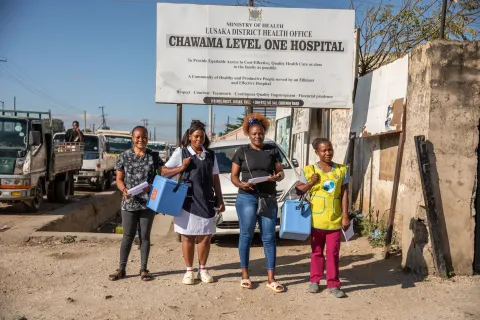
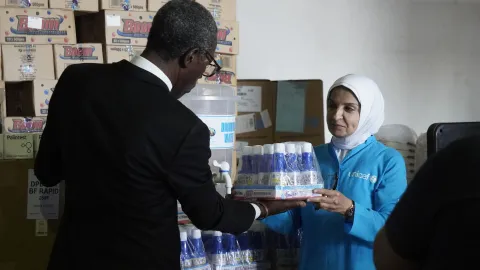
The mission also reviewed ECHO-supported cholera preparedness and response, where UNICEF works alongside Government, WHO and IFRC. UNICEF-supported interventions have reached 1.4 million people with life-saving cholera information, while water-quality interventions have helped 138,250 people access safe water in the last cholera season.
Partners also discussed Anticipatory Action and preparedness for the 2026/27 season, particularly important as Zambia prepares for the impacts of El Niño. The focus is on strengthening national and local systems so that Government and partners can anticipate risks and act before a crisis reaches its most severe impacts. By bringing together Government, UN agencies, the Red Cross and other partners, the ECHO-supported work is helping strengthen a coordinated approach to preparedness and early action. “We want to continue ensuring effective preparation for emergencies in Zambia,” said Norman Chipakupaku, National Coordinator at DRMD.
As the mission concluded, partners reflected on what is working, where gaps remain and what needs to happen next to better protect children and communities from future emergencies. One key observation from the mission was the importance of building local systems, protection mainstreaming across all interventions and need based prioritization so that humanitarian support can respond to immediate needs faster, while also strengthening preparedness for the next emergency. Partners highlighted the need to continue strengthening coordination, anticipatory action, and the links between humanitarian response and longer-term resilience.
As Zambia faces increasingly frequent and overlapping climate shocks and public health emergencies, strong humanitarian partnerships are more important than ever. At a time when humanitarian needs are growing and global funding is under increasing pressure, support from partners such as the European Union enables UNICEF and its partners to respond rapidly when emergencies strike, while investing in preparedness and anticipatory action before crises escalate. Sustaining these partnerships is critical to ensuring that limited resources reach the children and communities who need them most, before, during and after emergencies.
Note To Editors:
The ECHO Zambia Field Mission took place from 28 September to 7 October 2026, combining engagements with Government and humanitarian partners in Lusaka with field visits to ECHO-supported interventions in Western and Luapula provinces. The mission reviewed implementation and lessons across life-saving assistance, cholera response, anticipatory action, while exploring opportunities to strengthen coordination and complementarity between immediate humanitarian support and strengthening longer-term national resilience.
The European Union, through its Civil Protection and Humanitarian Aid Operations department (ECHO), provides humanitarian assistance to people affected by crises and disasters around the world. EU humanitarian aid is delivered through partner organisations, including United Nations agencies, international organisations and NGOs, and is guided by the humanitarian principles of humanity, neutrality, impartiality, and independence.
Media contacts
About UNICEF
UNICEF promotes the rights and wellbeing of every child, in everything we do. Together with our partners, we work in 190 countries and territories to translate that commitment into practical action, focusing special effort on reaching the most vulnerable and excluded children, to the benefit of all children, everywhere.
For more information about UNICEF and its work for children in Zambia, visit www.unicef.org/zambia.
Follow UNICEF Zambia on Twitter, Facebook and Instagram