Birth registration steadily increases worldwide, yet 86% of children in Zambia still lack an official identity
New report shows progress, while highlighting gaps—particularly in sub-Saharan Africa— leaving millions of children without legal identity

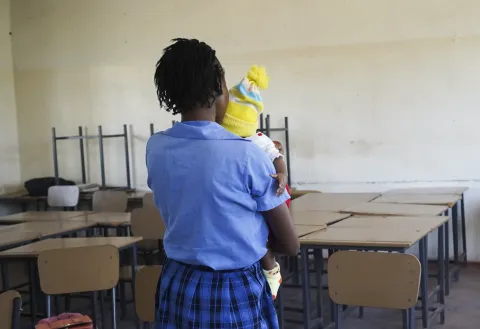
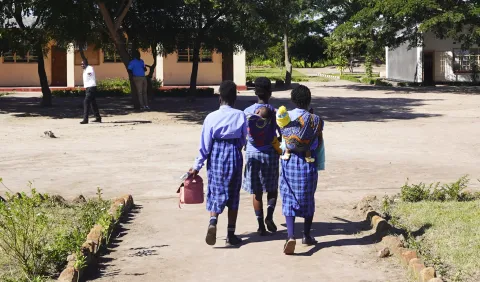
NEW YORK/LUSAKA, Zambia, 17 December 2024 – Over 500 million – or close to 8 in 10 - children under five have had their births registered in the last five years, reflecting notable strides in securing legal identity worldwide, according to a new UNICEF report. In Zambia, where birth registration of children under five stands at 14 per cent, one of the world’s lowest, and only 6 per cent possesses birth certificate, immediate action is needed to address the lack of official identity for a vast majority of children under the age of five
The Right Start in Life: Global levels and trends in birth registration, 2024 update – released on UNICEF’s 78th birthday – is the latest update on the number of children registered since 2019, when global levels stood at 75 per cent. Despite the increase to 77 per cent today, 150 million – or around 2 in 10 – children in the world under five remain unregistered and invisible to government systems.
“Birth registration ensures children are immediately recognized under the law, providing an identity and foundation for protection from harm and exploitation, as well as access to essential services like vaccines, healthcare, and education,” said UNICEF Executive Director Catherine Russell. “As UNICEF marks 78 years of championing children’s rights today, we celebrate the progress made for millions of children in gaining their legal identity, while calling for stronger efforts to ensure that every child, everywhere, is registered at birth.”
The report also reveals that over 50 million children whose births are recorded lack birth certificates. This essential document serves as proof of registration and is critical for acquiring nationality, preventing statelessness, and ensuring children can enjoy their rights from birth.
Despite the existence of the Integrated National Registration Information System (INRIS), Zambia continues to face significant challenges in ensuring children's right to identity. The current situation leaves the vast majority of Zambian children under the age of 5 years without official documentation, potentially limiting their access to essential services and future opportunities.
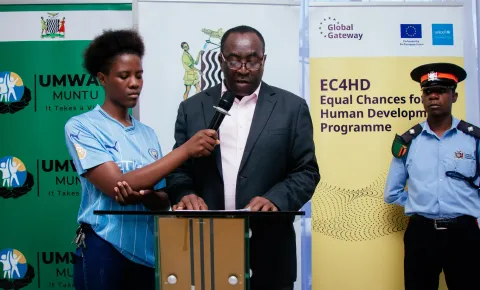
"This is not just about numbers, it is about giving every Zambian child their fundamental right to be counted and exist officially in the eyes of the law," stated UNICEF Representative, Penelope Campbell. "While we acknowledge the Government's ambitious goal to increase birth registration from 14 per cent to 50 per cent by 2026, we must accelerate our efforts through concrete actions."
Global progress has largely been driven by countries prioritizing timely registration, leveraging health, social protection, and education systems, expanding services to more locations, digitalizing the process, and eliminating fees.
Key challenges for the low coverage of birth registration services in Zambia include inadequate legal frameworks, limited digital infrastructure, and insufficient registration points across the country. Currently, only 50 out of 116 districts in Zambia have the capacity to issue birth certificates, although the system was decentralized in 2017, leaving many communities without access to vital registration services.
Despite these challenges, the Government of the Republic of Zambia, with UNICEF's support, is implementing several initiatives to streamline the process of birth registration, including:
- Working towards digitalization of birth notifications.
- Integrating registration services with immunization and health campaigns, Early Childhood Development, and social cash transfer programmes.
UNICEF calls upon the Government of the Republic of Zambia to:
1. Expedite the review and amendment of the Births and Deaths Registration Act of 1973.
2. Accelerate the implementation of interoperable digital systems between health facilities and civil registration to improve birth notification and registration.
3. Increase budgetary allocation for birth registration services.
4. Ensure availability of required equipment and supplies such as the birth certificates are available
5. Prioritize birth registration as the foundation of the national identity system.
Every day that passes without action means another child is left without official recognition – a situation that is deeply concerning. This is why UNICEF has strengthened its partnership with the Government of the Republic of Zambia to enhance the efficiency of birth registration processes. This collaboration focuses on removing barriers such as hidden costs, particularly transportation expenses to centralized registration facilities, which often prevent parents and guardians from registering their children. This critical situation requires immediate attention and action from all stakeholders. Acting now to bring registration services closer to communities will ensure that every Zambian child's right to an identity is protected, and not leave any child behind.
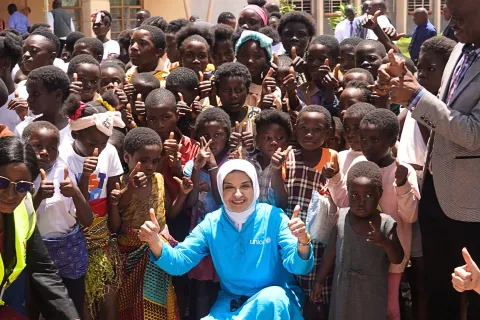
"The time to act is now. Every child in Zambia has the right to be recognized, counted, and provided with an identity," stated Penelope Campbell, UNICEF Representative in Zambia. "We urge all stakeholders—government, traditional leaders, civil society organizations, and communities—to come together and prioritize birth registration as a critical step towards achieving Sustainable Development Goal 16.9. This is fundamental for fostering peaceful, just, and inclusive societies. UNICEF stands committed to supporting the Government of the Republic of Zambia in advancing the digitalization and decentralization of registration services, utilizing innovative digital solutions to ensure that no child is left behind, regardless of their location or economic circumstances."
Notes to editors:
View the report and data here.
NEW: Subscribe to UNICEF’s global media updates on WhatsApp.
Article 7 of the UN Convention on the Rights of the Child states affirms every child's right to have their identity established ‘immediately’ after birth through birth registration. Find out more here.
Estimates are based on comparable data collected between 2014 and 2023 for a subset of 173 countries, representing 98 per cent of the global population of children under age 5. The latest available data for around 80 per cent of these countries are from the last five years. Data sources include nationally representative household surveys such as the Multiple Indicator Cluster Surveys (MICS) and Demographic and Health Surveys (DHS), vital statistics from civil registration systems, censuses and other nationally representative surveys that use a comparable methodology.
Media contacts
About UNICEF
UNICEF promotes the rights and wellbeing of every child, in everything we do. Together with our partners, we work in 190 countries and territories to translate that commitment into practical action, focusing special effort on reaching the most vulnerable and excluded children, to the benefit of all children, everywhere.
For more information about UNICEF and its work for children in Zambia, visit www.unicef.org/zambia.
Follow UNICEF Zambia on Twitter, Facebook and Instagram