Cholera outbreak threatening lives of vulnerable children in Yemen
Health facilities and teams on the ground are struggling to meet growing needs amid funding shortages

- English
- العربية
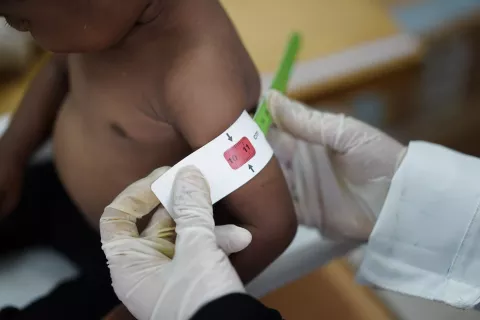
Saada/Aden, 26 August- Ahmed, a resident in the city of Sa’ada, anxiously holds his granddaughter Saja, a one-year-old girl who looks exhausted with sunken eyes and dehydration.
“She has been suffering from vomiting and diarrhoea for a few days. During the past week, she experienced a massive weight loss, and we took her to the hospital,” where her case was confirmed as cholera. “We had no idea that this could be cholera. She started taking medicines and fluids but has not improved much since last night,” said Ahmed.
Saja is one of tens of thousands of children suffering from the resurgence of the highly contagious disease, which could spread through contaminated water and food. While cholera can be prevented with proper hygiene practices, the disease can cause abdominal pain, vomiting and diarrhoea, which could lead to severe dehydration and even death if patients are left untreated.
As of 18 August, more than 172,023 cases of acute watery diarrhoea and suspected cholera cases have been reported in Yemen with 668 associated deaths, according to the Ministry of Health. On average, more than 1,500 cases have been reported daily over the last several weeks. While the number of cases is much lower than the previous outbreak between 2016 and 2021 when more than 2.5 million suspected cases were reported with 4,000 deaths, the situation is feared to deteriorate during the ongoing rainy season.
People living in areas with poor access to safe drinking water, sanitation and hygiene services, and sewage systems such as IDP camps are at the highest risk of contracting the disease. The cholera outbreak, coupled with flooding during the rainy season, could further devastate the already fragile health system, and affect the most vulnerable people. This could especially affect young children who are already suffering from malnutrition, food insecurity, poverty, and displacement amid the protracted conflict that has shattered the country’s economy and basic social services.
Combatting the outbreak and a call to step up support

After Saja tested positive, UNICEF through its partners deployed a technical team to investigate and take preventive measures in her neighborhood to contain the spread of cholera, including the disinfection of water sources, distribution of chlorine tablets, hygiene kits and awareness-raising activities. UNICEF is also targeting the area with quick fixes and maintenance of water and sanitation networks.
The team, made up of four experts – an engineer to check the water quality, two officers in charge of hygiene promotion and awareness raising, and a chlorination specialist – interviewed the family and sprayed the suspected sources of infection, such as their latrine and water tank, which were covered with a massive number of flies. The team disinfected 20 households around the patient’s home and distributed flyers detailing ways to prevent infections while providing neighbors with hygiene kits and aqua tabs to protect them from cholera and infectious diseases.
However, the team has not been able to meet the growing needs due to limited resources.
“In Sa’ada, we have only three technical teams for deployment. We are receiving far too many requests to handle with the current capacity. UNICEF is currently prioritizing areas with confirmed cases but we urgently need more support and expand our response to save the lives of vulnerable people and prevent the situation from slipping out of control,” said Ghassan Madieh, UNICEF Chief of Field Office in Sa’ada.

Health facilities are also overburdened with the rising number of patients. At Al-Basateen Medical Facility in the Dar Saad district in Aden, southern Yemen, health workers are scrambling to treat patients amid the shortage of staff and equipment.
“We are at the forefront of combating the outbreak in the densely populated area, serving diverse members of the community, including IDPs and refugees from Africa. We are seeing a constant influx of patients requiring urgent care,” said Munther Haroon Al-Sulaiman, a general practitioner at the medical facility. “Patients have limited financial resources to conduct medical examinations and medication shortages present additional challenges,” he added.
“While a rehydration station and some basic supplies are available, they are not enough. We need a wider range of treatments, especially intravenous fluids, rehydration solutions, and antibiotics. Sterilization, cleaning tools and educational brochures to prevent and control the disease are also essential,” he said, adding that the facility needs to expand its services to meet the pressing needs of the community.
UNICEF has procured over 1,872 Acute Watery Diarrhoea (AWD) kits, which can treat 121,500 cases. Over 127 have been airlifted and distributed but this has not been enough.

To date, UNICEF has invested US$ 7.9 million to prepare, prevent, and respond to the outbreak by combining support in the areas of water and sanitation, health, and social behavioral change. But it still needs around US$ 6.2 million by the end of the year to meet the needs on the ground.
“We are extremely concerned about the increase of cholera and acute watery diarrhorea cases, which could rapidly aggravate unless urgent and adequate multisectoral actions are taken,” said Kebir Hassen, UNICEF Chief of Health in Yemen. “UNICEF has invested in more than 3,200 Primary Healthcare Centers, which continue to play a vital role in response to this outbreak, but we need additional and urgent support to strengthen their capacity to cope with the mounting needs,” he said.
UNICEF has so far activated more than 161 Oral Rehydration Centers by supporting operational costs, incentives and training for health staff and the delivery of equipment.
Around 56,670 family hygiene kits, 26,000 jerrycans, and 1.15 million water purification tablets, 1,558 water tanks have been delivered and prepositioned, reaching around 280,000 people.
To raise community awareness, government and district structures have been supported to mobilize community volunteers and influencers to engage with local populations to promote key prevention practices. UNICEF supported such activities through print and audio materials broadcast by local radio stations.