World Water Week 2021: Meet our expert
On the occasion of World Water Week 2021 in Viet Nam, meet our expert - Mr. Maharajan Muthu -Chief of Child Survival and Development Program, UNICEF Viet Nam.

- English
- Tiếng Việt
1. Why is the theme of this year's World Water Week "Building Resilience Faster"
The United Nations warns that water scarcity and drought will cause damage on the scale of the COVID-19 pandemic due to global warming. In order to seek concrete solutions to challenges related to water, the climate crisis, food security, health, biodiversity and the impacts of the Covid-19 pandemic, World Water Week 2021, which takes place from August 23 to 27, have the theme "Building Resilience Faster".
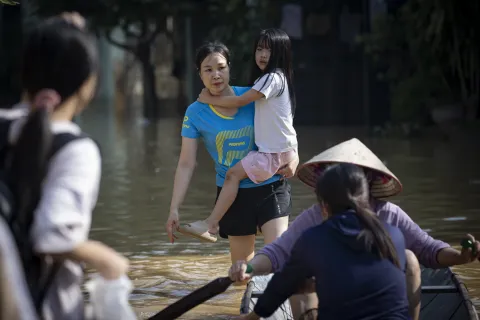
World water week is a good opportunity for us to recognize climate change crisis as the single biggest threat to the world and Viet Nam. Viet Nam is one of the highly vulnerable countries to climate-induced disasters and extreme weather events, which are disproportionately burdening vulnerable groups, especially women and children. Water-related climate impacts intersect with other socio-economic trends that impact water quality and quantity, including industrialization, population growth and rapid urbanization.
In the context of COVID-19, World Water Week 2021 will be held entirely online, ensure that many people can participate, collaborate in discussions and come up with related solutions.”
“Drought is on the verge of becoming the next pandemic and there is no vaccine to cure it,” Mami Mizutori, the U.N.’s special representative for disaster risk reduction.
2. From the UNICEF studies in Viet Nam, what is the current situation of water supply in Viet Nam?
Clean water, sanitation and personal hygiene are core elements of human resource development that drive Viet Nam's current and future productivity and growth. In recent years, Vietnamese government has put a lot of efforts to implement the water supply and sanitation programs with remarkable results.
Following joint monitoring program WHO/UNICEF 2020 report, Viet Nam is likely on track to achieve universal basic water and sanitation services by 2030 with an increase at the annual rate of 0.8% and 1.9%, respectively. In 2020, there were 90% of the population with improved water on their premises and 89% with improved sanitation facilities.
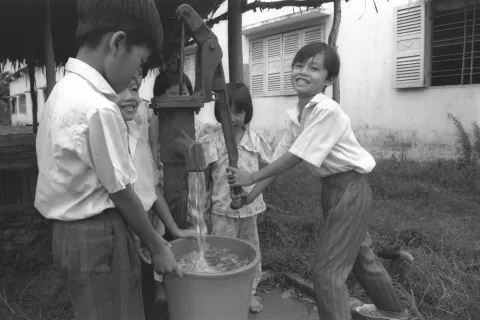
However, there is a gap between urban, rural areas and among regions. Nearly 2.5 million people in the rural areas cannot access basic water, and 10 million people still cannot access basic sanitation facilities, among which the majority live in rural areas. Furthermore, COVID-19 has highlighted the urgent need to ensure everyone can access good hand hygiene while almost 13.6 million people do not have handwashing facility with soap and water at home.
Mr. Maharajan Muthu -Chief of Child Survival and Development Program, UNICEF Viet Nam.

3. What are the impacts of the lack of clean water on people’s lives, especially children?
Lack of access to clean water remains a major challenge affecting children in rural area of Viet Nam. A lot of scientific evidence has proven that malnutrition is directly related to poor water and sanitation. Following the National Nutrition Survey 2019, the proportion of children under 5 years of age who are stunted in the whole country is 19.6%, and this rate reaches over 30% in some ethnic populations.
Water shortage and poor hygiene practices contribute to an increased incidence of diarrhea, pneumonia and parasitic infections and children are the most vulnerable to these diseases. Diarrhea ranks seventh in the national burden of disease and one of the main reasons is the lack of access to clean water for eating, drinking and living.
Natural Resources and Environment and Health Ministries claims that 9,000 people die every year due to poor sanitation and water quality, nearly 250,000 people are hospitalized because of acute diarrhea caused by contaminated domestic water, some 200,000 have cancer linked to water pollution.
Viet Nam still faces hurdles toward providing clean water to 100% of its population. Flooding, pollution, competing for water during the dry season and contaminants have contributed to a deterioration in clean water supplies. The World Bank argues that the impact of water pollution on human health is the greatest threat to the Vietnamese economy. It further argues that if these challenges are not met by the year 2035, Viet Nam could see a 6% annual reduction in GDP.
Because water is not available at home, women must bear the burden of fetching water for the family. Adult females are usually responsible for water collection and must spend a lot of time doing it. The percentage of households with adult women collecting water was higher for ethnic minorities (74.2 percent) than Kinh/Hoa (57.7 percent).
4.What are UNICEF’s recommendations to the Government of Viet Nam in ensuring the right of people and children to access to clean water, especially in most climate change impact areas?
We would like to suggest that at the national level, identified priorities to accelerate water–climate action include: enhancing water governance and water productivity to manage competition between the water needs of agriculture, energy, industry, cities and ecosystems; promoting specific nature-based solutions that can curb emissions and increase resilience; and integrating climate change and disaster risk reduction across the entire projects/programs and policy cycle development and implemenation across sectors.
It is also important to incorporate clean water and sanitation indicators into socio-economic development indexes of all levels of National Target Programs such as the New Rural Development Program, Sustainable Poverty Reduction, Socio-economic development program in ethnic minority and mountainous areas, nutrition and health programs to increase universal access for people in disadvantaged areas, greatly affected by climate change, to maximize social, economic and health benefits for people, for the development of children in particular. In addition, raising awareness and early warning on climate change, disaster risk to people are crucial, there is also a need to strengthen and mobilize the participation of more private sector, individuals interested in investment, operation and management of water supply systems to ensure sustainable access in water services for people.