A New Window to Learning
How Technology is Transforming Classrooms in the Mountains
- English
- Tiếng Việt
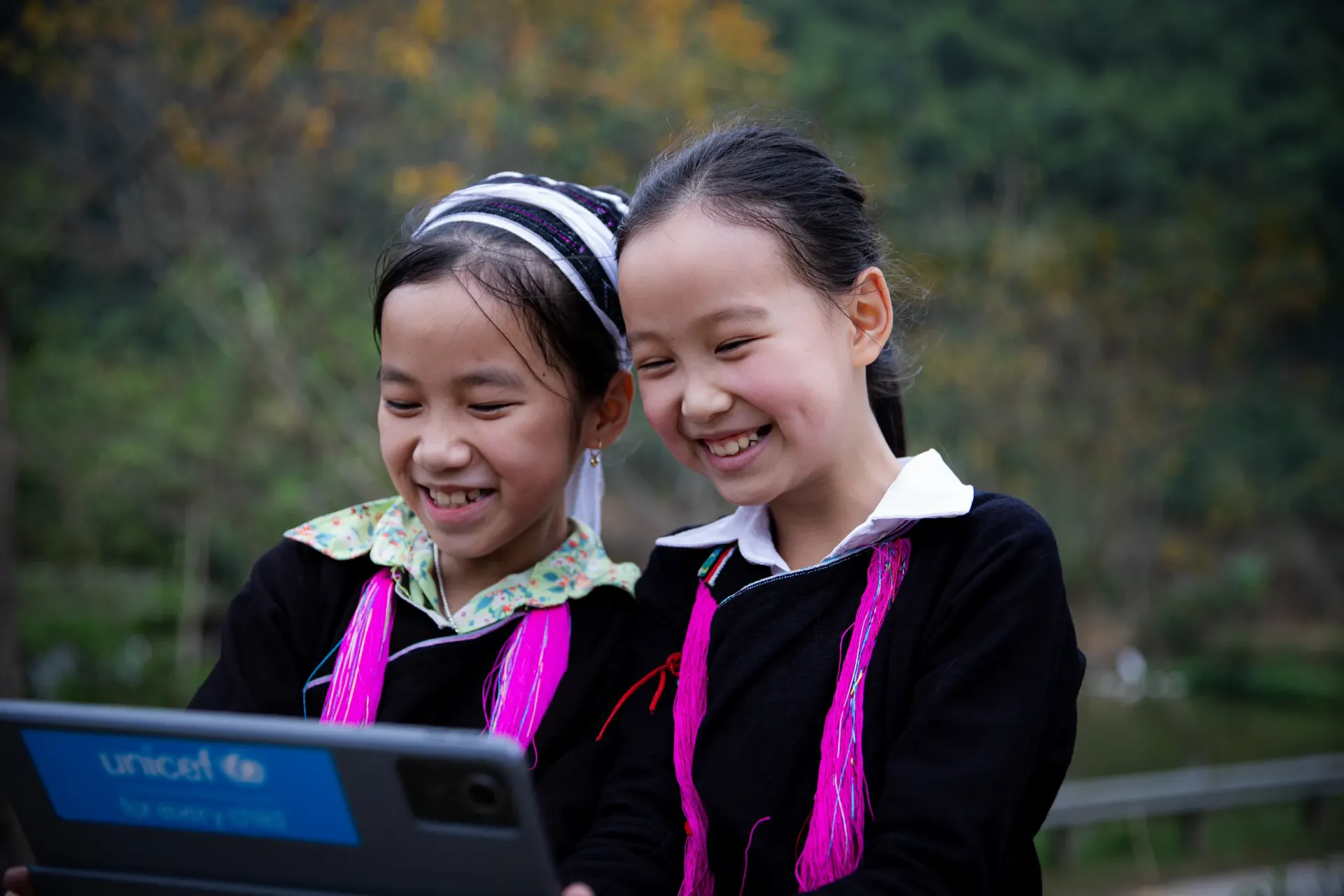
In a small classroom nestled between the green hills of Bao Yen District in the northern mountainous province of Lao Cai, the quiet hum of excitement filled the air. For the first time, students like Tho and Huong, both nine years old and from the Dao ethnic minority, joined a special digital learning session for Grade 4 students, supported by UNICEF. For these children, whose homes often have no internet connection or smart devices, it was a completely new experience.
That morning, the classroom came alive with laughter and curiosity. For the first time, students gathered around brand-new tablets and an interactive display.. Their teacher, Hoang Thi Thu Trang, led an energetic and engaging session -- using Kahoot! quizzes that had everyone smiling, and interactive applications on the tablets to explore literature and strengthen their Vietnamese vocabulary. The students were especially excited when she introduced them to artificial intelligence, guiding them to ask basic questions such as how to find equivalent fractions—a topic they had just been learning in class. The room was filled with laughter, focus, and wonder, as the children explored the digital world with fresh curiosity and bright hopes for the future.
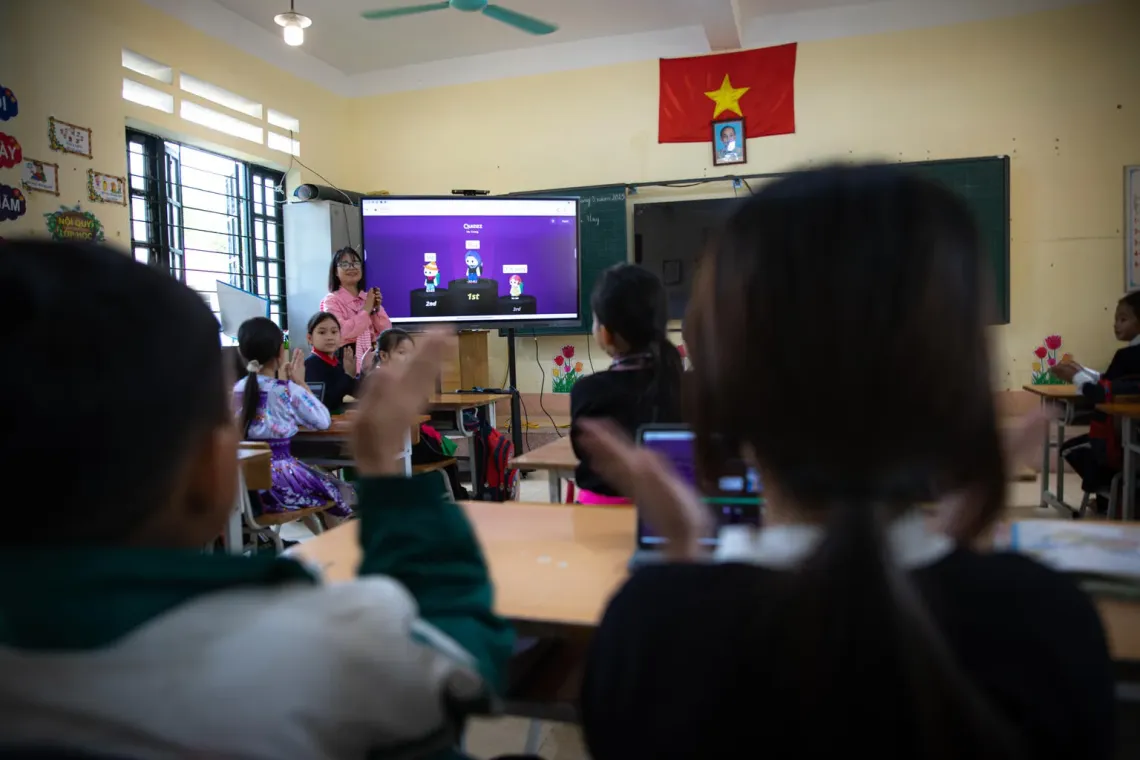
“At home, I don’t have the internet. I live with my grandparents and don’t have a smartphone,” said Tho, her eyes lighting up. “Every day after school, I help my grandparents with housework. Today’s digital class was so exciting - it helped me learn faster. I really love it.”
Sitting nearby, Hương nodded with a shy smile. “I learned how to use technology to solve math problems ” she shared. “I told my mom how fascinating the class was.” At home, Huong helps her mother with daily chores in their small house near the school. Like many children in remote areas, she has never had access to digital devices - until now.
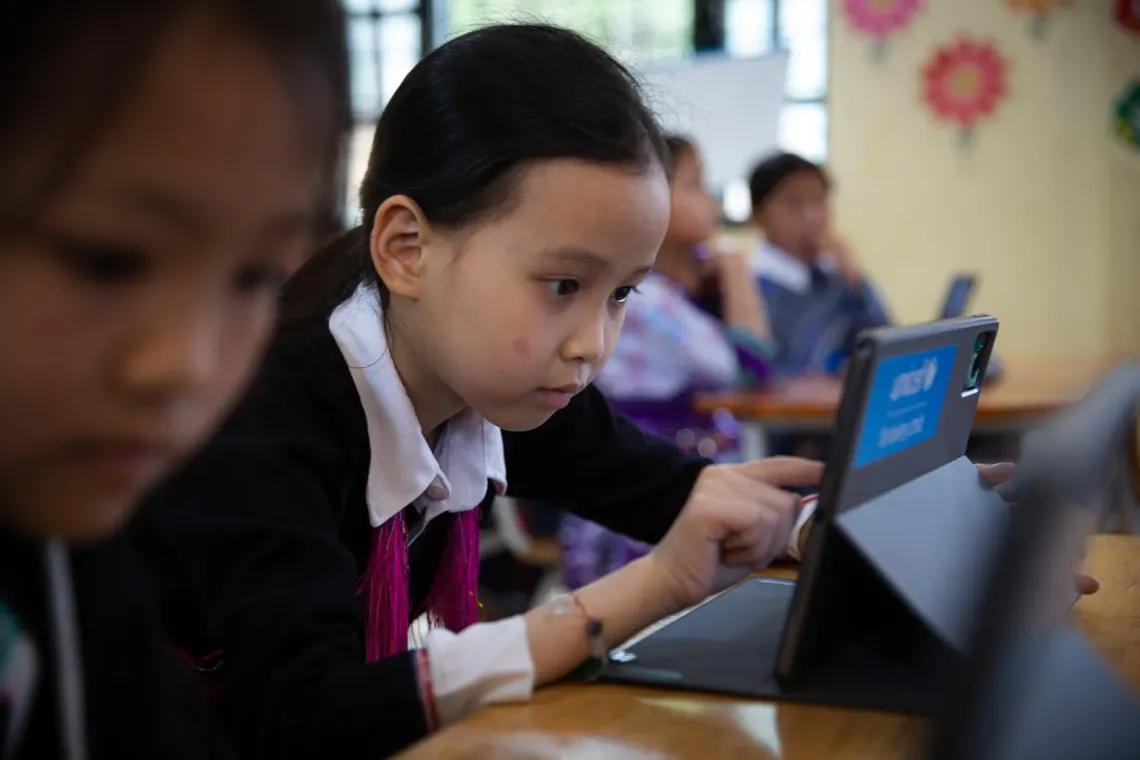
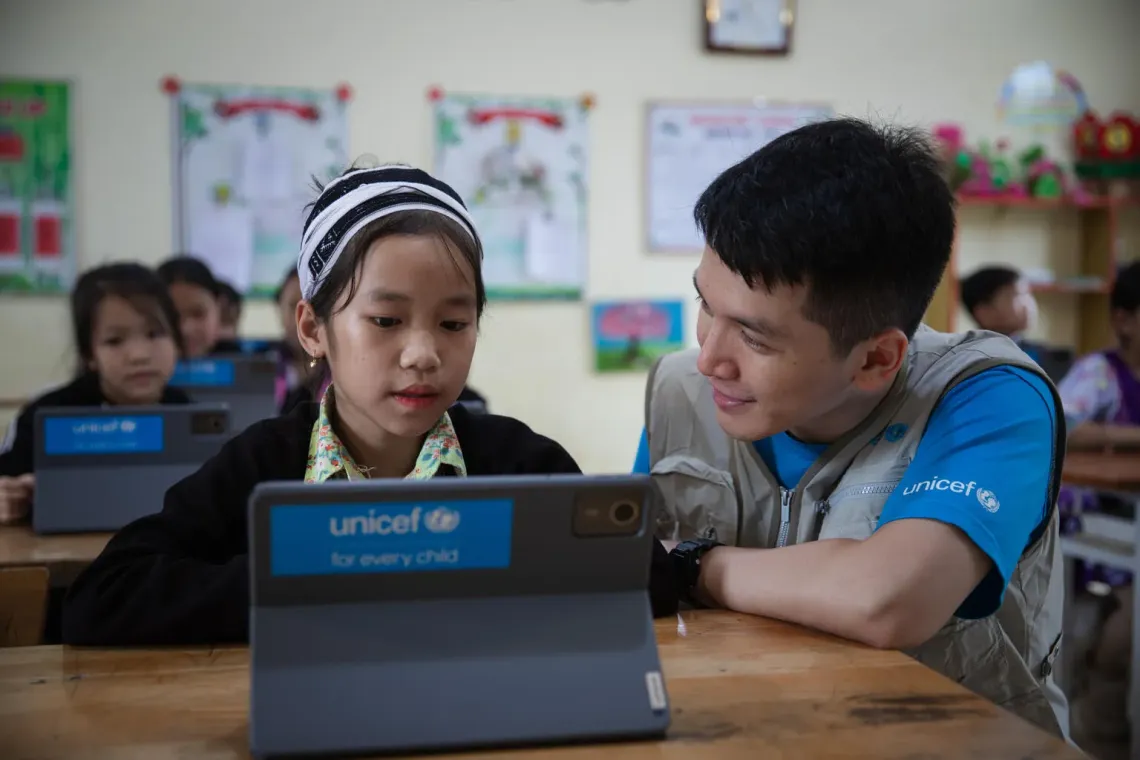
For their teacher, Hoàng Thị Thu Trang, the class was more than a lesson - it was a glimpse into a new way of learning. “With tablets, students can look up materials on their own,” she explained. “What’s really special is that their digital citizenship skills are improving. They are more confident, more curious, and more connected.”
Digital learning does more than teaching children how to use technology. It encourages collaboration, problem-solving, critical thinking and creativity -skills they will need to thrive in a changing world. Across Viet Nam, only about 36 per cent of students aged 15 to 24 have acquired basic digital skills[1], and the rate drops to just 7.5–8% among ethnic minority groups , in remote and mountainous areas. Digital education is more than a tool - it’s an opportunity. It helps unlock every child’s potential and gives them the confidence to dream bigger[2] As Tara O’Connell, Chief of Education at UNICEF Viet Nam, explained, “Technology can be a great equalizer when used thoughtfully and inclusively. It gives children the chance to participate fully in school, develop future-ready skills, and connect with the world around them.”
"Today’s class made me feel confident. I want to learn more with technology" shared by Tho, 9, from the Dao ethnic minority
For children like Thơ and Hương, the excitement in that classroom was more than screens and lessons - it was about possibility. “Today’s class made me feel confident,” said Thơ softly. “I want to learn more with technology.” And with UNICEF’s support, that wish is slowly becoming a reality for thousands of children across Viet Nam.
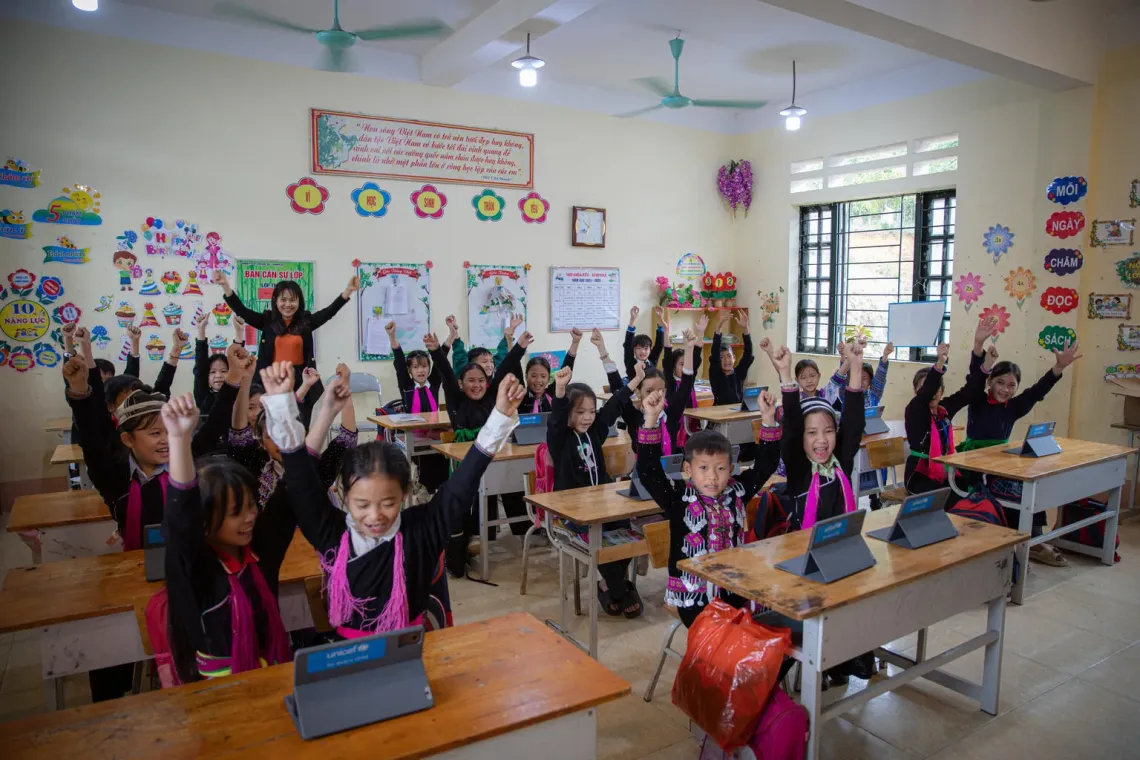
As Viet Nam moves toward a digital future, UNICEF is working closely with the Government and education partners to ensure that no child is left behind. Together, we are bridging the digital divide by integrating technology into classrooms, expanding teacher training, and improving digital literacy. By embedding these transferable skills into national policy and practice, we are building a future-ready education system where every child—especially the most vulnerable in remote provinces—can access inclusive, quality learning to thrive in a tech-driven world.
[1] Press release: Viet Nam is among few countries demonstrating gender parity in digital skills and the use
of internet
[2] Op-ed: Bridging digital divide for children with disabilities in Viet Nam