Building a Social Protection System that Improves Gender Equality
Recent findings by UNICEF on gender-responsive social protection system.
- English
- Tiếng Việt
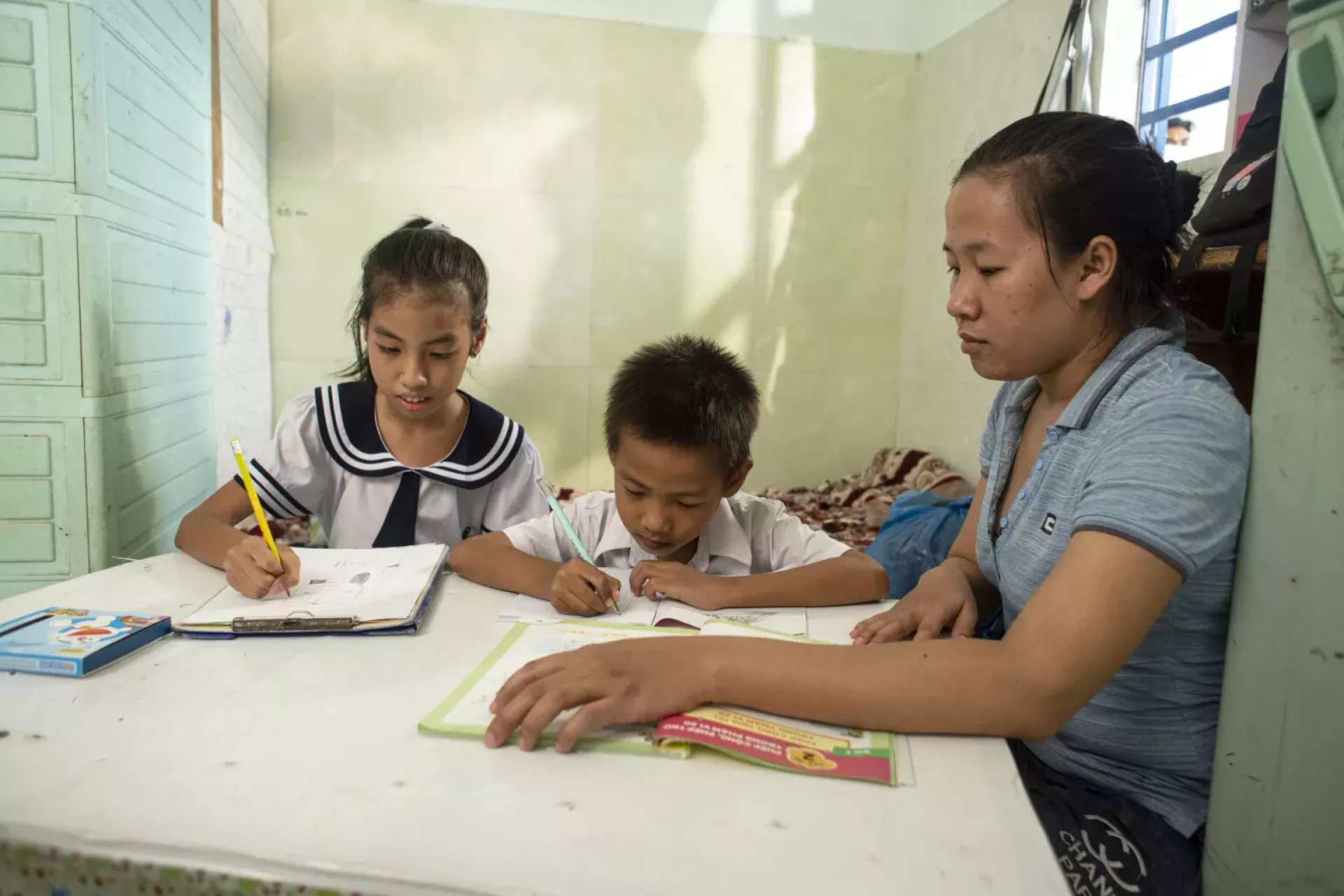
DA NANG - Ngo Thi Phuong would struggle to feed and educate her children adequately without help from the country’s social protection system. Her 12-year-old daughter Thuy Duong has a mental disability, so the family receives government cash assistance every month.
“When she (Thuy Duong) was a baby, she was very slow. She learned to walk slowly and learned to talk slowly,” Phuong recalls. “When she entered first grade, she was behind her friends.”

The family uses the social protection money to invest in their children’s education and buy more nutritious food. It has made a considerable difference, especially to Duong.
“Since then, Duong has been able to improve significantly. She had to repeat her first grade, but was able to go to 2nd, 3rd, and 4th grades smoothly,” Phuong recalls.
Viet Nam’s social assistance schemes provide monthly unconditional benefits to the most vulnerable people in poor and disadvantaged households, including people with disabilities and orphans. Phuong’s story illustrates how social protection is vital to supporting vulnerable families. However, the real potential of social protection goes beyond simply helping alleviate poverty.
When social protection policies and programmes are designed and implemented through a gender lens, they can tackle the consequences and root causes of gender inequality, creating better opportunities for women and girls.
There has been limited systematic evidence on how policy makers can design programmes and policies that create transformative change for women. To fill in this evidence gap, UNICEF Innocenti undertook a five-year research programme funded by the UK’s Foreign Commonwealth and Development Office, and one of the case studies looked at Viet Nam.
What does this research mean for Viet Nam?
In 2021, the Government of Viet Nam strengthened the social assistance programmes by extending coverage to more vulnerable groups, including children under-three- living in poor and disadvantaged households. Benefit levels were also increased.
However, the study shows that despite the existence of a legal framework and mechanisms for mainstreaming gender equality, the recent reforms were not supported by adequate gender analysis or consultations involving gender experts. The result was that gender considerations were only weakly integrated into the final policies – for example, proposals to expand provisions for vulnerable pregnant women were not taken up.
Moreover, although social assistance schemes provide much needed support to mothers like Phuong, women in Viet Nam are nearly twice as likely as men to take responsibility for care work and spend nearly three times more time on unpaid housework. On their own, social assistance benefits for children may do little to change the unequal distribution of care and economic work between men and women, and may even reinforce these unequal gender norms. As a result, women are more likely to remain out of the work force, and by consequence are more likely to experience poverty in older age.
A more gender responsive approach to social assistance in Viet Nam could address longer term gender inequality in incomes by, for example, linking benefits for children to the provision of subsidised childcare. This would make it easier for women to work. Poverty that affects many elderly women could also be alleviated by extending old age benefits to all those who are excluded from contributory pensions.
In the longer term, more gender transformative approaches may combine social assistance with parental and community engagement and dialogue that aims to change norms around care responsibilities, alongside incentives to encourage more men into caring roles, such as paternity leave.
How can Viet Nam strengthen the consideration of gender within social protection policy making processes?

Some of the key takeaways from the research:
- There needs to be strong and unequivocal political commitment beyond gender-neutral approaches at all levels of government and among all influential actors to improving gender mainstreaming in social assistance policies. Policymakers need to build their skills and capacities on gender and social assistance.
- Gender mainstreaming mechanisms can be further enhanced through the introduction of accountability frameworks, greater participation of women and gender experts within decision making bodies such as Appraisal Committees, and evaluating and strengthening the Gender Impact Assessment mechanism.
- Gender financing is also important, including adequate and earmarked budgets for gender analysis and consultation within policy making processes, and increased resources for the Gender Equality Department to fulfil its mandate more effectively.
>> Read the full report here.