Building back better: Restoring health and hygiene after the floods in Viet Nam
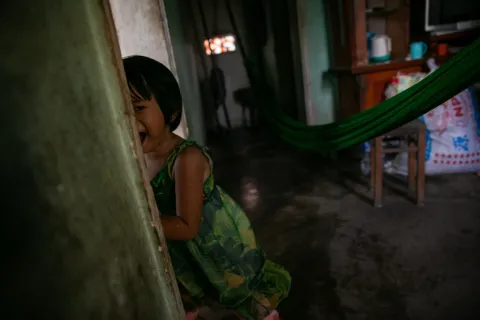
Say’s family is restoring access to clean water, and safe sanitation.
- English
- Tiếng Việt
At 5:00 a.m. inside a small wooden house in the mountainous commune of Vinh Thong, Ban Thi Say, a woman from the Dao ethnic minority, was jolted awake not by an alarm, but by the roar of rushing water.
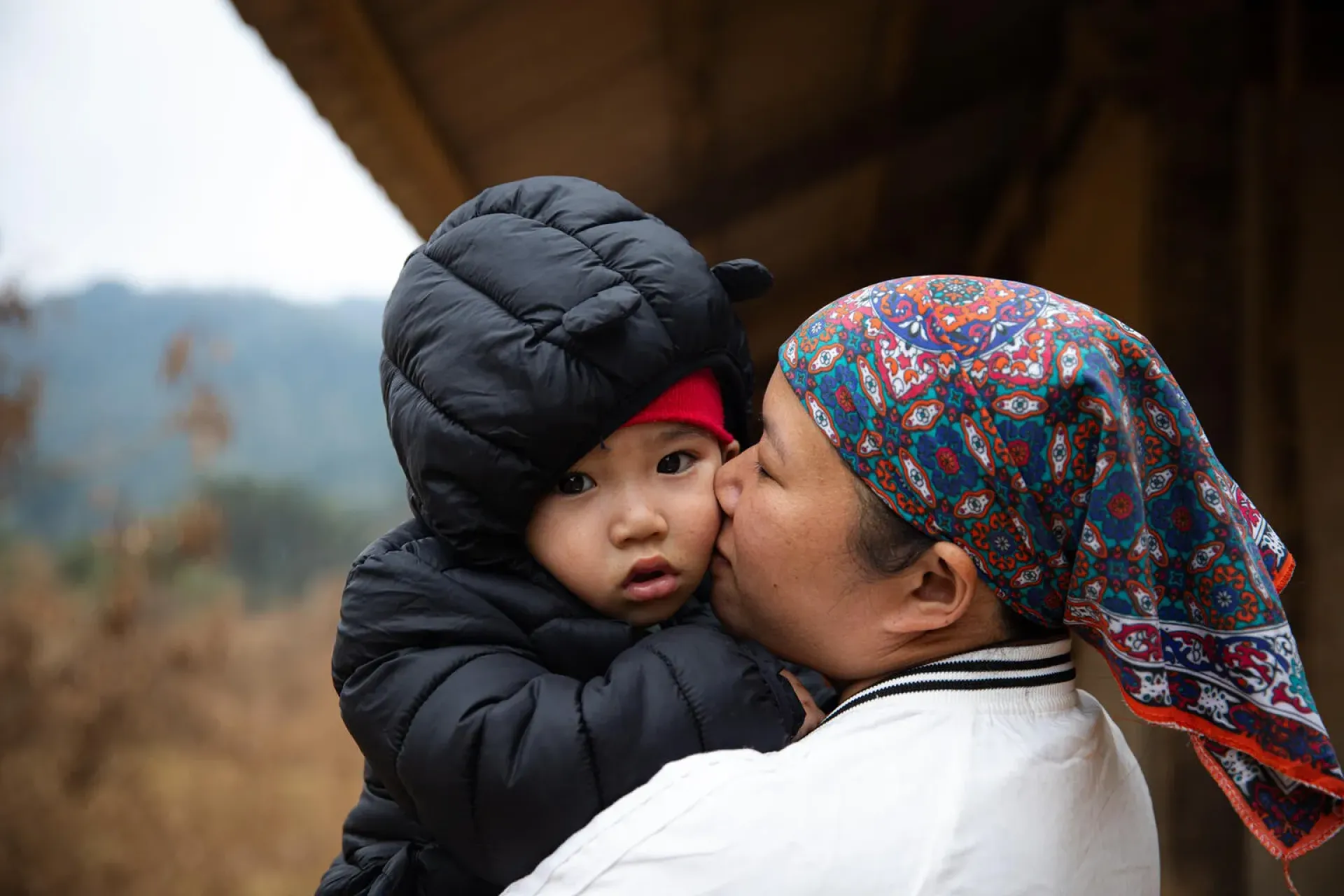
Her husband was working far from home, in another province, leaving Say alone to care for her two-year-old son, Ma Viet Cuong, while also supporting her elderly mother-in-law, Hoang Thi Che , who lives nearby.
“We hadn’t even woken up yet when the floodwaters came rushing in,” Say recalls, her voice still tinged with the memory of that panic. “I held my son as tightly as I could. The water kept rising and we couldn't save anything.”
The floods were relentless. Typhoon Bualoi submerged her home for three days. Just as they began scraping mud from their doorsteps, Typhoon Matmo struck, this time leaving their village underwater for 22 more days.
“It was just a vast expanse of water,” Say remembers. “My mother was still asleep when the water entered her yard, I shouted for her to run because the water was already waist-deep. We were lucky, she managed to climb the hill behind the house in time.”
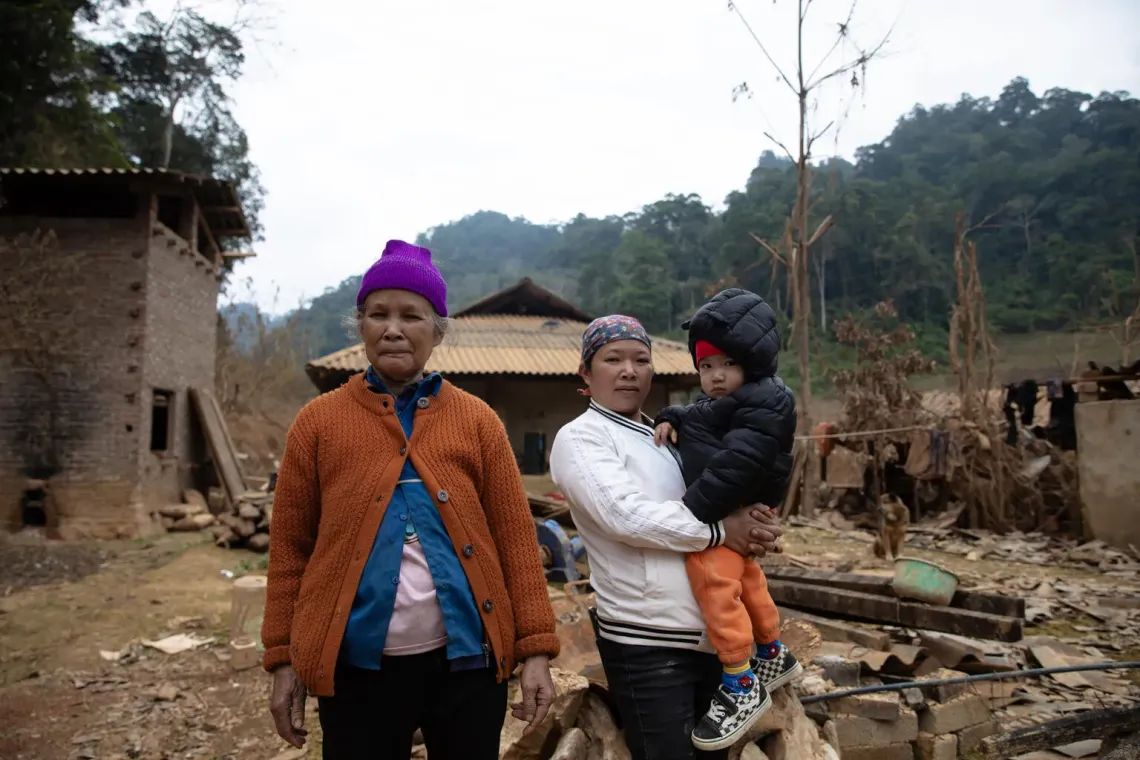
A daily struggle for hygiene and dignity
When the water finally receded, it revealed devastation: destroyed property, lost livestock, and critical infrastructure ruined. For a mother with a toddler, one of the biggest losses was invisible - clean water and sanitation.
"It was heartbreaking to sit there and see everything we owned washed away," Say, mother of a two-year-old son. “Daily life became incredibly inconvenient. We didn’t even have a clean place to use the toilet.”
Within a short span at the end of September and early October 2025, Viet Nam was struck by two devastating storms—Typhoon Bualoi and Typhoon Matmo. Together, they affected more than 500,000 houses and disrupted access to safe drinking water, sanitation facilities, and hygiene supplies for over 1.2 million people.
Timely support from the European Union and UNICEF
Before the storm, Say’s family relied on a makeshift dry pit toilet. The floods ruined it entirely, creating a serious risk of disease, particularly for her toddler, and for the whole community already surrounded by contaminated floodwaters.
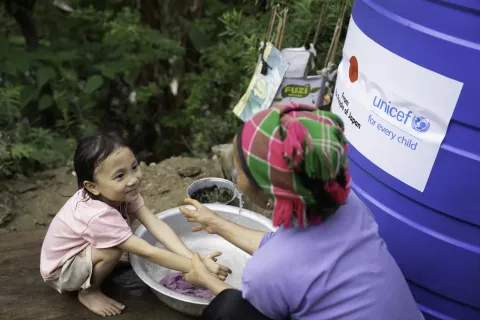
In the immediate aftermath of multiple typhoons across Northern Viet Nam, urgent support arrived. Local health workers provided water treatment tablets—part of UNICEF’s emergency response supported by the European Union—helping families make their water safe again.
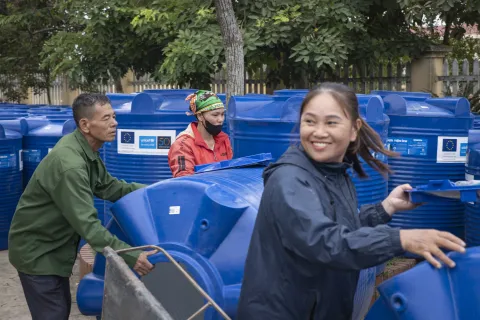
Say received a new water storage tank, solving the critical issue of water supply. “I was so happy to finally have a place to store clean water for my family’s daily needs,” she says.
Soon after, Say received cash assistance to repair her broken sanitation facilities and retore her water supplies–funding provided by EU Humanitarian Aid and implemented by UNICEF in close coordination with the National Center for Rural Water Supply and Sanitation (NCERWASS) under the Ministry of Agriculture and Environment (MAE).
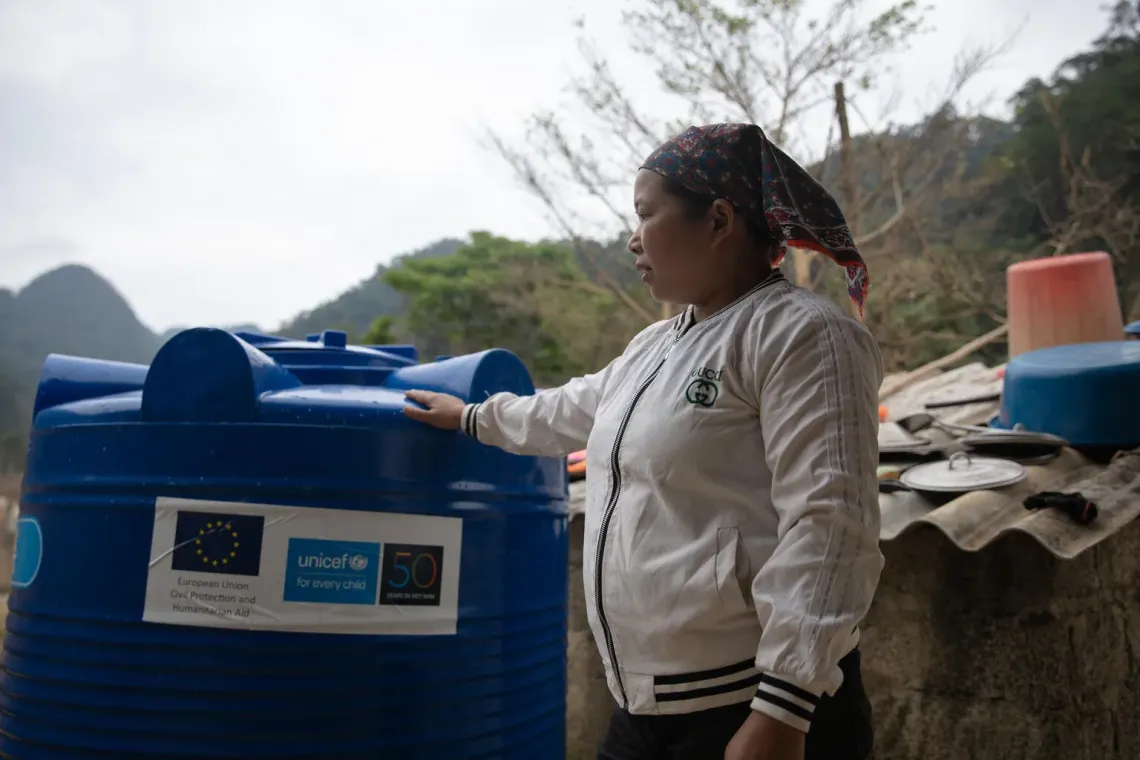
The cash assistance helps affected households purchase essential water and hygiene supplies, and fix their water and sanitation systems, supporting the restoration of sustainable services. Yet recovery requires more than financial support—it also needs technical guidance and community-led service delivery—giving families the confidence to truly 'build back better'.
UNICEF has worked hand in hand with local suppliers to introduce disaster-resilient designs and more affordable options that meet hygienic standards.
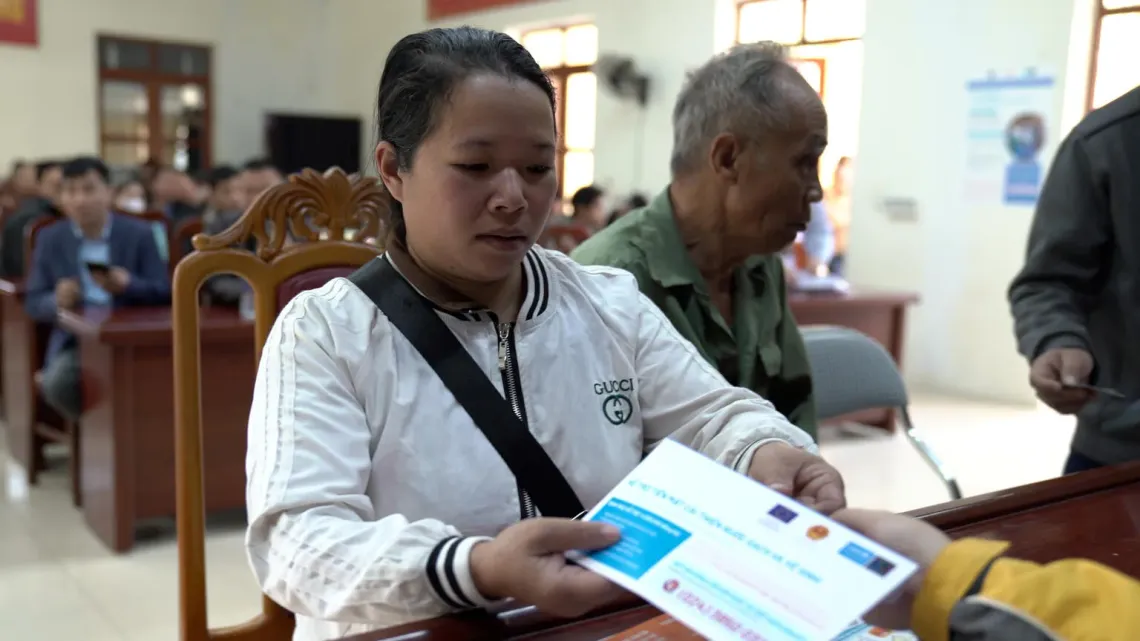
Building a safer future
With financial support and technical guidance from the village head, Say quickly made plans.
"I can buy pipes to bring clean water from the mountain stream into the new tank,” she explained with a smile. "I also plan to build a new septic tank toilet following the guidance I received. It will be much cleaner and safer than the old one."
For Say, the support brought more than just money or equipment; it restored dignity, health and hope.
“I am very happy and satisfied. This is exactly the support we needed to start over,” she says.
This combination of financial and technical support was essential for families facing repeated disasters.