

Social Work Development
On the frontlines for children

- English
- Tiếng Việt
Challenges
Children in Viet Nam are yet to benefit from a functioning child protection system, which is critical to preventing and protecting children from violence, child exploitation, abuse and neglect.
Gaps in child protection service coverage are compounded by a severe shortage of trained social workers and the lack of a professional case management system, which constrain the identification of children at risk and provision of services. This leaves children in vulnerable situations or unnecessarily placed in institutional care.
Solutions
Professional social workers have a frontline role to play in supporting children in need and their families. Working in communities with children and families, social workers act as a safety net to screen, identify and manage the evolving risks that children and adolescents may be exposed to, which cut across violence, abuse, child exploitation, neglect and other vulnerabilities. Social workers help identify the issues, provide direct support, and connect children with other critical services, including mental health and wellness care, education, legal aid, and social protection.
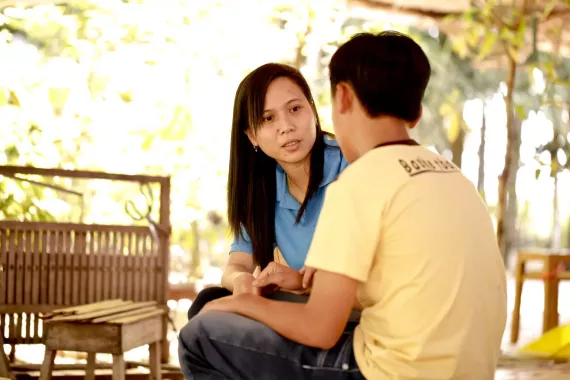
Professional social workers have a frontline role to play in supporting children in need and their families.
That is why UNICEF is leading efforts to develop social work as a profession in Viet Nam. We support the government and other partners to develop the legal framework on the social work profession, strengthen the capacity of the workforce, and develop social work services across key sectors and mass organizations. Key strategies include providing technical advice, sharing international evidence and best practices, capacity building and supporting social work service models in the social welfare, health, education and justice sectors.
UNICEF is contributing to the improvement of formal social work education as well as in-service training for teachers and local welfare, child protection and health workers, so they have strong skills and competencies to deliver effective support to children and adolescents.
You can be the change for children!
Help UNICEF provide children and families with critical essential services for health and nutrition, education and protection.
Impacts
UNICEF’s goal is that by 2026, more children have access to better care and protection. This means that the root causes of child abandonment are addressed, while community-based models like respite care, foster care and adoption are formalized. We also support the government to equip social welfare and child protection officers with essential knowledge and skills to support children without parents or at risk of not having parental care.