Skills and Learning for All
Ready for a changing world
- English
- Tiếng Việt
Challenges
Children are growing up in a rapidly transforming world.
Technology and societal changes are reshaping communities, people’s lives and work.
This means children’s access to learning and skills is not only a right – it is essential for their ability to thrive in the 21st Century.
Despite Viet Nam’s dynamic socio-economic development, many of its most vulnerable citizens – those in rural, remote mountainous areas, from ethnic groups and girls – are missing out on transferable and digital career-specific skills to future-proof their lives.
Only 36 per cent of students aged 15-24 years have basic digital skills. In remote areas, 67 per cent of school children lack access to online education opportunities and 93 per cent of teachers do not use digital technologies in class. This digital divide is set to widen unless school children can access affordable technology for effective learning. Additionally, just 3 per cent of schools have essential infrastructure required to support children with disabilities, underscoring a critical need for inclusive educational tools and assistive technologies.
As happens in many countries, Viet Nam’s education and vocational training systems need to be strengthened to meet today’s realities and labour market needs, with more robust teaching methods, learning techniques, examination practices and content.
Addressing these challenges is essential for children to develop into lifelong learners and gain productive employment in a fast-changing job market.
Solutions
The future is here for today’s generation of children.
To ensure they can seize opportunities and confront challenges, UNICEF is working so every child can access the education and skills needed for lifelong learning and employability.
Realizing this goal means impactful contributions throughout the education lifecycle. This will underpin development of human capital to drive Viet Nam’s economic growth as it transitions to a high-income country.
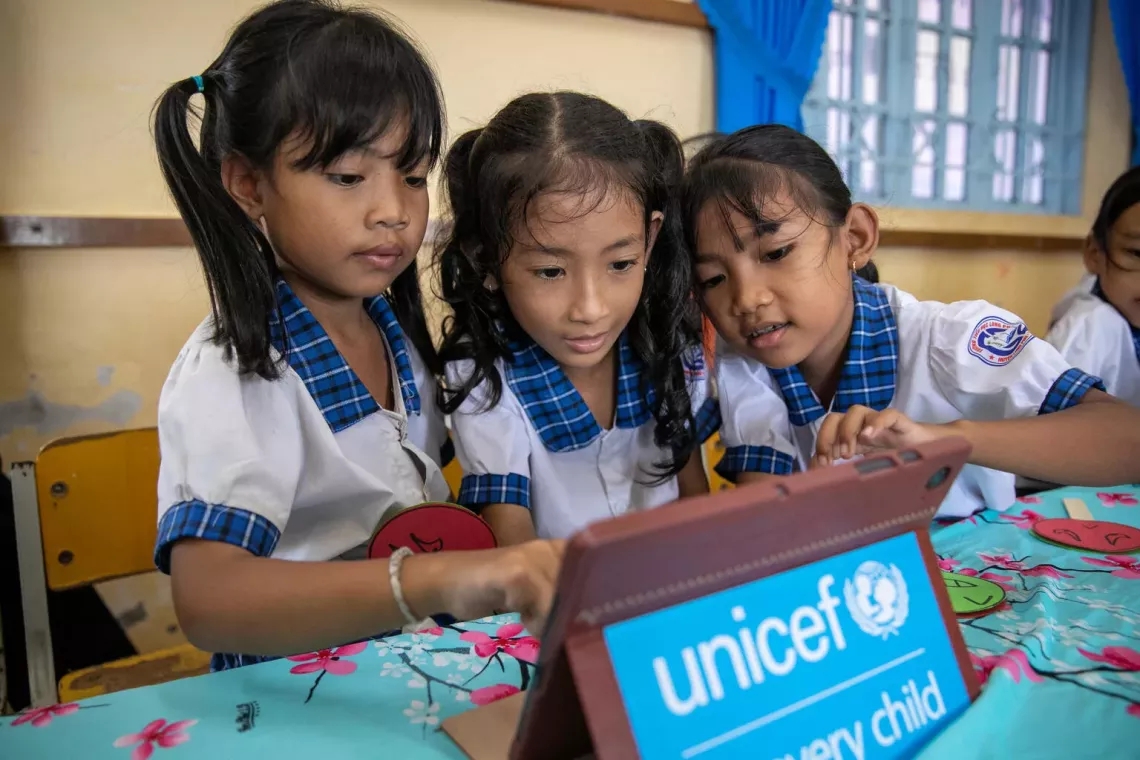
"UNICEF is working so every child can access the education and skills needed for lifelong learning and employability."
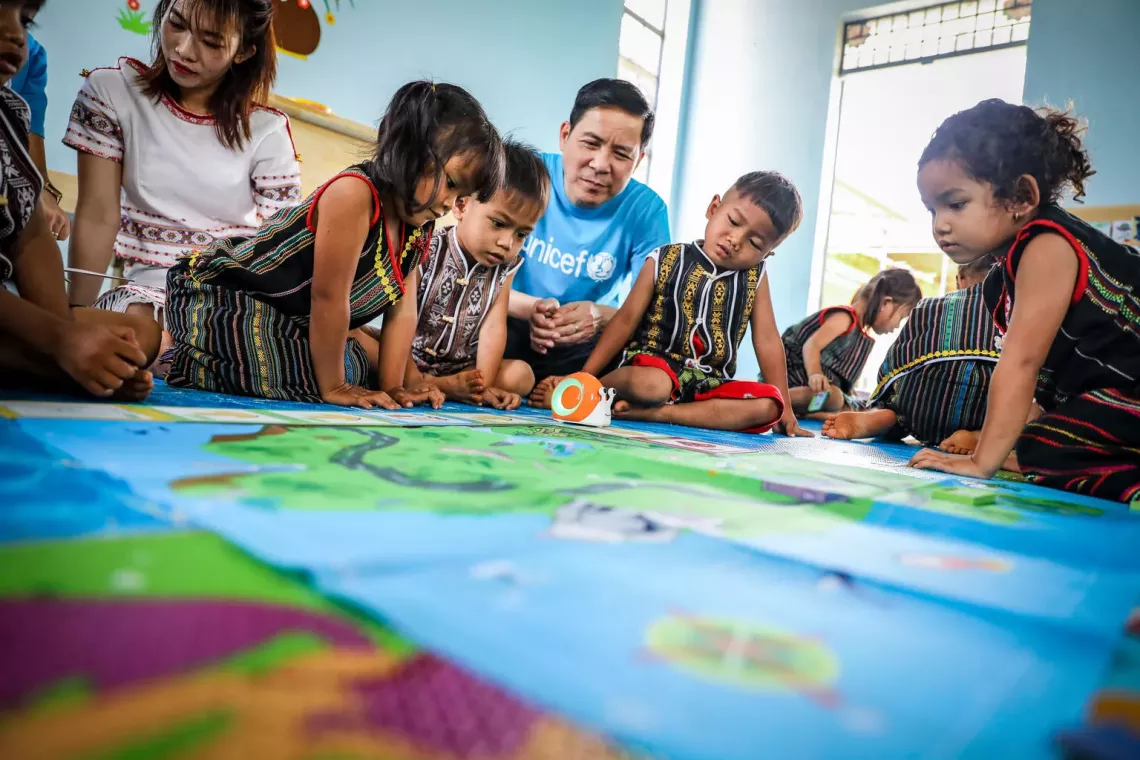
It starts with helping ensure building block foundational skills, including literacy and numeracy, are put into place during early childhood education. So ethnic minority children are not left behind, UNICEF-supported Mother Tongue-Based Bilingual Education is used to break down language barriers, including through a free digital library with books and mathematics games in sign and eight local languages. Likewise, gender-responsive social-emotional learning is being rolled out through the national early childhood education curriculum to ensure future generations of resilient young people.
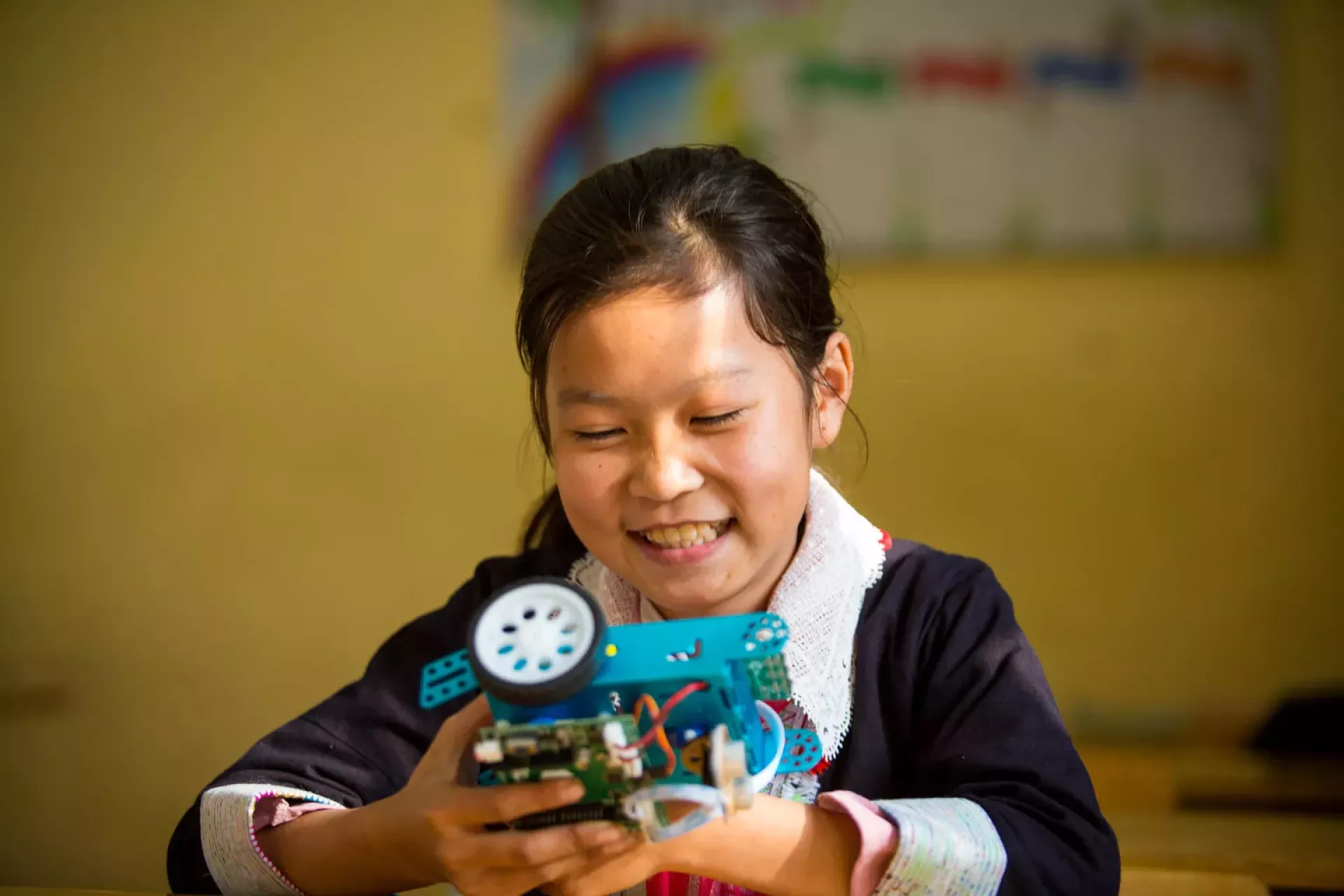
We also actively promote development of digital, social emotional, transferable and green skills across all school levels, as these 21st Century skills are essential for training and employment. In close collaboration with government partners, UNICEF develops digital and transferable competency frameworks, including in AI, for teachers and students.
UNICEF remains committed to inclusively engaging all children, particularly children with disabilities and ethnic minority students, in critical science, technology, engineering, and mathematics (STEM) education. Collaborative efforts with public and private sectors focus on piloting and scaling technology-driven innovations, closing the digital divide and empowering marginalized children with essential skills.
You can be the change for children!
Help UNICEF provide children and families with critical essential services for health and nutrition, education and protection.
Impacts
So every child is ready for a changing world, UNICEF is striving to unlock access to the education and skills needed for lifelong learning and employability. To realize this goal, we work with local partners to ensure children have the transferable, digital and job-related skills necessary to future-proof their lives.