Domestos, UNICEF and GIZ launch next phase of global partnership to bring healthy, safe, and sustainable schools to millions of children, including in Viet Nam
Viet Nam is one of five countries where the partnership will help children access clean water and toilets at school, driving collective action to accelerate progress towards 2030.
- English
- Tiếng Việt
Ha Noi, Viet Nam/London, UK (19 November 2026) – With just a few years remaining to achieve the Sustainable Development Goals, on World Toilet Day, Domestos, UNICEF and *GIZ announce a new phase of their long-standing collaboration, which will reach children in Viet Nam and four other countries. Bringing together additional partners such as the ELEVA Foundation, the partnership aims to help ensure every child, can learn in a healthy, safe environment.
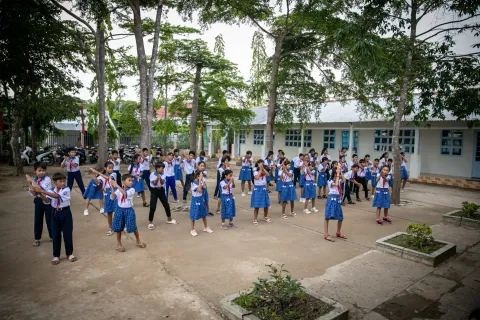
In Viet Nam, the partnership is already making a difference. In its first year, more than 60,000 children across 300 schools took part in a national competition designed to inspire innovation and action on water conservation and sustainability. Over the next three years, the programme will build on this momentum to help more children in Viet Nam benefit from better WASH services in their schools.
This work in Viet Nam is part of a broader programme across five countries: Viet Nam, India, Türkiye, South Africa and the Philippines. Building on a shared commitment to improve water, sanitation and hygiene services (WASH), the programme aims to ensure more than 24 million children can benefit from better WASH services in schools and learning environments across five countries(over the next three years. This will help to contribute progress towards Sustainable Development Goals 4 (Quality Education) and 6 (Clean Water and Sanitation).
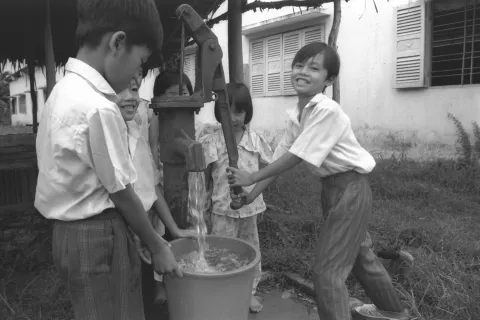
The initiative comes at a time when millions of children around the world continue to attend school without safe drinking water, decent toilets, and handwashing facilities. Despite global commitments to achieve universal access to water and sanitation by 2030, more than one in five schools still lack basic drinking water and sanitation services, while nearly one in three lack basic hygiene facilities.
Without these essentials, children are more likely to miss school, face disruptions to learning and face greater risks to their health and wellbeing. Girls are often disproportionately affected, particularly when schools lack safe, private, and accessible sanitation facilities.
Working with governments and local partners, the programme will strengthen the systems behind WASH services in schools, from policies, standards and monitoring to financing, capacity and sustainable operation and maintenance, while supporting healthier and safer school environments for children.
This year's World Toilet Day (19 November) highlights the crucial role sanitation plays as a driver of gender equality. For girls, a safe toilet at school can make a real difference to their ability to learn, participate and manage their periods with dignity.
Through the partnership Domestos, UNICEF, GIZ and partners are working with governments, including in Viet Nam, to make school WASH services safer, more inclusive, and more sustainable, helping to remove some of the barriers that can hold girls back from fully participating in school.
Dr Philip Goodwin, Chief Executive Officer for the UK Committee for UNICEF (UNICEF UK), said: "Every child deserves a safe, healthy place to learn. Yet millions of children around the world still go to school every day without clean water, safe toilets, and basic hygiene facilities, putting their health and education at risk. These are not luxuries, they are fundamental to children's dignity, development, and future opportunities.
"Partnerships like this are essential to accelerating progress for children. Together, we can strengthen the systems that underpin safe water, sanitation and hygiene services, helping more children access their rights and creating lasting change for generations to come."
Domestos and UNICEF have been working together since 2012 to help advance every child’s right to clean water, sanitation, and hygiene. Over the last 14 years, the partnership has supported more than 29 million children and communities around the world with access to safer, cleaner toilets and a further 57 million people with hygiene education. The latest initiative will support Domestos’ goal of helping 100 million people gain access to cleaner and safer sanitation by 2030.
ENDS
Notes for editors
For more information, please contact UNICEF UK Media team at [email protected] or 0208 375 6030.
UNICEF does not endorse any brand, company, product, or service.
*GIZ acting on behalf of the German Federal Ministry for Economic Cooperation and Development (BMZ)
Media contacts
About UNICEF
UNICEF promotes the rights and well-being of every child, in everything we do. Together with our partners, we work in 190 countries and territories to translate that commitment into practical action, focusing special effort on reaching the most vulnerable and excluded children, to the benefit of all children, everywhere. For more information about UNICEF and its work for children, visit https://www.unicef.org/vietnam
Follow UNICEF on Facebook, Instagram, X, Youtube, LinkedIn and TikTok
About Unilever
Unilever is one of the world’s leading suppliers of Beauty & Wellbeing, Personal Care, Home Care and Foods products, with sales in over 190 countries and products used by 3.7 billion people every day. We have 96,000 employees and generated sales of €50.5 billion in 2025.
For more information about Unilever and our brands, please visit www.unilever.com
About GIZ
The Deutsche Gesellschaft für Internationale Zusammenarbeit (GIZ) GmbH works worldwide for a future worth living. Together with our partners, we create opportunities and sustainably improve people’s lives. Through our networks, we turn international agendas into action – with a global vision and local impact. GIZ acting on behalf of the German Federal Ministry for Economic Cooperation and Development (BMZ)