UNICEF study reveals significant gap between corporate commitments and action for children across Asia
Analysis of 1,399 companies across nine Asian markets reveals children remain largely invisible in corporate ESG reporting, despite growing risks from climate change, digital harms and poor nutrition
- English
- Tiếng Việt
Bangkok/Hanoi, 9 July 2026 – A new UNICEF study of 1,399 listed companies across nine Asian countries, including Viet Nam finds that while most companies make commitments on human rights, few identify, report on or measure their impacts on children, revealing significant gaps both in disclosure and in action.
The report, Making Children Count: Sustainability Reporting across Emerging Asia, developed with The Centre for Child Rights and Business, finds that children remain largely invisible in corporate sustainability reporting, despite making up around one in three people across much of the region.
In Viet Nam, the study reviewed 109 listed companies across the Stock Exchange of Ho Chi Minh city (HOSE) and Hanoi (HNX). Companies achieved an average score of 57 out of 260, below the regional average of 77.7, indicating that children's rights remain at an early stage of ESG integration. While 83 per cent of companies reported supporting child-related initiatives at community level, formal corporate commitments to children's rights have yet to emerge. Just 37 per cent of companies explicitly committed to addressing child labour risks, while commitments to promoting living wages in supply chains were not reported.
These findings come at a time when Viet Nam has mandatory sustainability disclosure requirements and aligns its reporting framework more closely with international sustainability standards. This creates an opportunity for businesses to strengthen how children's rights are integrated into governance, risk management, operations and supply chains, building on existing community investments.
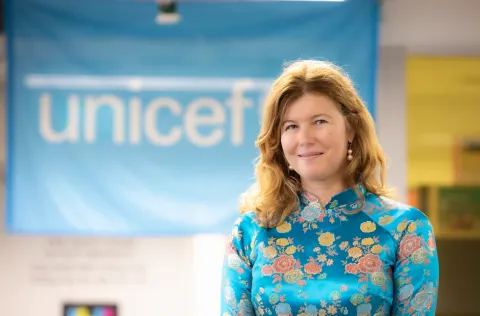
"This study shows that many companies in Viet Nam are already investing in children through community programmes. The next step is to embed children's rights into the way businesses operate to better manage risks, build investor confidence and contribute to a healthier, more skilled and more resilient workforce. UNICEF Viet Nam continues working with government, investors and the private sector to make children's rights an integral part of responsible business and sustainability reporting," said Silvia Danailov, UNICEF Representative in Viet Nam.
The report finds that while nearly 3 in 4 companies report human rights commitments and 88 per cent report child-related community activities as corporate philanthropy, only one in 20 companies identify children as stakeholders and only one in 100 assess their business impacts on children.
The disconnect is particularly stark in sectors tied to some of the region's greatest challenges for children.
Only a small fraction of companies discloses how they are addressing risks and material impacts on children in climate change, online harms, malnutrition, child labour and the working conditions of parents. Just 2 per cent mention children in climate strategies, fewer than 10 per cent of tech companies report measures to protect children online, and only 3 per cent of companies commit to implementing protective marketing practices for children. Even within the food and beverage sector, just 12 per cent disclose protective marketing practices.
On child labour, where 72 per cent of companies have commitments, only 2 per cent explain how they remediate cases when these are found, while just 3 per cent support suppliers to improve practices. The picture is slightly better on family-friendly workplaces, where reporting is more common, but meaningful commitments on living wages remain rare.
UNICEF is calling on all stakeholders to make children visible in the decisions, disclosures and standards that will shape a more sustainable and inclusive future for every child. Specifically, UNICEF calls for:
- Companies to move from promises to proof by identifying, managing and reporting on impacts on children and aligning philanthropy with children's needs and business impacts.
- Governments and policymakers to make child-inclusive business the norm by integrating children's rights into laws, policies and reporting frameworks.
- Investors and stock markets to make child rights part of mainstream ESG by integrating child-related risks and impacts into reporting and ratings and promoting child-lens investment to contribute to the development of children in Asia.
- Parents, consumers, children and young people to use their voices, choices and lived experiences to hold companies accountable and help shape business practices that better protect and support children.
### Notes for editors:
Read the full report here.
For more information, please contact:
Nguyen Thi Thanh Huong, Advocacy and Communications Specialist, UNICEF Viet Nam
Tel: +84 (0)904154678, Email: [email protected]
Media contacts
About UNICEF
UNICEF promotes the rights and well-being of every child, in everything we do. Together with our partners, we work in 190 countries and territories to translate that commitment into practical action, focusing special effort on reaching the most vulnerable and excluded children, to the benefit of all children, everywhere. For more information about UNICEF and its work for children, visit https://www.unicef.org/vietnam
Follow UNICEF on Facebook, Instagram, X, Youtube, LinkedIn and TikTok