Universal Patronage System revolutionizes primary health in Uzbekistan
Health care to the doorstep

Barno Nematova (46) is greeted by Ulbosin Sarsenbayeva (26) with a huge smile. She quickly gets down to business with the baby, stripping him down, adept at her assessment, she is asking about the reddish spots on the baby’s waistline and back. She cautions on the increasing heat, she lifts a chortling baby Salamat, with such ease and dexterity and lays him down.
From her patronage red bag, she brings out her weighing sack, and her tap measure. She measures the head circumference, height and checks the baby’s breathing. Both mother and nurse are excited about weight and growth milestones. The excitement is palpable.
Clearly, I am among friends.
Here the joy of health and wellbeing is shared between nurse and family, the counsel is sincere and well received.
“I counselled her to feed the baby with breast milk only for 6 months. He is growing so well and has just turned seven months and I am now monitoring the introduction to solids,” says Barno.

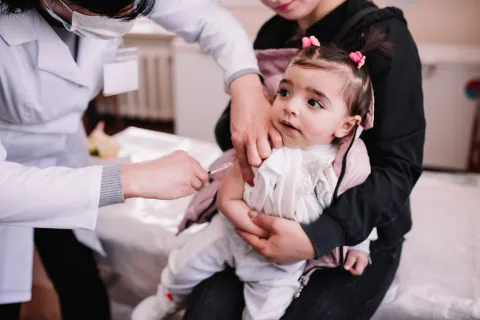
Barno is a patronage nurse in Nukus, Karakalpakstan. She visits 285 families in her polyclinic’s catchment area, prioritizing pregnant women, women who have just delivered, newborn babies and persons with disabilities. For new mothers like Ulbosin, she visits from the third day after delivery and keeps a tight watch on the newborns. This simple nurse, who knocks on various doors in her community, often without her uniform and can assure apprehensive new mothers, is at the frontier of childcare success story.
Nurses like Barno are foot soldiers in the primary health care revolution happening across the country.
They are a vital link between the primary health care facility, known as the Polyclinic in Uzbekistan and the community (Mahalla), delivering care right at the doorstep, even for some of the most vulnerable communities. Home visiting by these nurses is critical, providing holistic support to families on child care, nutrition and child development.
Dr Nazira Allambergenova, the Chief Doctor at Nukus Polyclinic is happy about the results of the home visits. “ They often catch children on the brink, averting hospitalization for newborns. It is a cost-effective way of screening and support on childcare and child development,” said Dr Allambergenova, “Importantly, it saves time for us at the clinics, the queues are shorter, enabling us to deliver quality care here at the clinic.”
She is right.
Compelling research findings have demonstrated that home visits by nurses can improve delivery of care at the primary health care facility, inculcate positive standards on early childhood development, nutrition, and psycho-social support, as well as hugely enhance parenting, health and wellbeing of both caregivers and children.
“Home visits by nurses are transformational and have a huge potential to bring a package of family services at the doorstep of families.” said Munir Mammadzade, UNICEF Representative in Uzbekistan. “UNICEF’s investment in the Universal Progressive Home Visits recognises their transformative potential to reach pregnant women, new-born babies and young children in both urban and rural settings including remote areas,”
In Uzbekistan, UNICEF supported the introduction of the Universal Progressive Model of Home visiting. With UNICEF support, a team of experts from the Ministry of Health adapted guideline and developed a pocketbook on implementing the Universal Progressive Model of Home Visiting. UNICEF, together with the Ministry of Health trained a team of trainers who trained all patronage nurses on new the methodology. The new model has been introduced into the system of pre- and post-graduate training of nurses
The impact has been immense since the introduction of the updated home visiting model, more than 4 million mothers and children in Uzbekistan, especially the disadvantaged families, are more visible and have improved access to services.
Back on the mattress, in Ulbosin’s home the impact is evident. Baby Salamat is excited by the hand and leg exercise and is babbling away, his mother sings Barno’s praise without being prompted.
“ Barno is a great support system, sometimes as a mother I am scared, but I know I can call her anytime, she knows my baby and she will guide me appropriately,” said Ulbosin.