UNICEF addresses urgent water and sanitation needs in Ukraine
Through technical aid, restoration of damaged facilities, and partnerships with local utilities, UNICEF has provided safe water and hygiene support to millions
- Українська
- English
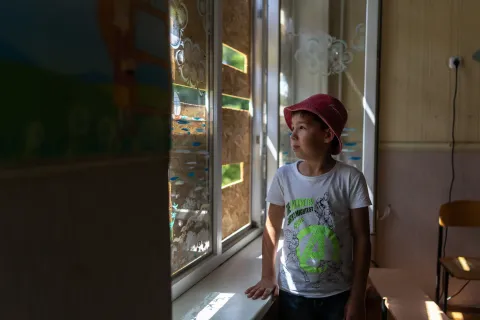
The war has caused human suffering and displacement across the country. It has also caused extensive damage to essential public utilities. This means that pre-existing vulnerabilities and already substandard water, sanitation and hygiene (WASH) infrastructure have become significantly worse, leaving millions of families and children in a precarious situation.

In 2023, UNICEF facilitated safe water supply and sanitation services to over 4.5 million people through technical support to water utility companies, restoring damaged infrastructure, and supplying essential equipment and chemicals for water purification. In 2022, similar support was provided to an estimated 4.65 million people.
“Washing your face, going to the toilet and doing the dishes turns into a daily disaster when there are 10 people in the family and there is no water,” says 51-year old Yevhen, a caregiver for nine foster children who live in Mykolaiv.
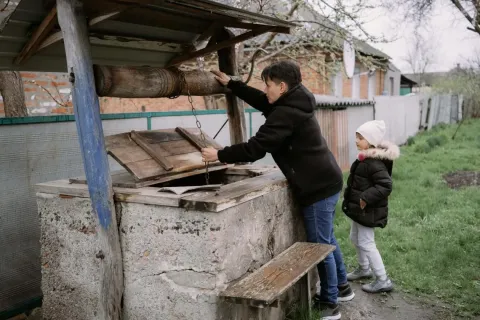
“Sometimes, we were left without water for several weeks. To wash dishes or do laundry, people had to collect water from wherever possible, from their wells or rivers. They even collected rainwater,” - says Alina, a mother of two.
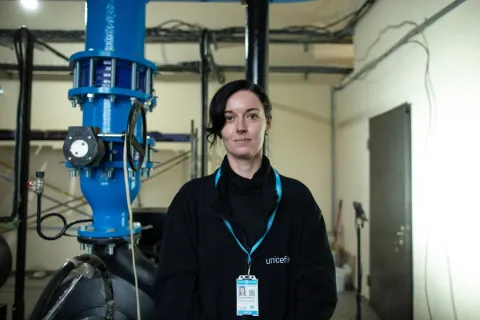
“Fluoride, ammonium nitrogen, phosphates and hardness are too high,” explains Marina Petrovska, director of local water utility company Voda Eskhara. “All these indicators have a bad impact on the health of our population. Children and the elderly are particularly affected. Children suffer tooth decay and loose teeth.”

UNICEF's ongoing support to over 50 local water utilities across the country remains essential to maintaining water security and the functionality of critical infrastructure during the ongoing war. This partnership includes supplying equipment and materials to water utility companies, as well as offering support for design and restoration efforts. UNICEF provides further WASH assistance in institutions critical to children, such as schools and hospitals.

In 2023, UNICEF has extended its support to 1.9 million people with essential WASH supplies, including hygiene kits for different age groups, water containers, water purification tablets, bottled water and water trucking, diapers, menstrual hygiene products, and institutional hygiene kits for collective centres, health facilities and schools.
Last year, in 2022, such lifesaving supplies and services reached 1.6 million people in Ukraine who had been affected and displaced by the war.

UNICEF and its partners were among the first agencies on the ground in Kherson on 6 June 2023, following the Kakhovka Dam attack, providing immediate support to families displaced or evacuating as the flood waters rose. Since then, UNICEF and partners have scaled up their operations.


In the two months since the destruction of the Kakhovka Dam, UNICEF has provided life-saving support. A total of 947,595 people affected by the situation received aid. Among them, 124,404 individuals in the Khersonska region, 821,364 in the Dnipropetrovska region, and 1,827 in the Mykolaivska region now have access to safe drinking water through measures such as bottled water, water trucking, and the use of chemical reagents for water treatment. Around 48,000 people have received hygiene supplies through mobile teams.

UNICEF remains committed to its mission, providing vital assistance to children and communities in need and forging strong partnerships in the pursuit of clean water, hygiene and sanitation in Ukraine.