Ukraine war continues to rob children’s hopes for future
Two teenagers share their thoughts on the future, amid an ongoing war that has devastated the lives of millions.
- Українська
- English
Today, like most days, classmates Stepan, 15, and Yaroslav, 16, awoke to the sound of explosions as their hometown of Kharkiv, Ukraine came under rocket fire. This is the grim reality for millions across the country after nearly two years of war.
Two years ago, on this very same morning, the boys’ school was destroyed by shelling. Since then, it has remained in ruins, and the children have switched to remote learning. This often poses a significant challenge as online classes require internet access, but there is no internet without electricity.
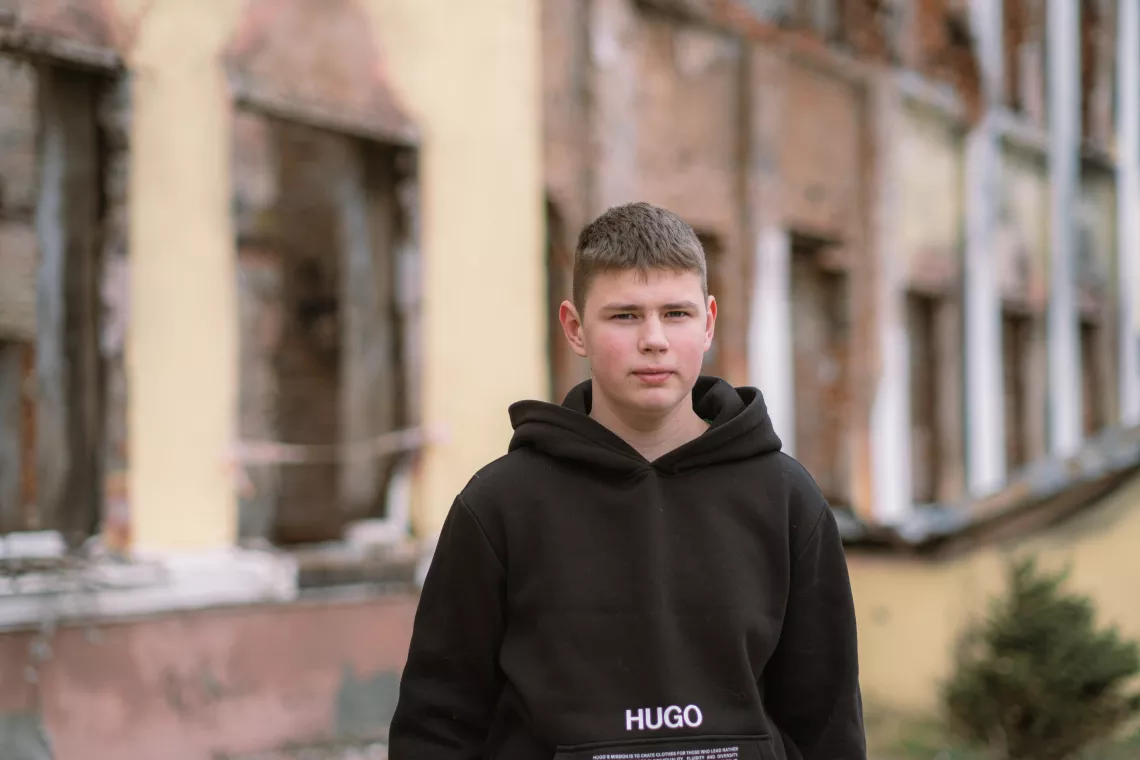
"My grades have worsened. English and German are the most challenging because the teachers' explanations are not always clear online. Plus, you can't talk to your classmates. I'm afraid that because of the gaps in my studies, I won't be able to pass the university entrance exams.”
Stepan and Yaroslav were at least able to attend school full-time before the COVID-19 pandemic and the onset of war. In contrast, some first-graders have never even set foot into school due to the challenging security circumstances.
"I'm afraid that younger children won't have the opportunity to receive an education and, thus, won't have a future. I went to school before the war and I have some knowledge, but they might not get this chance. I feel very sorry for them."
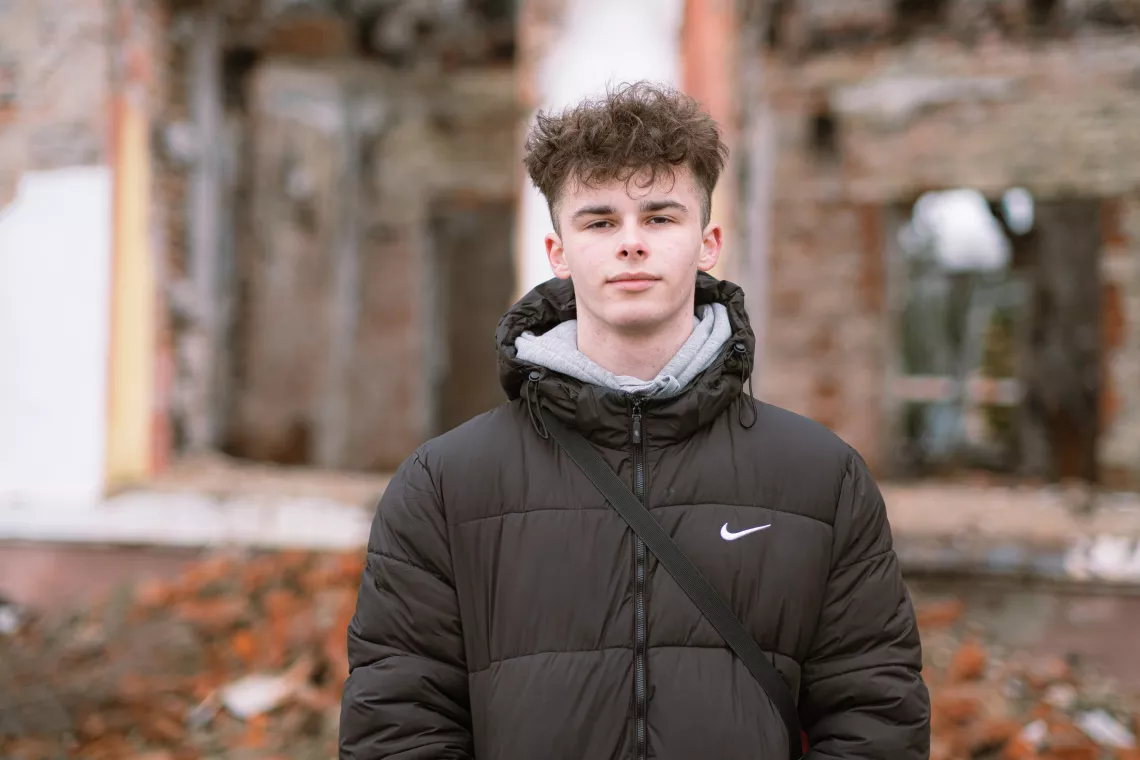
As well as shelling and power outages, anxiety and stress have significantly impacted the learning process for scores of children.
"I wish to return to school,” says Stepan. “But the risk of a rocket hitting it, similar to our previous school, is always on our minds.”
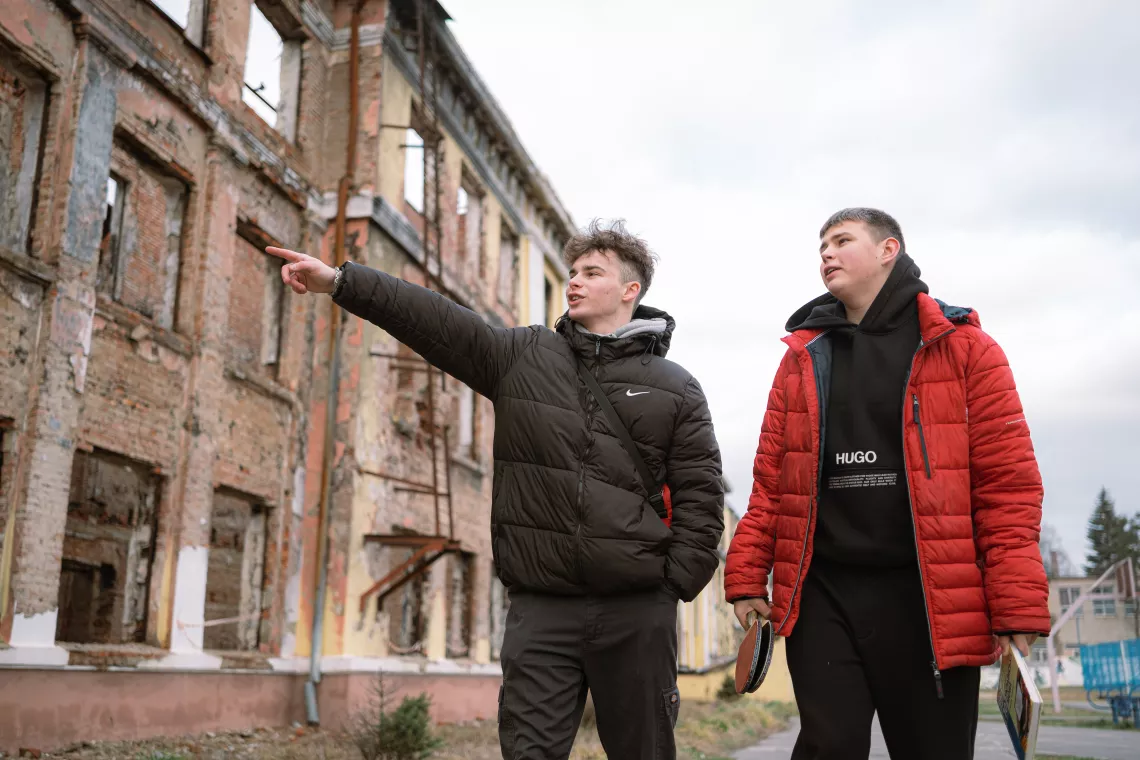
Before the war, Stepan loved sport, attending water polo and volleyball clubs. However, since the fighting broke out, this has become impossible.
Both of the boys are very sociable and used to have a large group of friends, but now most of their peers have left the city.
"In a year, when I complete the eleventh grade, I plan to study to become a massage therapist," says Yaroslav. "After the war ends, there will be many veterans in need of rehabilitation. I want to be useful."

Ukrainian schoolchildren dream of returning to their desks and catching up on everything they have lost due to the war. Most of all, they want peace and security.
"I don't want to fall asleep and wake up to the sound of air raids, it scares me," Yaroslav says. "Most of all, I dream that the war will end, and I can live as I used to – full of joy and without fear."

Approximately 5.3 million children in Ukraine have suffered learning losses due to limited access to traditional schooling. Over 7,000 Ukrainian schools are inaccessible, some are closed due to security risks, others have been damaged or destroyed, and some rely on distance learning. Although online classes are prevalent, they cannot replace in-person learning, especially for primary school children. Lack of stable access to the internet and a lack of devices, such as laptops and tablets, also negatively influence distance learning.
The United Nations Children’s Fund (UNICEF) is working with the Government of Ukraine and partners to reopen schools for full-time education across the country as soon as possible. Since February 2022, UNICEF has supported some 1.5 million of Ukraine's most vulnerable children to access formal and non-formal education, including early childhood education. It is crucial that rebuilt educational facilities are accessible, inclusive and safe, with equipped bomb shelters – an essential requirement for full-time education in Ukraine.
Children need the opportunity to continue their education. Ukraine's recovery and development depends on it.
>> Read the first story about Stepan and Yaroslav, we have published almost two years ago.