"I will be big, I will learn everything"
UNICEF and partners work with Roma communities in Zakarpattia to strengthen children’s access to education, healthcare, safe water and social support.

- Українська
- English
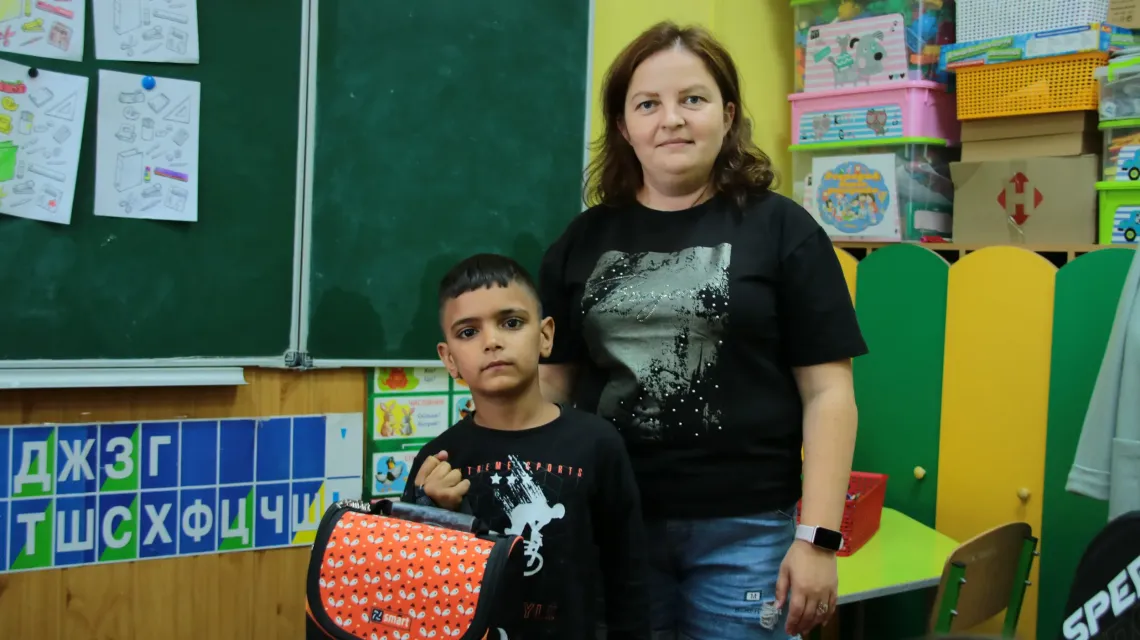
Yasha walks confidently into a classroom that is already familiar to him. He recognises his teacher, greets the children he met over the summer, and settles at his desk calmly.
Yasha is now a first-grader at Uzhhorod Gymnasium No. 14.
“Writing, learning, numbers…” the seven-year-old lists when asked what he learned over the summer. And what does he want now? To write even better.
Before the first school bell, Yasha and 30 other future first-graders attended a school-readiness programme. The classes were led by Taisiia Hvozdetska, a primary school teacher at the same gymnasium. The children worked on basic social skills while getting to know the school — their teacher, their future classmates, the classroom and the new rules.
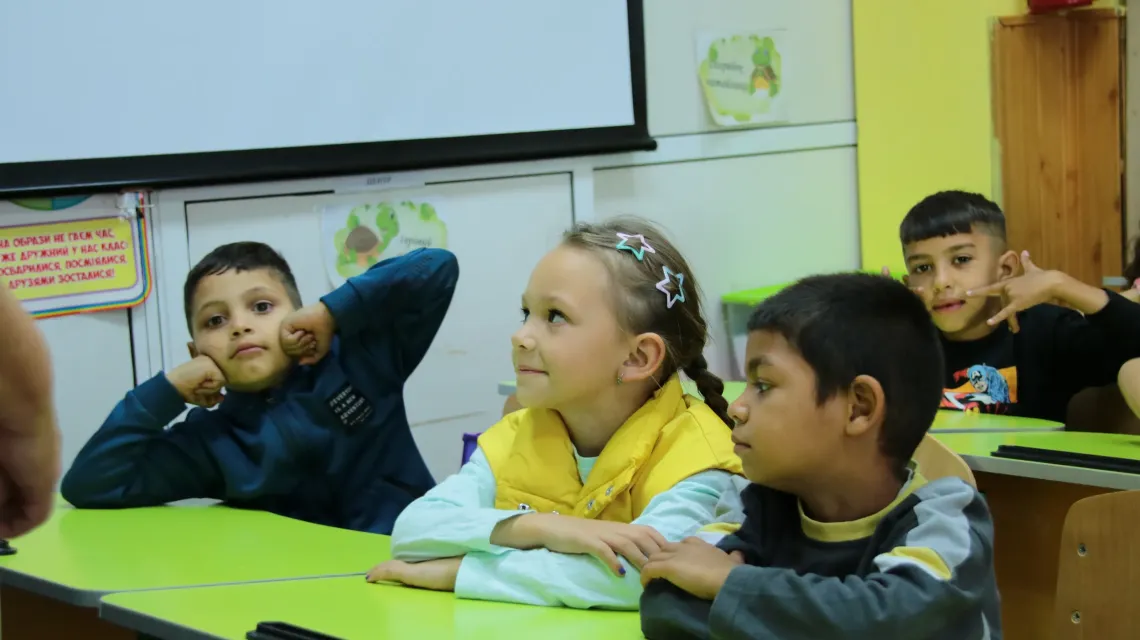
“The children already know each other, they know their teacher, they understand that they need to be in class. They feel freer. Those who came to the summer classes stay at school calmly today, without their mothers, without that anxiety of being left behind,” explains Taisiia.
UNESCO and UNICEF's Global Report on Early Childhood Care and Education (2024) confirms that quality preschool experiences help children develop social and emotional skills — including self-regulation and the ability to interact with others — that are foundational for school readiness and a successful transition to primary school. Findings from the programme show that none, of the 50 families surveyed, had children who had attended kindergarten. In half the families, children did not attend school, and fewer than half of the households surveyed had learning materials for study at home. In most families, Romani was the language spoken at home, so children often began learning Ukrainian only once they were at school. This is the same time as they take on reading, writing, basic numeracy and start adjusting to classroom dynamics. This is their first experience of an organised learning environment and can result in an unequal start that can create gaps in learning outcomes, making it harder to adapt and succeed at school later on.
For Roma families, the decision about kindergarten often depends not only on whether a place is available, but also on financial constraints, and cultural and social barriers. Alongside the school-readiness programme for children, UNICEF partners held meetings with parents that enabled them to work through fears and concerns about possible prejudice, to show what preschool education means for child development, and to support families in enrolling younger children in preschool.
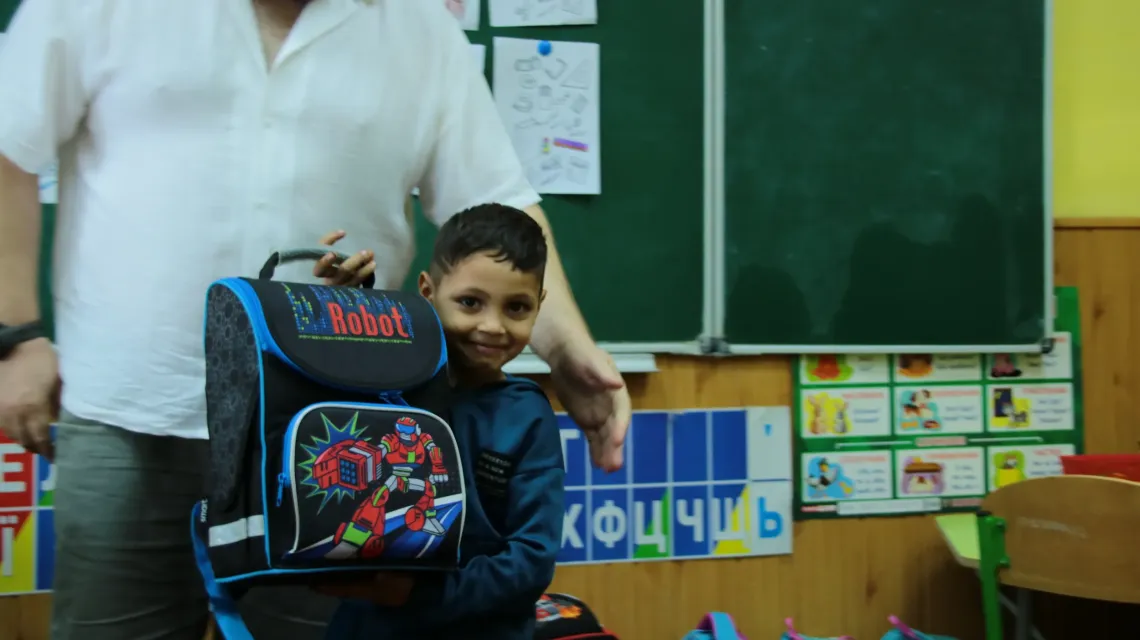
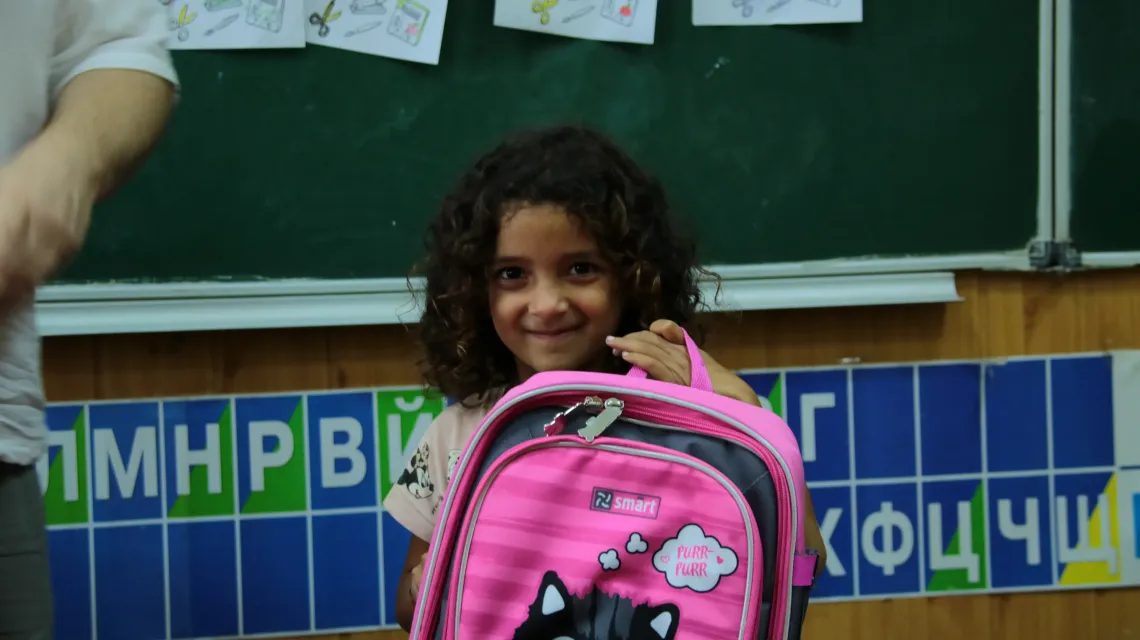
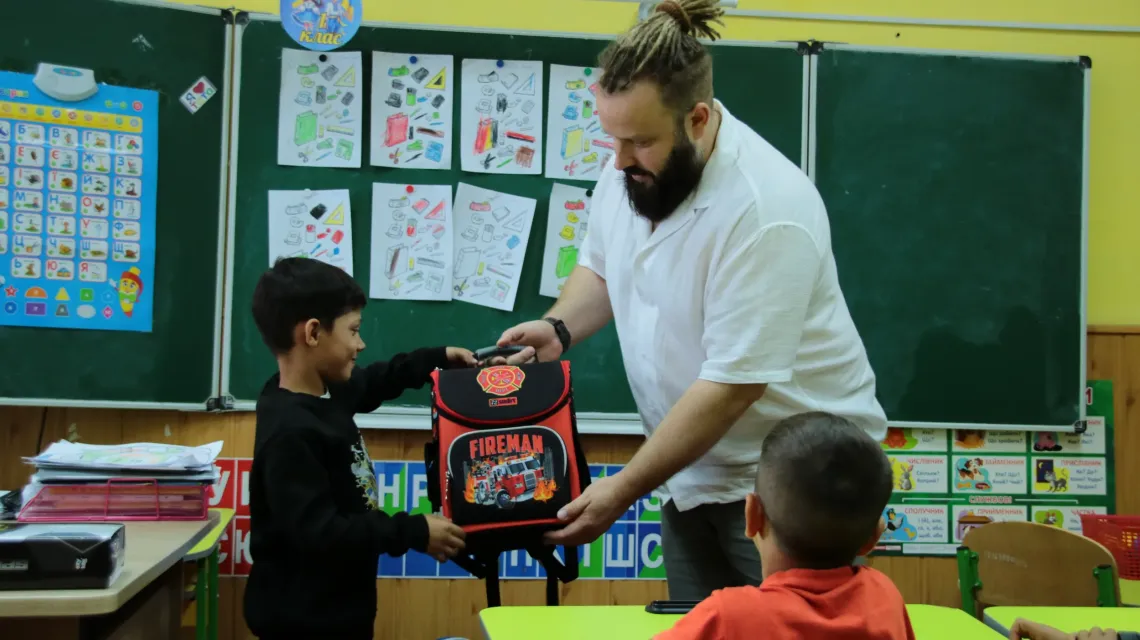
On 8 September, International Literacy Day, Yasha received a backpack with school supplies. The learning kits for 47 first-graders of Uzhhorod gymnasiums No. 13 and No. 14 were provided by the International Foundation for Health and Environment Protection “Rehion Karpat” (NEEKA) in partnership with UNICEF. For families with no learning materials at home, this is critical support.
The work with families from the Roma community, however, does not stop at school. The survey showed that none of the 50 households has a centralised water supply, 98 per cent of families needed hygiene support, and fewer than half have a declaration with a family doctor.
UNICEF supported teams were able to reach these families with home visits and vaccination, case management for protection support, strengthening access to safe water and hygiene, and access to youth spaces for older children. Education here is one point of contact among several, but the goal is to build a system that works together to protect the rights of all children in the community.
“Every child should have an equal start in education, whatever the circumstances they are growing up in. Our task is to build consistent work that helps children join the education process, feel a full part of it and have more opportunities to fulfil themselves in the future,” stresses Oleh, education component coordinator.
Yasha takes another look through his learning kit. He says he likes everything in it. And what does he need the supplies for? “Because I will be big, I will learn everything,” he declares confidently.