Ukrainian schoolchildren will develop lifelong career management skills: UNICEF study provides recommendations on career education
The UNICEF study looks at international experience of career education in times of instability and offers 25 recommendations, some of which the Ministry of Education and Science is already putting into practice
- Українська
- English
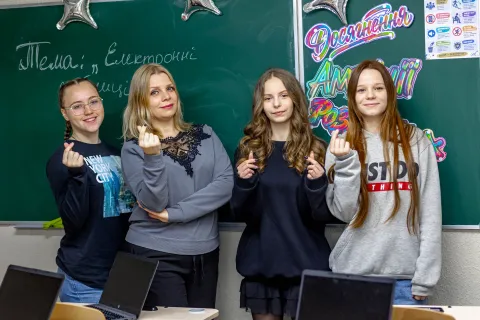
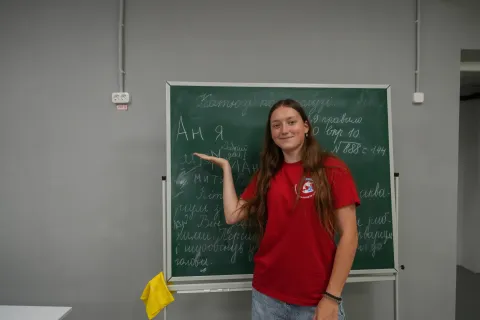
Kyiv, 12 November 2026 – From 1 September 2027, the New Ukrainian School reform will start to be introduced in senior specialized secondary school. After Grade 9, students will choose between an academic and a vocational track. Those in academic lyceums will also choose a profile, subjects and courses in line with their interests. But having a choice does not mean the choice will be an informed one. To help young people make confident educational and career decisions, both at school and throughout their lives, they need to develop career management skills.
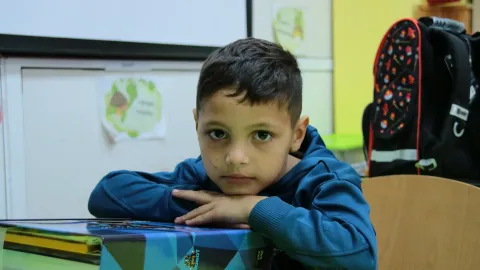
PISA data show that the share of 15-year-olds in Ukraine who could not name what job they expect to have as adults rose from 14% in 2018 to 48% in 2022. Among the 71 countries that took part in the last two PISA rounds, uncertainty grew faster in only three. The share of students whose expected level of education is insufficient for the job they plan to pursue also grew, from 6.5% to 20%, which is the largest increase among the 70 countries with data.
These figures reflect the reality Ukrainian teenagers are growing up in: war, displacement, interrupted schooling and a rapidly evolving labour market. For this reason, UNICEF, together with the Ministry of Education and Science and with funding from the German Federal Ministry for Economic Cooperation and Development (BMZ) via the German Development Bank (KfW), studied international experience and developed recommendations for introducing career education in Ukraine.
“For many teenagers, the choice after Grade 9 will be the first independent decision about their own future. It is essential for us that every student has support and can explore their interests and understand where a particular educational path leads. That is why we are building career education as part of the New Ukrainian School reform. I thank UNICEF and our German partners for supporting this work,” said Minister of Education and Science of Ukraine Andrii Butenko.
One of the main recommendations is to make career education compulsory for all students in basic secondary education, because voluntary participation is least likely to reach those who need support most. The study also recommends restoring employer engagement to its pre-full-scale-invasion level, including through coordinators in communities and a national online platform. In practice, age-appropriate engagement with employers, workplace visits and job shadowing can help students connect career guidance with real opportunities and informed choices.
“War and prolonged uncertainty make career education more important than ever. Young people in Ukraine are navigating displacement, disrupted learning, changing labour market demands and difficult decisions about their studies and careers. They need guidance, skills and opportunities to explore the world of work, to make informed choices and adapt to change,” said UNICEF Representative in Ukraine Anne-Claire Dufay. “This also requires employers to open their workplaces to young people and help them connect career education with future opportunities,” she added.
The Ministry of Education and Science, together with partners, is already implementing some of these recommendations, in line with the international best practice on which the study draws. A standard 90-hour professional development programme for career education advisers has been approved, which matches a recommendation of the study. The position of career education adviser has been added to the Classification of Occupations, and the Ministry plans to introduce it in general secondary schools across Ukraine from 2027.
Ahead of the 2026/2027 school year, Ministry of Education and Science in partnership with UNICEF and with financial support from the German Federal Ministry for Economic Cooperation and Development (BMZ) via the German Development Bank (KfW), held training in career guidance and counselling for educators from 150 pilot academic lyceums who will become career education advisers. The lyceums are testing approaches to building a career education system for upper secondary school with UNICEF’s support. The next step is to extend this to more than 2,000 academic lyceums so that students can better understand their interests, compare educational options and plan their next steps with confidence. The pilot experience can also help inform how students are supported in navigating pathways into further education, training and future employment.
Media contacts
About UNICEF
UNICEF works in some of the world’s toughest places, to reach the world’s most disadvantaged children. Across 190 countries and territories, we work for every child, everywhere, to build a better world for everyone. For more information about UNICEF and its work for children, visit www.unicef.org
Follow UNICEF Ukraine on Facebook, Instagram , Twitter та TikTok.