Back to the classroom: how teachers help children learn despite the war
After several years of distance learning, pupils at Lyceum No. 119 in Kryvyi Rih have returned to their desks. A shelter renovated with UNICEF’s support has helped to resume face-to-face learning, and enabled teachers to be close to their students.

- Українська
- English
After several years of distance learning, pupils at Lyceum No. 119 in Kryvyi Rih have returned to their desks. A shelter renovated with UNICEF’s support has helped to resume face-to-face learning, and enabled teachers to be close to their students once more, supporting them and preparing them for life ahead.
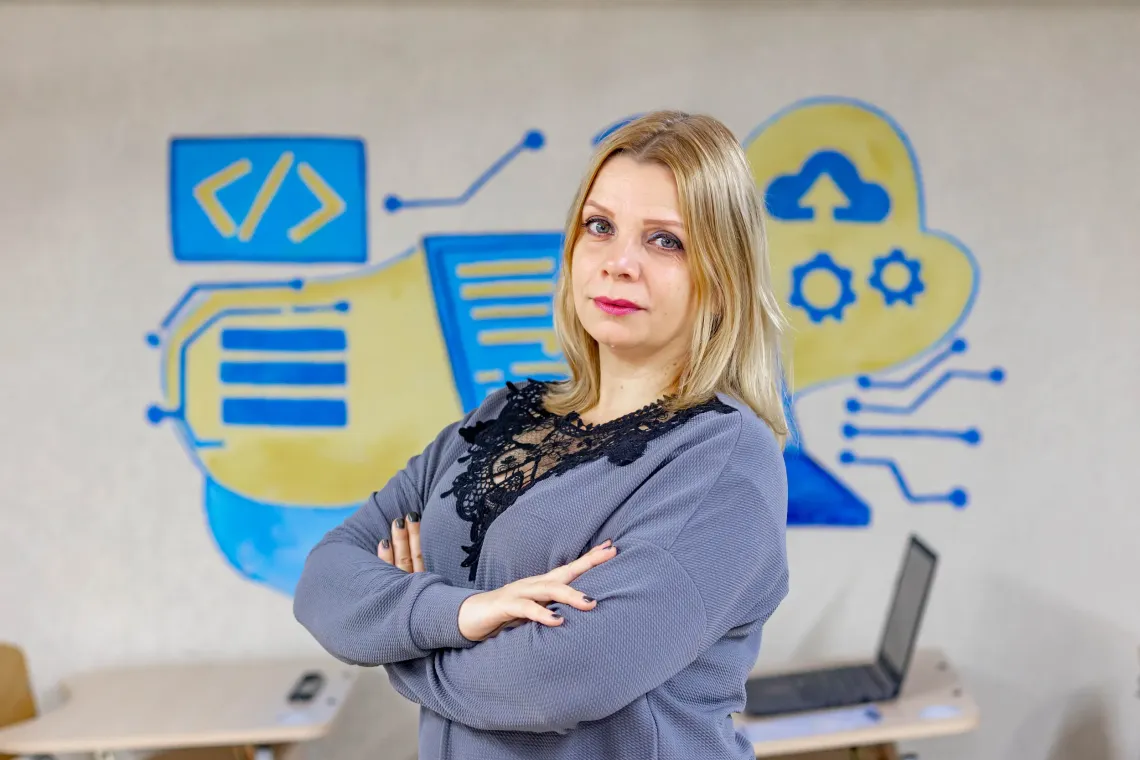
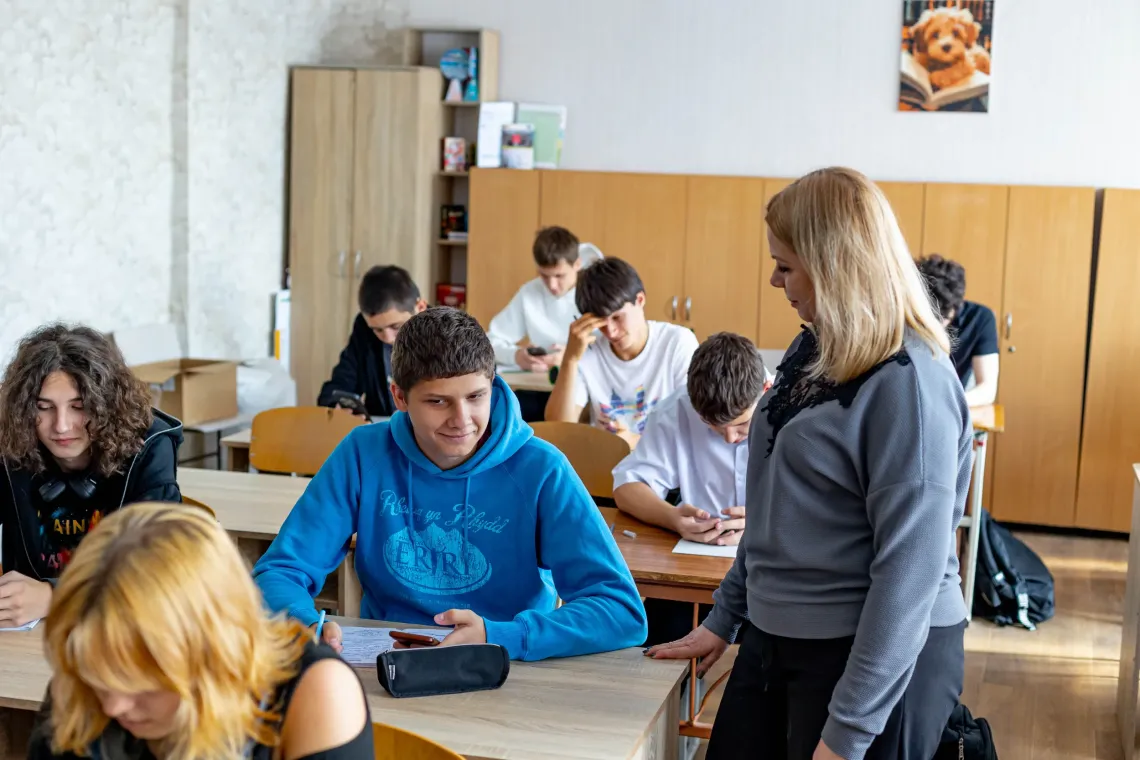
In the IT classroom, Olga Pynzar, form tutor for 10-A Grade, is once again seeing her pupils in front of her, rather than small squares on a computer screen.
Olga decided to become a teacher when she was still a child: she would take her mum’s magazines, write her classmates’ names in them, conduct imaginary lessons and give marks.
“What I love most about this profession is learning and getting feedback from the children. When you see their eyes light up and they say, ‘That’s brilliant, that’s cool!’” she says enthusiastically.
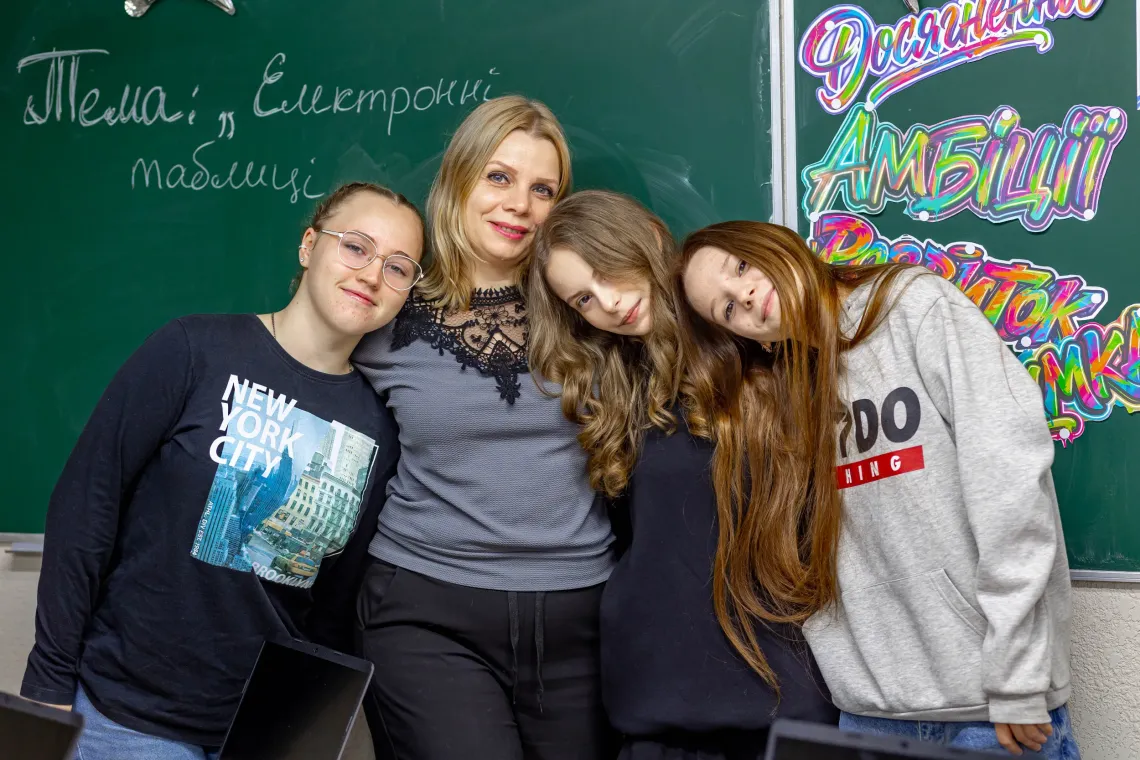
Back to School
The full-scale war has changed not only children's daily lives but also their education. Air raid alerts, power cuts and internet outages, technical difficulties have all become part of their daily routine. For Olga, who teaches computer science, distance learning was particularly challenging:
“Online learning presents many challenges: no software, no internet, no electricity. But when the children are here in the classroom, we can sort out any issues that arise straight away,” she says.
Returning to the school has given pupils not only the chance to learn more effectively, but also something that was particularly lacking during remote lessons: face-to-face interaction.
“The children missed socialising, the competitions and the events that took place at school. Now they’re happy to go to school, socialise and learn,” says Olga.
Maria, a 10th grader, is delighted to be back in class and to be part of the group again.
“These are my new friends. I find it interesting being with them,” says the pupil.
Maria is already dreaming of her upcoming school-leaving ceremony, although she cannot yet imagine what it will be like in the midst of the war.

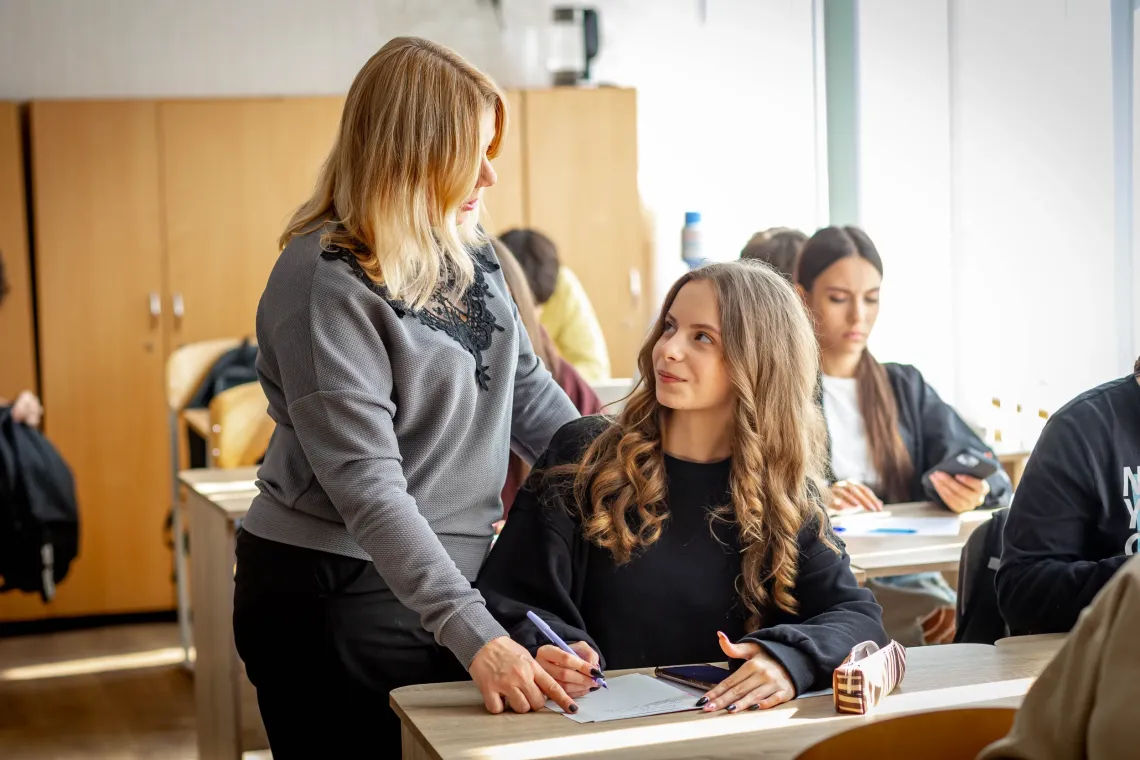

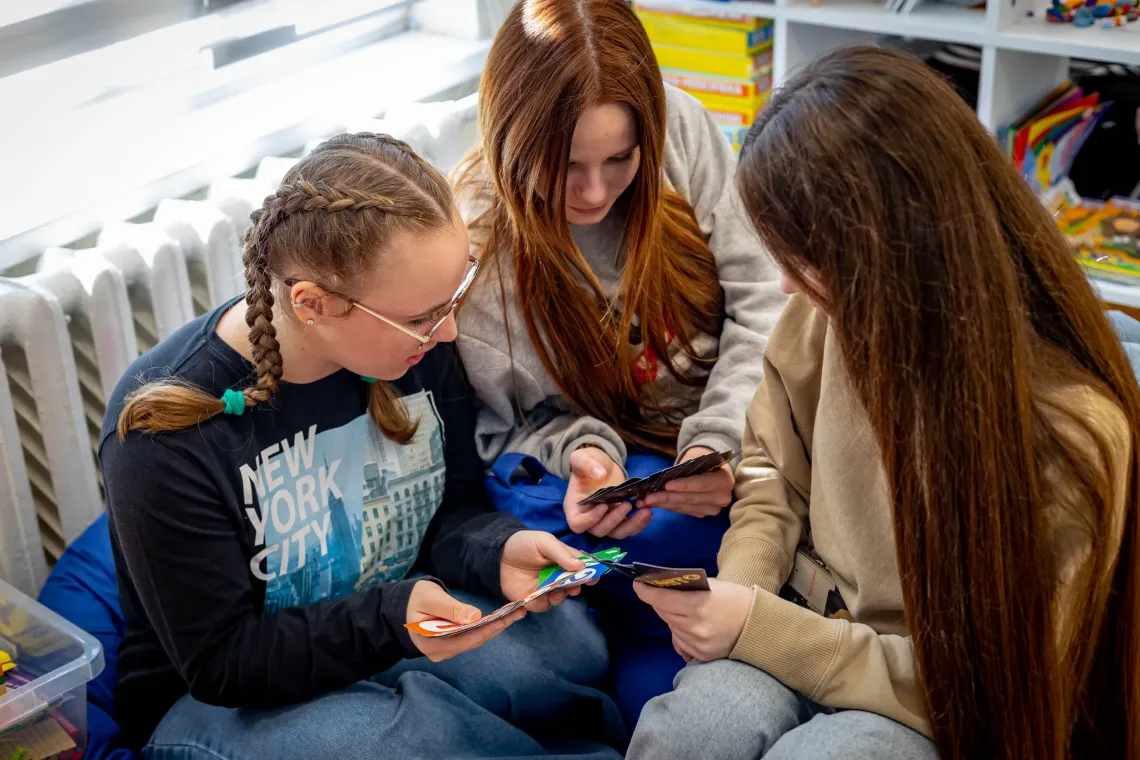

Learning in Safety
In 2026, 483 pupils at the lyceum were able to return to their desks thanks to the renovation of the shelter. UNICEF restored it with financial support from the Spanish Government.
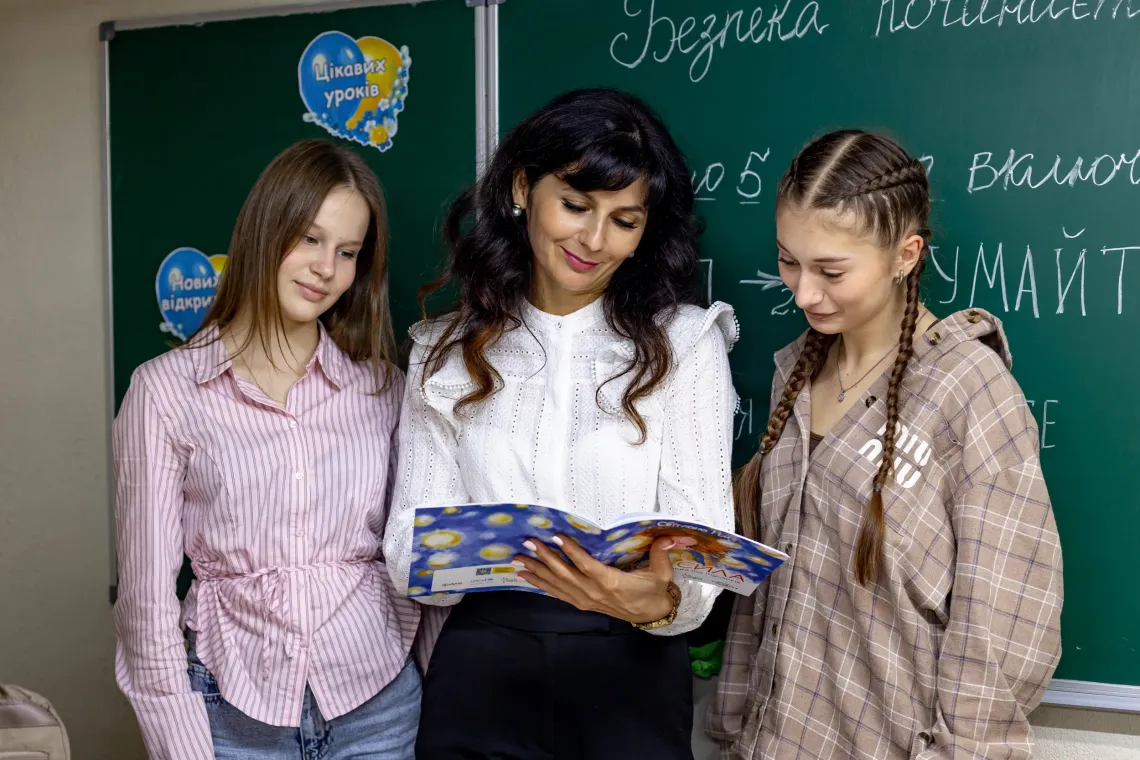
For Olesia Bazilevska, a biology teacher and form tutor for 10-B Grade, the opportunity to study in person is inextricably linked to a sense of safety:
“Our shelter provides a comfortable environment so that we, as teachers, can impart knowledge to the children, and the children can absorb it,” she explains.
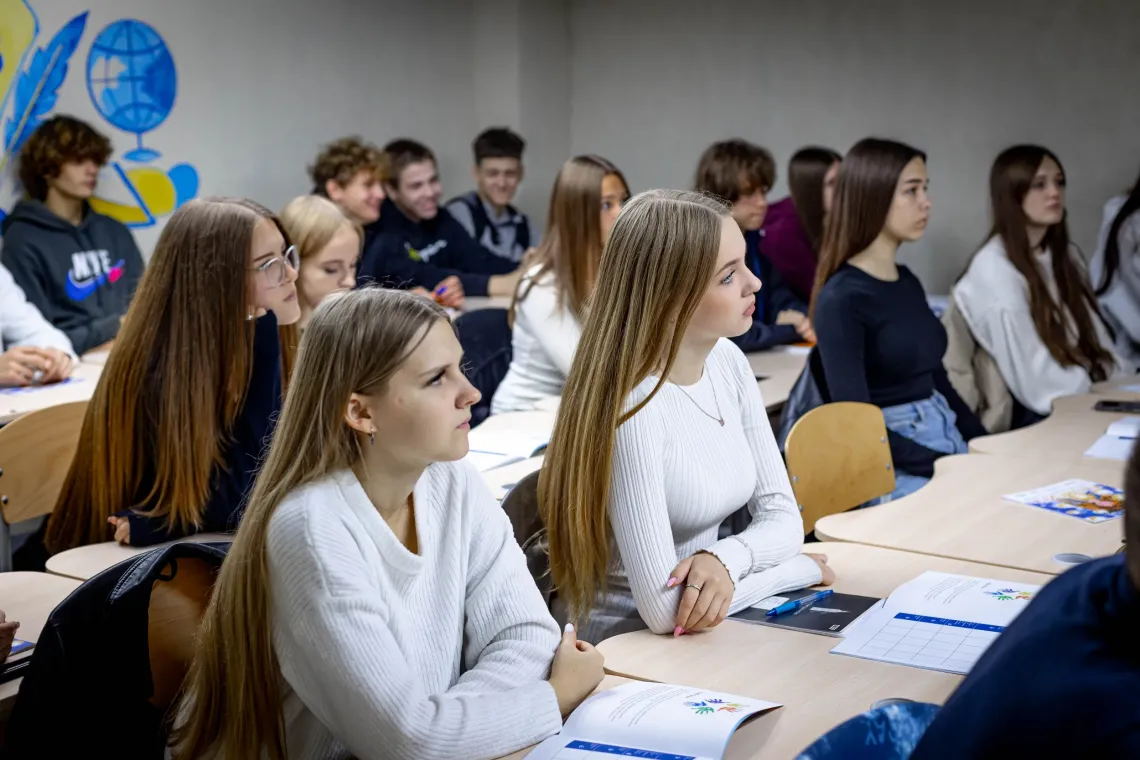
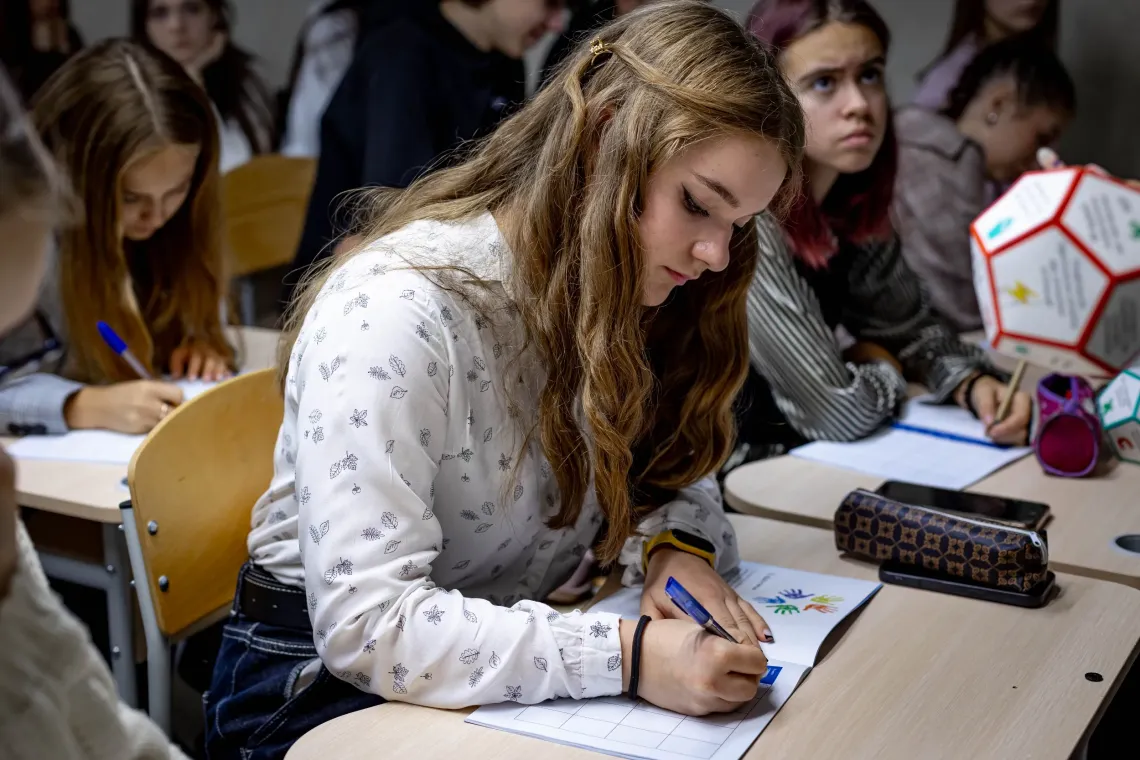
Sofia, a 10th grade pupil, says that she feels comfortable in the shelter even during air raid alerts.
“There’s a very cosy atmosphere here and a very friendly group,” she says.



Being there for the children
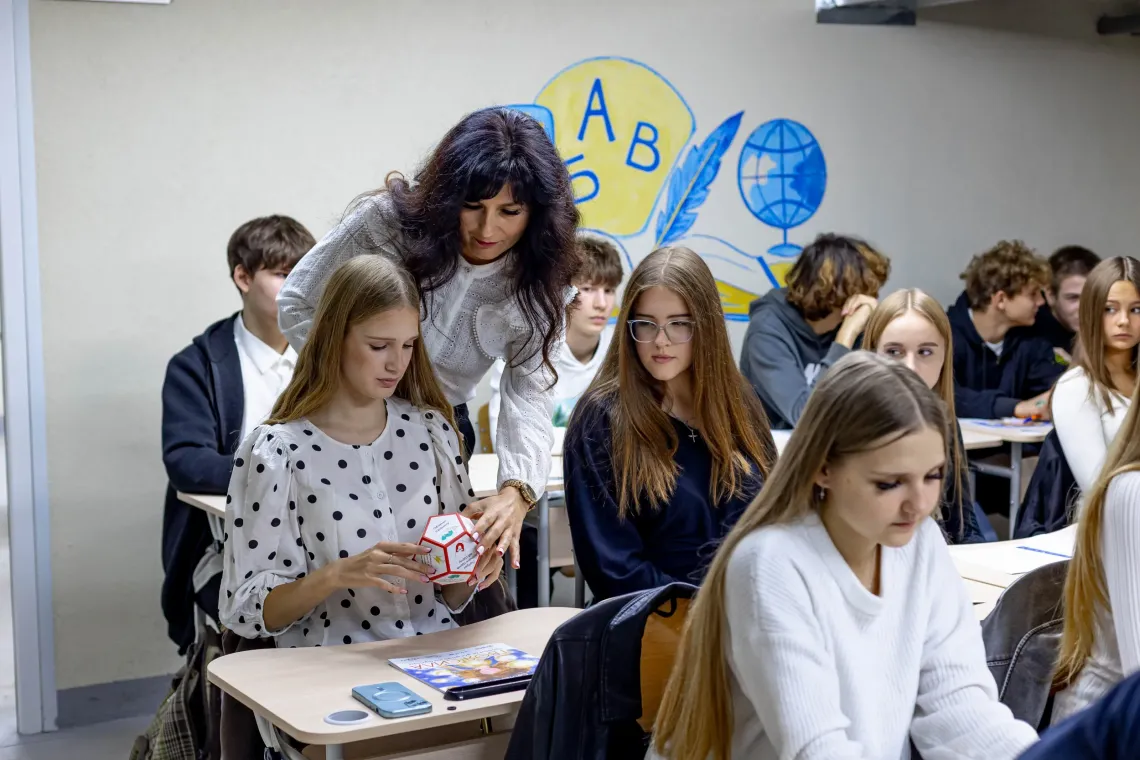
The war has also changed the role of the teacher. According to Olesia, it is important for teachers today not only to teach their subject, but also to have the strength to support a child in difficult times.
“The realities of today are challenging, so we need to be there for our pupils. We’ve undergone various training courses and workshops so that we can be a source of support for them in difficult times,” says the teacher.
It is the children’s reactions that remind her why this work is important.
“It’s their emotions, their hugs, their eyes. It’s their thirst for knowledge. When you see those eager faces - it fills us with joy.”
Fifteen-year-old Sofia is particularly grateful for her teacher because of her care:
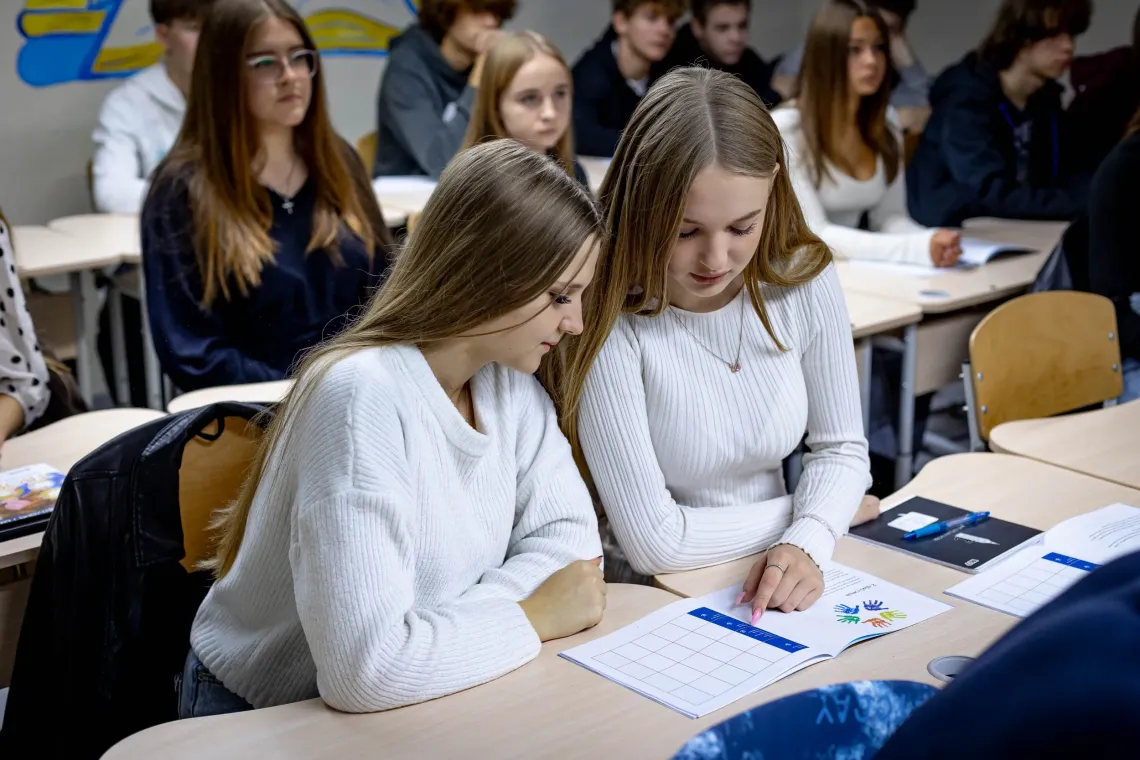
“I’m very grateful to her for always being in a good mood and always being there to support us.”
For Olesia, it’s just as important to see how the children learn to be part of a group: opening up, supporting one another and gradually becoming more independent.
For her colleague Olga, a teacher’s work is not limited to the curriculum either:
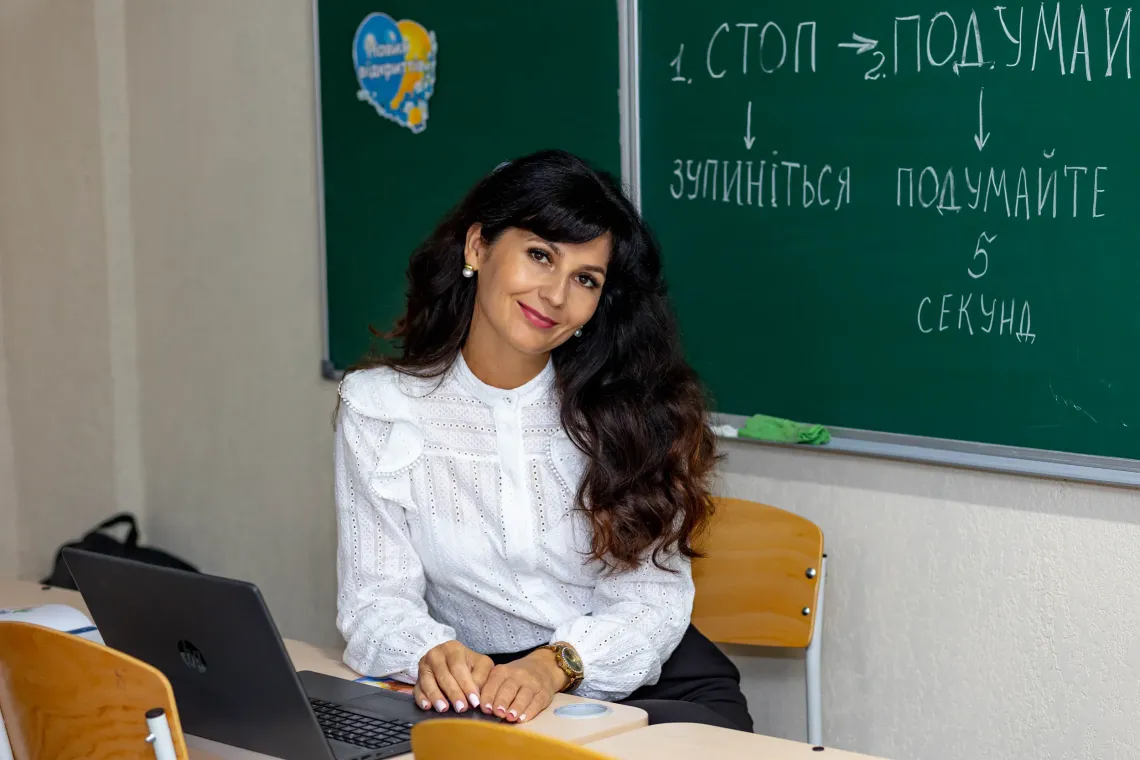
“I want to teach children to think critically. I want them to be able to distinguish between true and false information, and to use this knowledge throughout their lives.”
Since the start of the full-scale invasion UNICEF has helped to restore 15 shelters in schools in Kryvyi Rih and nurseries, enabling nearly 6,500 children to return to face-to-face learning in safety.